KromfohrländerGermany's devoted post-war companion
The Kromfohrländer is a rare, medium-small German companion dog created after World War II. Affectionate, adaptable and reserved with strangers, it bonds very closely to its people and suits owners who want a sensitive family dog that is not obsessed with hunting.
Why people love the Kromfohrländer
- Devoted companion bred specifically for family life
- Low hunting drive compared with terriers
- Medium-small size fits apartments and houses
- Light to moderate shedding; coat sheds dirt
- Usually peaceful with household dogs and cats
Things to consider
- Very rare in the US; long waits likely
- Small gene pool with several inherited conditions
- Reserved with strangers; prone to shyness
- Sensitive to tension and harsh handling
- Dislikes being left alone
Is this breed right for you?
10 questions · live resultHistory and Origin
The Kromfohrländer is one of the youngest German breeds. In the mid-1940s, Ilse Schleifenbaum of Siegen in western Germany took in a scruffy, wire-coated stray named Peter, thought to have arrived with American soldiers. Peter was mated with a local terrier-type female, and the puppies were so consistent in type and temperament that Schleifenbaum set out to establish a breed.
The name comes from Krom Fohr, a local field name in the Siegerland region. The FCI recognized the breed in 1955. It exists in rough-coated and smooth-coated varieties and remains uncommon even in Germany. Neither the AKC nor The Kennel Club recognizes it.
Size, Coat Types and Colors
The Kromfohrländer is a medium-small, well-proportioned dog standing 15 to 18 inches at the shoulder and weighing 20 to 35 lb. Males are larger and sturdier, while females are lighter and more delicate. The body is slightly longer than tall, with a light, agile build.
Two coat varieties are recognized:
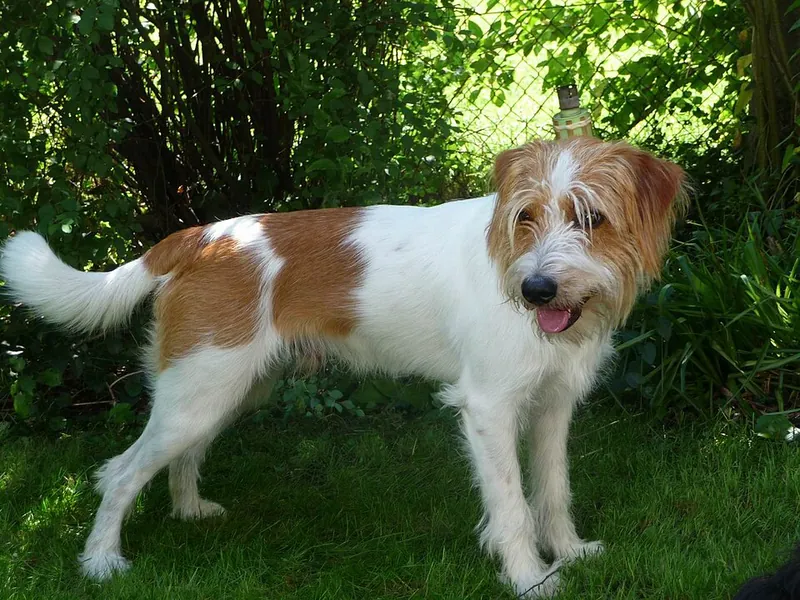
- Rough-coated: wiry, medium length, with a characteristic beard and eyebrows
- Smooth-coated: shorter and softer, with slight feathering on the ears and tail
The base color is always white. Tan markings range from light to dark brown, usually on the head and ears, with a symmetrical blaze often splitting the face. Many dogs also have a tan saddle or patches on the body. The ears are V-shaped and drop forward, and the dark eyes give a warm, alert expression. The tail is long and carried in a gentle curve.
Temperament and Personality
Kromfohrländers were bred as companions, and their whole focus is on their people. They are affectionate, playful and attentive at home, and many attach strongly to one person while staying friendly with the rest of the family.
They are typically reserved with strangers and alert enough to bark at visitors, without being a guard dog. Unlike many terrier-based breeds, hunting drive is usually low, which makes walks more relaxed. Their sensitivity means they react strongly to tension and harsh words, and they do not like being left alone for long.
With dogs and cats in the household, Kromfohrländers are usually peaceful, especially when raised together.
Is the Kromfohrländer Good for First-Time Owners?
Yes, the Kromfohrländer can be a good choice for a first-time owner who is calm, home a lot and gentle in handling.
Its moderate exercise needs, low hunting drive and focus on its people make everyday life easy. The main challenges for beginners are emotional rather than physical: Kromfohrländers are sensitive and can become shy without careful socialization. Plan to introduce your puppy to many friendly people, places and sounds, using food rewards. Harsh corrections tend to backfire. Novices should also be prepared for a long search, since the breed is rare outside Germany.
Do Kromfohrländers Bark a Lot?
Kromfohrländers are moderate barkers: they announce visitors and unusual sounds but are not typically nuisance barkers.
Their reserve with strangers can lead to barking at people who approach the home or speak to them directly. Teaching a calm response at the door and rewarding quiet behavior early helps. Boredom and isolation increase barking, so daily walks, play and short training sessions matter. In apartments, most Kromfohrländers settle well once they are familiar with everyday noises. Sudden increases in barking can signal anxiety or discomfort.
Can a Kromfohrländer Be Left Alone?
A Kromfohrländer can be taught to stay alone for a few hours, but long daily absences do not suit this people-focused breed.
The breed was developed purely as a companion, and many attach strongly to one person. Start teaching alone time in very short steps when the puppy is settled at home, use a crate or puppy pen if helpful and provide chews. Signs of stress include whining, scratching at doors and barking. If you work full time away from home, a dog walker, family member or daycare is important. Some do better with a second, calm dog.
Exercise and Training
A Kromfohrländer needs moderate exercise: about an hour of walking and play per day keeps most adults balanced. They enjoy hiking, agility, trick training and scent games, and they are agile, light-footed dogs.
- Train with praise, food and patience. They learn readily but shut down with pressure.
- Socialize puppies gently with many people and places to prevent shyness.
- Practice short separations early, since the breed tends to cling to its people.
They tend to stay close on walks, and many can learn a reliable recall, though individual dogs vary.
Grooming and Shedding
The rough-coated variety has a medium-length, wiry coat with a characteristic beard; the smooth-coated variety has a shorter, softer coat. Both are white with tan to brown markings on the head and often on the body.
Brush weekly. Rough coats benefit from occasional hand-stripping or thinning to remove dead hair. Shedding is light to moderate, and the coat dries quickly and tends to shed dirt.
Feeding and Nutrition
Cystinuria, an inherited condition that can cause bladder stones, occurs in the Kromfohrländer, mainly in males. Encourage plenty of water intake: fresh water in several places, and moistened food if your dog drinks little. Watch for straining or frequent urination and ask your vet about periodic urine tests. If cystinuria is diagnosed, your vet may recommend a specific diet as part of treatment; do not change diet on your own.
For healthy dogs, weight control is the main goal. Kromfohrländers are medium-small and gain weight easily with too many treats.
- Feed puppies three or four meals a day and adults two.
- Use small treats in training and subtract them from daily meals.
- Check body condition by feel, since a rough coat can hide extra weight.
Some Kromfohrländers are sensitive to sudden changes in routine, which can affect appetite. Introduce new foods gradually over a week or more, and keep mealtimes regular.
| Adult weight | Less active | Typical adult | Very active |
|---|---|---|---|
| 20 lb | 510 kcal | 590 kcal | 730 kcal |
| 28 lb | 660 kcal | 750 kcal | 940 kcal |
| 35 lb | 780 kcal | 890 kcal | 1,110 kcal |
Estimates use the resting energy formula veterinarians work with (70 × body weight in kg0.75) and standard activity factors. Use the feeding guide on your food as a starting point and adjust to body condition. Puppies, seniors, pregnant animals and pets that need to lose weight have different needs, so ask your vet.
Health and Lifespan
Kromfohrländers often live 13 to 15 years. Because the breed descends from very few founders, its gene pool is small, and several inherited conditions occur. These include epilepsy, cystinuria (which can lead to bladder stones), hereditary footpad hyperkeratosis, patellar luxation and some inherited eye diseases.
Breed clubs in Germany control breeding and use DNA tests and health screening to reduce these risks. Buy only from breeders who participate in these programs and can show test results for both parents.
Kromfohrländer Price and Cost of Ownership
The Kromfohrländer is extremely rare in the US, and most puppies are imported from Germany, the Netherlands or other European countries. Expect a long waiting list, travel or transport costs and an application process with breeders who follow club breeding rules. Prices vary by breeder, region and lines, and import costs can exceed the price of the puppy itself.
Breed-specific cost drivers include:
- DNA tests and health screening for cystinuria, footpad hyperkeratosis and eye disease in parents
- Urine tests over the dog's life if cystinuria is a risk
- Occasional hand-stripping or thinning of rough coats
- Pet insurance that covers inherited and chronic conditions
Food costs are moderate, given the breed's size of 20 to 35 lb.
Is the Kromfohrländer Right for You?
This breed suits families, couples and singles who are home a good deal and want a medium-small, adaptable companion. It fits city or country life, including apartments with daily walks.
It is less suitable for owners away for long workdays, households with rough handling or lots of conflict, and people who want a dog that loves strangers. Expect a wait for a puppy, since litters are few.
Kromfohrländer Traits at a Glance
Kromfohrländer FAQ
How big do Kromfohrländers get?
They stand about 15 to 18 inches tall and weigh 20 to 35 lb.
Are Kromfohrländers good family dogs?
Yes. They are affectionate and playful with their family, though they can be reserved with strangers and dislike being left alone.
Do Kromfohrländers shed?
They shed lightly to moderately. Weekly brushing is usually enough.
Is the Kromfohrländer a hunting dog?
No. It was bred as a companion, and most have relatively low hunting drive.
How long do Kromfohrländers live?
Typically 13 to 15 years.
Can a Kromfohrländer live in an apartment?
Yes. Its moderate size and exercise needs suit apartment life, provided it gets daily walks and is not left alone for long periods.