Volpino ItalianoItaly's small, devoted spitz watchdog
The Volpino Italiano is a small Italian spitz with a fox-like face and a fluffy stand-off coat. It is intensely attached to its people, quick-witted and a keen alarm barker. It suits owners who want a lively, clever companion and can give it lots of mental stimulation.
Why people love the Volpino Italiano
- Affectionate and devoted to its people
- Quick-witted, enjoys trick training
- Coat resists matting despite its length
- Small size suits many homes
- Long lifespan of 12 to 15 years
Things to consider
- Very vocal, keen alarm barker
- Dislikes being left alone
- Can be reserved with strangers
- Needs lots of mental stimulation
- Rare outside Italy, puppies hard to find
Is this breed right for you?
10 questions · live resultHistory and Origin
Small spitz dogs have lived in Italy for centuries. The Volpino, whose name means little fox, was a favorite of both noble households and working people. In Tuscany and other regions it rode on carts and lived on farms, barking to alert larger guard dogs to intruders.
By the mid-20th century the breed had almost vanished. A recovery program in the 1980s, supported by the Italian kennel club, brought it back from a handful of dogs. It remains rare outside Italy, and in the US it is recorded through the AKC Foundation Stock Service.
On farms, the small Volpino and the large Maremma sheepdog were often kept together: the Volpino raised the alarm and the bigger dog dealt with the threat. That division of labor explains much of the breed's watchful character today.
Size, Coat and Colors
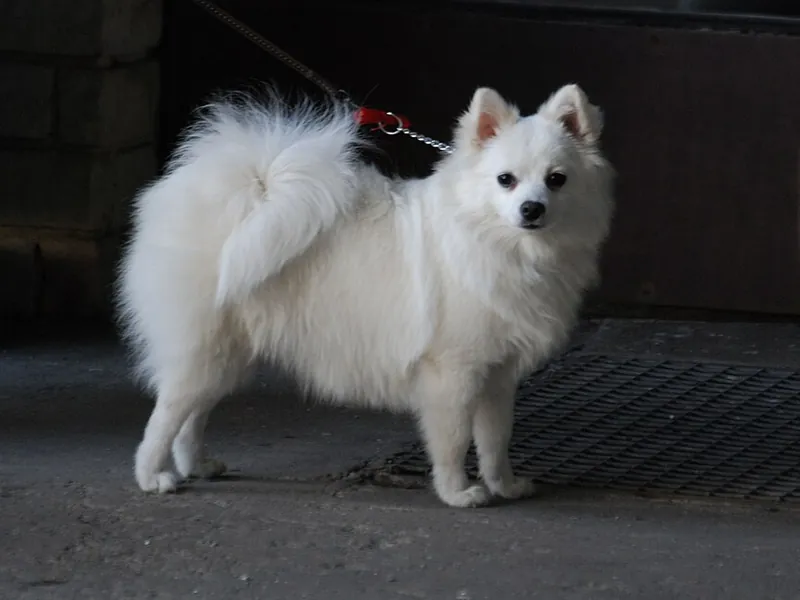
The Volpino Italiano is a small, compact spitz standing 10 to 12 inches and weighing 8 to 16 lb. It is square in outline, with a fox-like, wedge-shaped head, small erect triangular ears, dark eyes and a tail carried curled over the back.
Males are slightly larger than females; the FCI standard gives about 10.5 to 12 inches for males and 10 to 11 inches for females. It is often confused with the Pomeranian or German Spitz, but it has a longer muzzle and a slightly leggier frame.
The coat is long, straight and dense, standing off the body to create a rounded, fluffy outline. A thick ruff surrounds the neck, and the tail is heavily plumed. The texture is harsh rather than silky, which helps it resist matting. Accepted colors under the FCI standard:
- White, the most common
- Red, a solid fox red
- Champagne, tolerated but not preferred
Pale shading on the ears of red dogs is allowed. Parti-colors and other patterns are not accepted.
Temperament and Personality
Volpini are affectionate, playful and very people-focused. Many stay close to their favorite person all day. They are sharp and observant, and they notice every change in their environment.
That alertness makes them vocal. A Volpino will bark at visitors, noises and passersby, and our data rates it low for apartment life largely for that reason. It can be reserved with strangers. With children and other pets, it usually does well when raised with them and treated gently.
A well-raised Volpino is cheerful and playful, and many enjoy learning tricks. Socializing it with visitors, other dogs and everyday noises early in life helps keep the alert streak from turning into nervous barking.
Is the Volpino Italiano Good for First-Time Owners?
The Volpino can suit a first-time owner who is home a lot and enjoys training. It is affectionate, clever and small enough to handle and travel with easily.
Beginners should be ready for:
- A keen alarm barker that needs consistent training from day one
- Daily mental stimulation, not just walks
- Teaching alone time gradually
- Wide socialization so alertness does not become nervousness
- A long search for a breeder, as the breed is rare
Reward-based methods work well with this quick learner. Owners who want a quiet, independent dog are better served by another breed.
Can Volpino Italianos Live in Apartments?
Volpinos are small enough for apartments, but their barking can make it difficult. They were bred to raise the alarm on Italian farms, and they still notice every footstep, door and voice in hallways and neighboring units.
Apartment life works better if you focus on:
- Teaching a quiet cue early and rewarding silence
- Plenty of puzzles, tricks and short training sessions
- Daily walks and play to burn energy
- Blocking views of busy corridors or streets
A house with some distance from neighbors is often a better fit. With consistent training, many Volpinos still do well in quieter buildings.
Can Volpino Italianos Be Left Alone?
Volpinos do not like long periods alone. They are very attached to their people, often to one person in particular, and a lonely Volpino is likely to bark, whine or become anxious.
To help a Volpino cope:
- Teach alone time from puppyhood with short, calm departures
- Leave a chew toy or food puzzle
- Provide a cozy, quiet space away from street noise
- Exercise and play before leaving
Most adults can manage a few hours. For full workdays, a pet sitter, a dog walker or a compatible companion animal helps. The breed suits people who work from home or are retired.
Exercise and Training
Physical needs are moderate: daily walks and play sessions keep a Volpino fit. Mental needs are high. Without puzzles, training and new experiences, it can become noisy or demanding.
- Teach tricks, short obedience routines and scent games.
- Practice calm alone time from puppyhood; the breed does not like being left for long.
- Reward quiet behavior and teach a reliable cue to stop barking.
- Watch portions: the AKC notes a tendency to gain weight.
Grooming and Shedding
The long, straight coat stands away from the body and looks high maintenance, but it is less work than expected. Its texture resists matting, so a thorough brushing once or twice a week is usually enough, with more during seasonal sheds. Do not shave the coat. Trim nails regularly and keep up with dental care.
Feeding and Nutrition
Volpinos tend to gain weight easily, a point the AKC also notes. The fluffy, stand-off coat hides extra pounds well, so check condition by feel: ribs should be easy to find under the coat, with a visible waist when you part the hair. Extra weight also strains small joints over a long life.
Puppies grow quickly and reach adult size by about ten months. Feed three or four small meals a day until about six months, then two meals for adults, using a diet suited to small breeds and kibble sized for small mouths.
Small spitz breeds can be prone to tartar build-up. Brush teeth several times a week and schedule regular dental checks.
The breed's keen mind makes food a useful tool:
- Use part of the daily ration in puzzle feeders
- Reward quiet behavior with small treats
- Break treats into tiny pieces for training
Count all treats in the daily ration, and avoid table scraps, which encourage demanding barking at mealtimes.
| Adult weight | Less active | Typical adult | Very active |
|---|---|---|---|
| 8 lb | 260 kcal | 290 kcal | 370 kcal |
| 12 lb | 350 kcal | 400 kcal | 500 kcal |
| 16 lb | 430 kcal | 500 kcal | 620 kcal |
Estimates use the resting energy formula veterinarians work with (70 × body weight in kg0.75) and standard activity factors. Use the feeding guide on your food as a starting point and adjust to body condition. Puppies, seniors, pregnant animals and pets that need to lose weight have different needs, so ask your vet.
Health and Lifespan
The Volpino typically lives 12 to 15 years. The main known inherited issue is primary lens luxation (PLL), where the lens of the eye dislocates and can cause painful glaucoma and blindness. A DNA test is available, and both parents should be tested.
Keep the dog lean, since extra weight strains small joints. Ask breeders for PLL results and eye examinations.
Volpino Italiano Price and Cost of Ownership
Volpinos are rare in the US, with only a small number of breeders, and there is no reliable published US price range. Prices vary by breeder, region and lines. Some owners import puppies from Italy, which adds transport, health certificates and sometimes travel costs.
Adoption is uncommon, though spitz and small breed rescues occasionally see similar dogs.
Breed-specific ongoing costs:
- PLL DNA testing and regular eye exams, given the risk of primary lens luxation
- Dental cleanings for a small breed prone to tartar
- Training classes to manage barking
- Insurance covering eye conditions
Grooming is mostly home brushing; professional grooming is optional. Food costs are low.
Is the Volpino Italiano Right for You?
The Volpino is a good fit for people who are home a lot, enjoy training and want a small dog with a big bond. Houses with some distance from neighbors suit it better than thin-walled apartments.
It is less suited to people who want a quiet or independent dog, or who are out all day. Finding a puppy may take time because the breed is rare.
Volpino Italiano Traits at a Glance
Volpino Italiano FAQ
How big does a Volpino Italiano get?
Volpini stand about 10 to 12 inches tall and weigh roughly 8 to 16 pounds.
Is a Volpino Italiano a Pomeranian?
No. Both are spitz-type dogs, but the Volpino is a separate Italian breed with its own standard and history.
Do Volpino Italianos bark a lot?
Yes, they are known as alert, vocal dogs. Consistent training can reduce nuisance barking.
Are Volpino Italianos hypoallergenic?
No dog is hypoallergenic. The Volpino sheds moderately, especially during seasonal coat changes.
How long do Volpino Italianos live?
Usually 12 to 15 years.
Are Volpino Italianos good with children?
Usually yes, with gentle, older children. They are small and can be overwhelmed by rough play.