SmålandsstövareCompact black-and-tan hound from southern Sweden
The Smålandsstövare is a compact black-and-tan scenthound from the forests of Småland, often called the oldest of the Swedish hound breeds. Calm and friendly with people, but energetic and driven on a trail, it suits hunters and active countryside owners.
Why people love the Smålandsstövare
- Calm, friendly and affectionate at home
- Hardy breed with no widely reported inherited problems
- Short, thick coat is easy to care for
- Persistent, steady hunter on hare and fox
- Alert and good at announcing visitors
Things to consider
- Very high exercise needs
- Strong prey drive toward cats and small pets
- Vocal, especially on a trail or when bored
- Independent on a scent, so recall is unreliable
- Extremely rare outside Sweden
Is this breed right for you?
10 questions · live resultHistory and Origin
The breed comes from Småland in southern Sweden, a region of dense forest and small farms. Local hunters kept hounds for hare and fox for centuries, and these dogs are thought to include old German, Polish and Baltic influences mixed with local stock.
Organized breeding began in the early 20th century, and the Swedish Kennel Club recognized the breed in 1921. One distinctive trait is the natural short tail that some dogs are born with, a feature breeders deliberately preserved. Today the Smålandsstövare is recognized by the FCI but remains rare even in Sweden.
Size, Coat and Tail Types
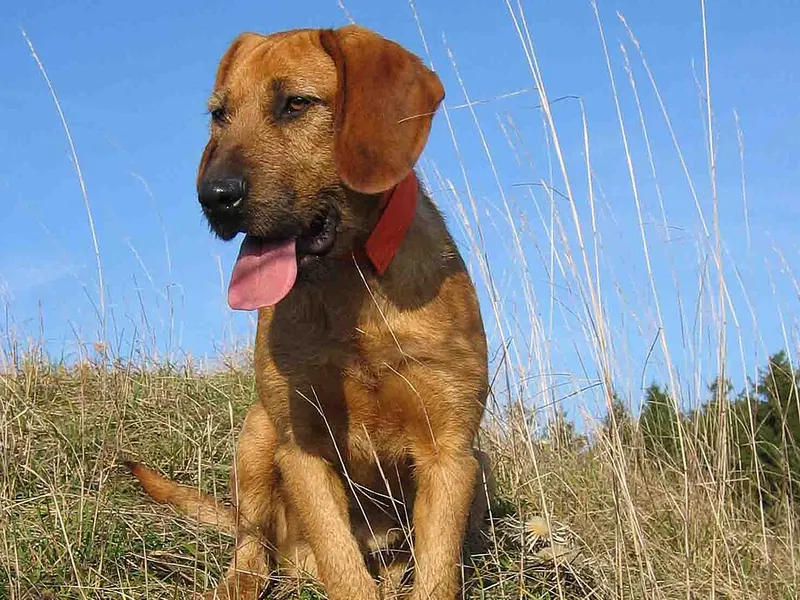
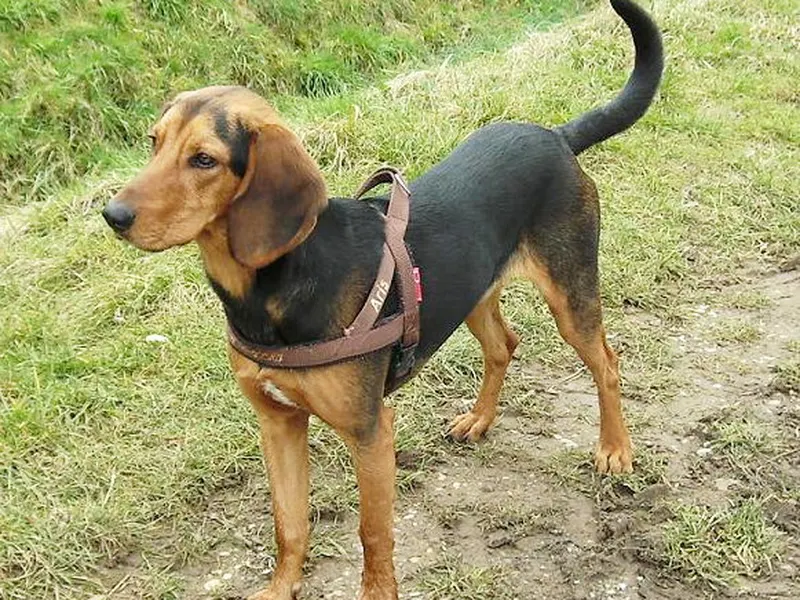
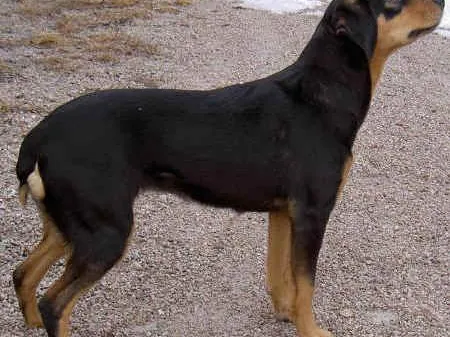
The Smålandsstövare is a compact, well-muscled, rectangular scent hound with a strong but not heavy build, built for long days in dense forest. It has a moderately broad head, a straight muzzle, dark eyes and medium-length drop ears. Adults stand about 17 to 21 inches and weigh roughly 33 to 44 lb. Males are slightly taller and more robust than females.
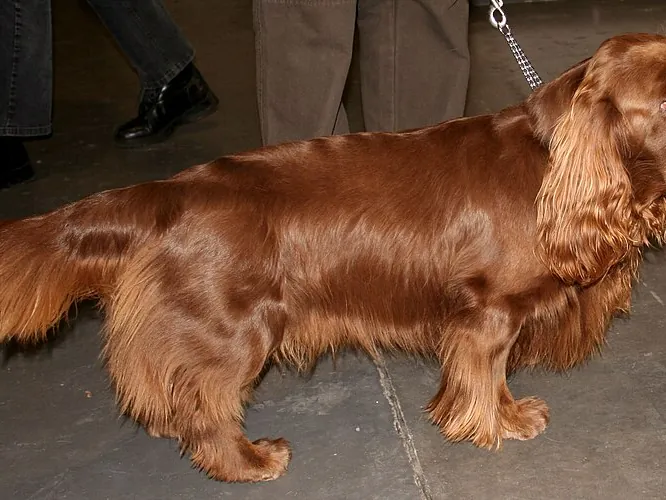
The coat is short, thick and close-lying, with a dense undercoat that protects against cold and wet weather. It is glossy and slightly coarse to the touch.
The only accepted color is black and tan, with the black covering the body and tan markings on the eyebrows, muzzle, chest, lower legs and under the tail. Small white markings on the chest and toes are permitted.
The tail can be either long or a natural bobtail, a short tail present from birth. Both types are accepted, and breeders have preserved the natural bobtail as a distinctive trait of the breed.
Temperament and Personality
Smålandsstövares are known as calm, friendly dogs, affectionate with their families and generally easy to live with. They are alert and will bark at unfamiliar people or noises, which makes them good at announcing visitors.
Like other Swedish hounds, they hunt alone and are independent on a trail. Prey drive is very strong, and they may not get along with cats or small pets. Some are also choosy about other dogs, so careful introductions help.
Hunters appreciate its steady working style. It searches methodically, follows a hare or fox with persistent voice and stays on the trail for a long time, but it is usually easy to handle when the hunt is over. At home it is often content to doze once its exercise needs are met.
Is the Smålandsstövare Good for First-Time Owners?
Generally no, unless the first-time owner is a hunter or a very active outdoor person. Although the Smålandsstövare is calm and friendly at home, it is a working scent hound with high exercise needs, a strong prey drive and an independent attitude on a trail.
Beginners often underestimate how difficult recall can be with a hound that has found a hare or fox scent, and how much daily exercise the breed needs to settle indoors. A novice who hikes daily, uses a long line in open country and takes up tracking or mantrailing can manage, especially with guidance from the breeder. Most first-time owners will find a less driven breed easier.
Are Smålandsstövares Easy to Train?
They are moderately easy to train in everyday manners, but hard to control once they are on a scent. At home, Smålandsstövares are generally cooperative and friendly, and they respond well to calm, reward-based training.
The challenge is the hunting instinct. They were bred to follow hare and fox independently for long periods, so recall is often unreliable when game is around. Practice recall with high-value rewards from puppyhood, use a long line in open areas and choose fenced spaces for off-leash running. Teaching a quiet cue early helps manage barking. Tracking and mantrailing make good use of their abilities.
Can You Get a Smålandsstövare in the US?
It is possible but rare. The Smålandsstövare is not recognized by the AKC, and there are very few, if any, established US breeders. Most dogs live in Sweden, where the breed is still primarily a hunting hound and even there remains relatively uncommon.
Getting one usually means contacting Swedish breeders through the Swedish breed club and arranging an import. Many breeders prefer active or hunting homes. Plan for import paperwork, vaccinations and travel well in advance, and be prepared to wait for a suitable litter. Be cautious of sellers offering black-and-tan hounds under this name without FCI-recognized registration papers.
Exercise and Training
This breed has high exercise needs. It was bred to hunt for hours in forested terrain.
- Long daily walks and hikes, plus running in safe, fenced areas.
- Tracking, mantrailing or hunting give it a proper outlet.
- Use a long line in open country; game will override training.
- Teach a quiet cue early, as it is fairly vocal.
It is not suited to apartment life, and it struggles when left alone for long periods.
In Sweden many Smålandsstövares are tested in hunting trials that assess how well they search, track and give voice. For non-hunting homes, structured tracking and mantrailing tap into the same skills and provide real mental tiredness, not just physical exercise.
Grooming and Shedding
The coat is short, thick and close-lying, black with tan markings on the face, legs and chest. A weekly brush keeps it tidy, with a little more during seasonal shedding.
Check paws after winter walks for ice and salt, and inspect ears for dirt. Some dogs have a natural bobtail, which needs no special care.
Feeding and Nutrition
The Smålandsstövare is an active hunting hound, and its food needs depend on how much it works. A dog hunting several days a week during the season needs larger portions than in quieter months, so adjust gradually and watch body condition. The ribs should be easy to feel and the waist visible, since extra weight reduces stamina and strains the joints.
Puppies do well on three meals a day until about six months, then two meals. A complete puppy food for medium-sized breeds supports steady growth. Avoid long, forced runs until growth plates close.
On hunting or long tracking days, feed a light meal in the morning and the main meal after the dog has cooled down. Offer water regularly during work. As a hound with a keen nose, it can be a skilled scavenger, so store food securely and watch for food left on counters or picked up on walks.
Use small treats to reward recall and calm behavior, and count them in the daily ration.
| Adult weight | Less active | Typical adult | Very active |
|---|---|---|---|
| 33 lb | 750 kcal | 850 kcal | 1,070 kcal |
| 44 lb | 930 kcal | 1,060 kcal | 1,320 kcal |
Estimates use the resting energy formula veterinarians work with (70 × body weight in kg0.75) and standard activity factors. Use the feeding guide on your food as a starting point and adjust to body condition. Puppies, seniors, pregnant animals and pets that need to lose weight have different needs, so ask your vet.
Health and Lifespan
The Smålandsstövare is a healthy breed according to surveys by the Swedish breed club, which have not identified breed-specific health problems. Typical lifespan is about 12 to 15 years.
The population is small, so breeders aim to maintain genetic diversity. Ask about health screening, including hips, and keep the dog lean and active throughout life.
Smålandsstövare Price and Cost of Ownership
There is no meaningful US price range for the Smålandsstövare, since the breed is extremely rare outside Sweden. Puppies typically come from Swedish breeders, and prices vary by breeder, region and hunting lines. Importing a puppy adds transport, vaccination and paperwork costs. Rescue dogs of this breed are practically unavailable in the US.
Ongoing costs are modest. The short, thick coat needs no professional grooming, and food costs are typical for a medium-sized active dog.
The main breed-specific cost drivers are activity and containment: a GPS tracking collar for off-leash work, long lines, secure fencing and possibly tracking or mantrailing classes. Hip screening is worth asking about when buying, and insurance that covers injuries in forest terrain or encounters with wildlife is sensible for a working hound.
Is the Smålandsstövare Right for You?
This is a good breed for rural outdoor people.
- Good match: hunters, hikers and active rural families who want a calm, friendly house dog.
- Poor match: apartments, owners away all day, homes with cats or rabbits, people who want quiet neighbors.
Finding a puppy usually means contacting Swedish breeders and planning an import.
Smålandsstövare Traits at a Glance
Smålandsstövare FAQ
How big is a Smålandsstövare?
It stands about 17 to 21 inches tall and weighs around 33 to 44 lb.
Do Smålandsstövares have short tails?
Some are born with a natural bobtail, while others have a normal long tail; both are accepted.
How long do Smålandsstövares live?
Typically about 12 to 15 years.
Are Smålandsstövares good with cats?
Their prey drive is strong, so cats and small pets are often at risk.
Can a Smålandsstövare live in an apartment?
No. It needs space and lots of daily exercise and can be vocal.
Is the Smålandsstövare a good watchdog?
Yes. It is alert and will bark to announce visitors or unusual sounds.