Japanese TerrierJapan's rare, elegant little terrier
The Japanese Terrier is a small, smooth-coated terrier with a distinctive black head on a mostly white body. Lively but less fiery than many terriers, it was developed as a companion and adapts well to apartment life with owners who give it attention and gentle structure.
Why people love the Japanese Terrier
- Small, elegant companion that suits apartments
- Less driven to dig and hunt than working terriers
- Very low-maintenance short coat
- Alert little watchdog that announces visitors
- Long-lived, typically 13 to 15 years
Things to consider
- Thin coat makes it sensitive to cold and sun
- Can be shy without careful socialization
- Independent streak in training
- Will still chase small animals
- Very rare; finding a puppy may require importing
Is this breed right for you?
10 questions · live resultHistory and Origin
Smooth Fox Terriers and similar small dogs reached Japan with European traders and sailors through ports such as Nagasaki, Kobe and Yokohama. In the early 20th century, Japanese fanciers crossed them with local small dogs and other toy breeds to create a lighter, elegant companion terrier.
Breeding was organized in the Kobe area in the 1920s and 1930s, and the Japan Kennel Club later recognized the breed. The FCI lists it in Group 3. It remains rare, even in Japan. The AKC records it in its Foundation Stock Service.
Size, Coat and Black Head
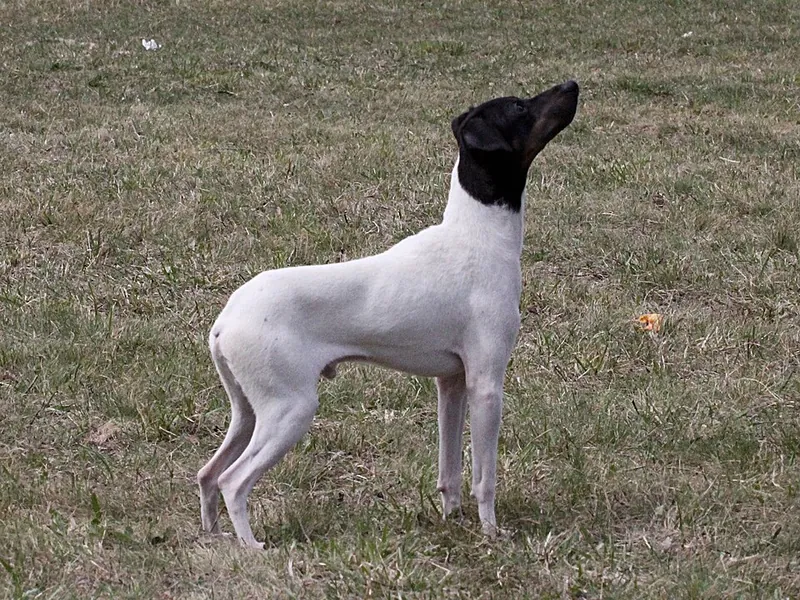
The Japanese Terrier is a small, square, elegant terrier with a fine build, a flat skull, a tapering muzzle and thin, V-shaped ears that fold forward. It moves lightly and quickly. In our data, adults stand about 12 to 13 inches tall and weigh roughly 10 to 12 lb, though some registries describe smaller dogs. Males and females are similar in size; males may be slightly sturdier.
The coat is extremely short, fine and dense, lying flat and glossy, about the length of a few millimeters. It provides little insulation, which explains the breed's sensitivity to cold and strong sun.
Colors: the most distinctive feature is the head, which is typically black, often with tan markings on the cheeks and above the eyes, and sometimes a white blaze. The body is mostly white with black and sometimes tan spots or ticking. This tricolor combination of a dark head on a white body is the breed's hallmark.
The tail is traditionally docked short in Japan, though natural tails are increasingly common.
Temperament and Personality
Japanese Terriers are cheerful, quick and playful. They often bond most closely with one person and are reserved with strangers, which makes them alert little watchdogs that announce visitors.
Compared with working terriers, they are generally less driven to dig and hunt, though they will still chase small animals. They can be independent and sometimes stubborn, so training takes consistency.
Japanese Terriers tend to be sensitive and can be shy without good socialization, so introduce puppies to many people, places and sounds. Once comfortable, they are affectionate and playful.
Are Japanese Terriers Good for First-Time Owners?
Yes, the Japanese Terrier can be a good choice for first-time owners who want a small, adaptable companion and are prepared for some terrier independence.
Its short coat needs almost no grooming, its exercise needs are moderate and it suits apartment life. Novices should focus on gentle, early socialization, since the breed can be shy or reserved without it. Training works best with upbeat, reward-based sessions and patience, as some dogs are independent. The biggest challenge for many first-time owners is finding a puppy, as the breed is rare even in Japan. Protecting the thin-coated dog from cold and sun is also important.
Do Japanese Terriers Bark a Lot?
Japanese Terriers are moderate barkers. They use their voice to alert their owners to visitors and unusual sounds, but they are generally less noisy than many small terriers.
As small watchdogs with a reserved attitude toward strangers, they are likely to announce people at the door and noises in the hallway. Boredom and long periods alone can increase barking. Daily walks, play and short training sessions help a great deal. Teaching a quiet cue and rewarding calm behavior at the door early on makes apartment living easier. Good socialization also reduces barking caused by uncertainty around new people.
Are Japanese Terriers Good With Cats?
Japanese Terriers can live with cats, especially when raised with them, but they still have some terrier chase instinct.
Compared with working terriers, they were developed more as companions and are generally less intense about hunting. A puppy introduced to a calm, confident cat usually learns to share the home peacefully. Adult dogs without cat experience need slow, supervised introductions, and the cat should have high escape routes. Outdoor cats, squirrels and small animals may still be chased. Pet rodents and rabbits should be kept safely separate from any terrier.
Exercise and Training
Daily walks totaling 30 to 60 minutes, plus play and short training games, keep this breed content. It enjoys trick training, nose games and small-dog agility.
Training should be upbeat and reward-based. Sources disagree on how easy the breed is to train: some describe it as eager and quick, others as independent. Patient repetition, early socialization and avoiding harsh methods give the best results. Its thin coat means it feels the cold, so a sweater can help in winter.
Grooming and Shedding
The very short, fine coat is easy to care for. A weekly wipe with a soft cloth or rubber mitt removes loose hair. Shedding is moderate, and the breed is not hypoallergenic.
Brush teeth several times a week, as small breeds are prone to dental problems, and trim nails regularly.
The coat is very short and fine, white with black and tan markings, and the head is typically black. Because the coat is thin, the breed is sensitive to cold and sun.
Feeding and Nutrition
The Japanese Terrier is a small, fine-boned dog, so small changes in food make a noticeable difference in body condition. Keep your dog lean: extra weight puts strain on the knees, and patellar luxation is one of the main conditions in the breed. With its very short coat, ribs and waist are easy to check by eye and hand.
Puppies: small-breed puppies can develop low blood sugar if they skip meals, so feed three or four small meals a day. Adults usually do well on two meals.
Hip health: Legg-Calvé-Perthes disease, a hip problem in young small-breed dogs, is reported in the breed. Watch for limping in young dogs and see a vet promptly; keeping the dog lean supports recovery after any treatment.
Cold weather: a thin-coated dog loses heat quickly. Some dogs need slightly more food in cold weather, but watch body condition instead of simply increasing portions.
Dental care: small mouths are prone to tartar buildup. Brushing teeth several times a week matters more than any particular food. Use tiny training treats and count them in the daily ration.
| Adult weight | Less active | Typical adult | Very active |
|---|---|---|---|
| 10 lb | 300 kcal | 350 kcal | 440 kcal |
| 12 lb | 350 kcal | 400 kcal | 500 kcal |
Estimates use the resting energy formula veterinarians work with (70 × body weight in kg0.75) and standard activity factors. Use the feeding guide on your food as a starting point and adjust to body condition. Puppies, seniors, pregnant animals and pets that need to lose weight have different needs, so ask your vet.
Health and Lifespan
The Japanese Terrier is generally healthy. Kneecap luxation (patellar luxation) and Legg-Calvé-Perthes disease, a hip problem seen in small breeds, are the main conditions breeders are advised to watch for. Ask about knee checks of the parents and watch for limping in young dogs.
Typical lifespan is about 13 to 15 years.
Japanese Terrier Price and Cost of Ownership
The Japanese Terrier is very rare in the United States and remains uncommon even in Japan. It is recorded in the AKC Foundation Stock Service, but very few US breeders exist. Most owners need to import a puppy from Japan or Europe, which adds travel, transport, paperwork and possibly quarantine-related costs. Prices vary by breeder, region and lines, and expect a long search.
Adoption of a purebred Japanese Terrier is very unlikely, though small terrier rescues may have similar dogs, such as Toy Fox Terriers.
Ongoing costs are modest for a small, short-coated breed. The main drivers are dental care, including professional cleanings, possible treatment for patellar luxation or Legg-Calvé-Perthes disease, and coats or sweaters for cold weather. Pet insurance can help cover orthopedic surgery if needed.
Is the Japanese Terrier Right for You?
This breed suits apartment dwellers, singles and couples who want a small, alert, affectionate dog that does not need hours of exercise. It is fine with considerate older children.
It is less suited to homes where it would be left alone all day or to owners who want an outdoor dog in cold climates. Because it is rare, finding a breeder may require patience or importing.
Despite its terrier label, many owners find it a gentler, more adaptable companion than working terriers, but it still benefits from training and play every day.
Japanese Terrier Traits at a Glance
Japanese Terrier FAQ
How big do Japanese Terriers get?
They are small, about 12 to 13 inches tall and roughly 10 to 12 lb in our data.
Are Japanese Terriers good apartment dogs?
Yes. Their size and moderate exercise needs suit apartments, as long as they get daily walks and company.
Do Japanese Terriers shed?
They shed moderately. The short coat needs very little grooming.
Are Japanese Terriers easy to train?
They are smart but can be independent. Consistent, reward-based training works best.
How long do Japanese Terriers live?
Typically 13 to 15 years.
Are Japanese Terriers good with kids?
They can be, particularly with calm, respectful older children. Supervision is wise because of their small size.