Finnish SpitzFinland's fox-red barking bird dog
The Finnish Spitz is Finland's national dog: a fox-red, foxy-faced hunting spitz that finds game birds and barks to hold them in the treetops. Lively, clever and friendly with family, it is a delightful companion for owners who can live with, and train, one of the most vocal breeds around.
Why people love the Finnish Spitz
- Cheerful, affectionate dog that bonds with the whole family
- Coat stays naturally clean with little doggy odor
- Hardy, long-lived breed, typically 13 to 15 years
- Enjoys cold weather, hiking and snow
- Good with respectful children when exercised well
Things to consider
- One of the most vocal breeds, bred specifically to bark
- Heavy seasonal shedding
- Independent and easily bored by repetitive training
- Recall can fail when birds or squirrels appear
- Thick coat makes hot climates difficult
Is this breed right for you?
10 questions · live resultHistory and Origin
Spitz dogs accompanied Finno-Ugric peoples across the northern forests for centuries. By the late 1800s, the native Finnish type was being diluted by crossbreeding until two Helsinki sportsmen, Hugo Roos and Hugo Sandberg, noticed pure examples while hunting and began a program to preserve them. The Finnish Kennel Club recognized the breed in 1892.
Its specialty is hunting capercaillie and black grouse. The dog locates a bird, follows it to a tree, then barks rhythmically while gently wagging its tail, which seems to fix the bird's attention until the hunter approaches. It was declared Finland's national dog in 1979. The AKC places it in the Non-Sporting Group and The Kennel Club in the Hound Group.
Size, Coat and Colors
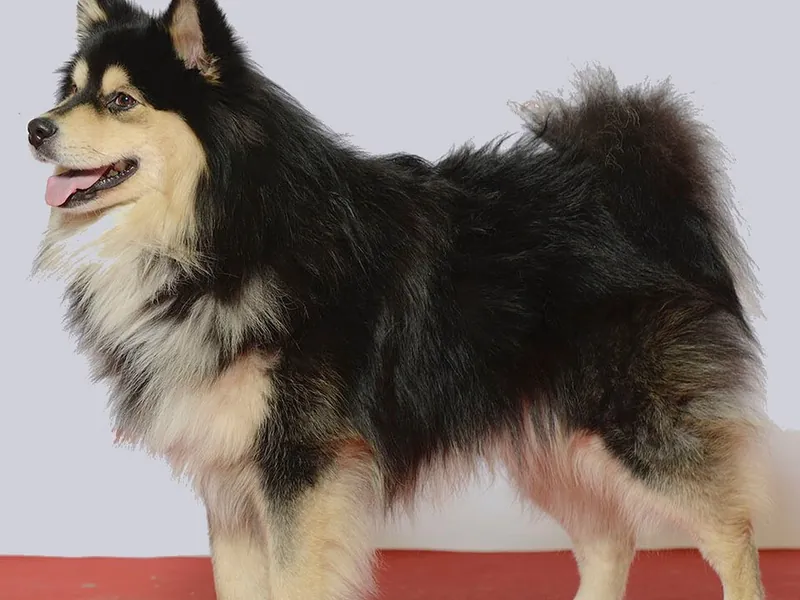
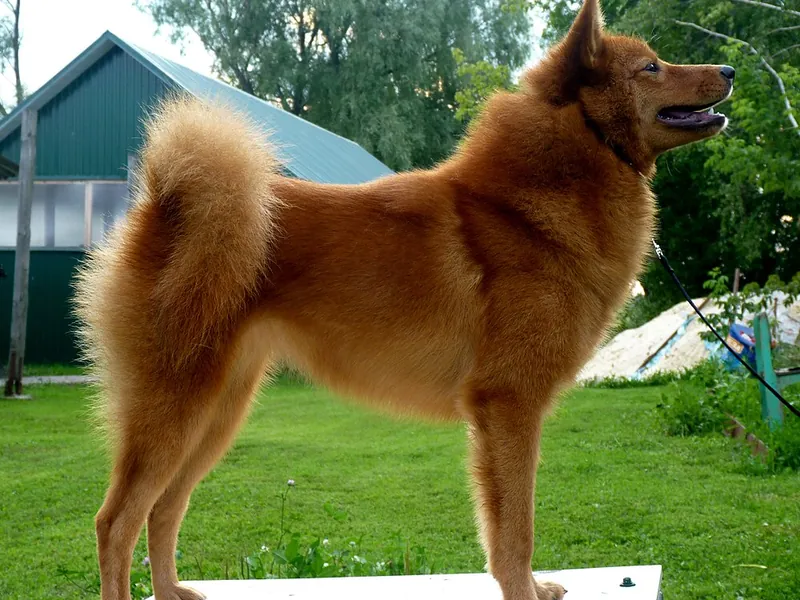
The Finnish Spitz is a fox-like, square-built hunting spitz with a wedge-shaped head, a narrow muzzle, small, sharply pointed erect ears and dark, almond-shaped eyes. The plumed tail curls over the back and down against the thigh.
Adults stand about 15 to 20 inches and weigh roughly 20 to 33 lb. The AKC standard calls for males of about 17.5 to 20 inches and females of about 15.5 to 18 inches. Males are noticeably more masculine, with a heavier ruff and broader head.
The double coat has a short, soft, dense undercoat and a longer, harsh outer coat that stands off the body, especially on the neck and back. Males in particular grow a prominent ruff.
Color is a hallmark of the breed:
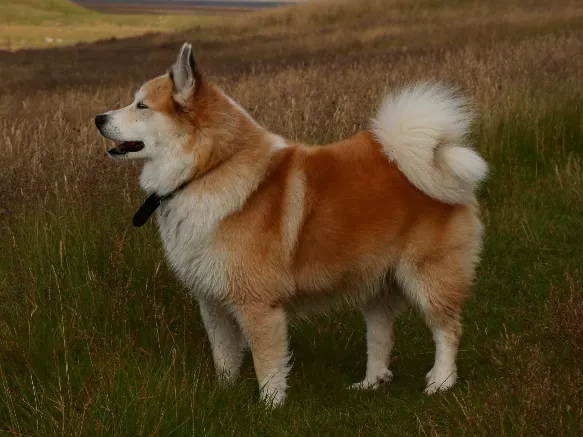
- shades of golden red, from pale honey to deep auburn
- lighter shading on the cheeks, chest, belly and legs
Puppies are often born darker, with black hairs that fade as the adult coat comes in. Small white markings on the chest and feet are permitted.
Temperament and Personality
Finkies are cheerful, alert and affectionate with their families, and generally good with children who treat them respectfully. Many are somewhat reserved with strangers at first but are rarely sharp.
Above all, they bark. The voice is part of the breed's job, and in Finland there are even barking competitions for working Finnish Spitzes. At home, this means alert barking at noises, visitors and wildlife. They are also independent thinkers that like to make their own choices.
Many Finnish Spitzes are also somewhat catlike: clean, independent and selective about affection. They tend to bond with the whole family rather than one person.
Are Finnish Spitz Good for First-Time Owners?
Finnish Spitz can suit first-time owners who are patient and ready for a lot of barking. They are friendly, affectionate and not usually sharp, which makes them easier than many hunting breeds.
The challenges are noise, independence and boredom. A Finkie needs around an hour of exercise daily plus training that is positive and varied, since repetition and harshness make it shut down. Start working on a quiet cue early and avoid accidentally rewarding barking. Beginners who live in a house rather than a shared-wall apartment and enjoy outdoor activities have the best chance of success.
Can Finnish Spitz Live in Apartments?
It is possible but often difficult. The Finnish Spitz is a moderate size and calm indoors when exercised, but it was bred to bark persistently, and shared walls make that a problem.
Apartment Finkies need daily long walks, sniffing time and training to keep their minds busy, along with dedicated work on reducing alert barking at hallway sounds. Owners should be realistic: training can manage the breed's voice but not eliminate it. If your building has strict noise rules, a house with some distance from neighbors is a far better fit. Air conditioning is also important in warm climates because of the thick coat.
Are Finnish Spitz Good With Cats?
Many Finnish Spitz live well with household cats, especially when raised with them. They are usually friendly and not as intense toward pets as some terriers or sighthounds.
Remember, though, that this is a hunting breed bred to track birds and small game. A cat that bolts may trigger a chase, and outdoor or unfamiliar cats are more at risk than a resident cat the dog knows. Pet birds and small rodents need careful separation. Introduce animals gradually, give cats high escape routes and supervise until you are confident in the relationship.
Exercise and Training
Expect to provide around an hour of exercise a day, including off-road walks where the dog can explore. Agility, tracking, rally and scent work give mental challenges the breed enjoys.
Training should be positive and varied. Finnish Spitzes are smart but easily bored and sensitive to harshness. Start work on a quiet cue early, reward calm behavior and avoid inadvertently rewarding barking. Recall can be unreliable when birds or squirrels appear.
Finnish Spitzes are also good in cold weather and enjoy snow. In hot climates, exercise during cool hours, as their thick coat makes them prone to overheating.
Grooming and Shedding
The double coat has a short, soft undercoat and a longer, harsh outer coat. Brush weekly, and daily during the heavy seasonal shed, often once or twice a year. Shedding is significant overall.
The coat should not be trimmed beyond tidying the feet; it stays naturally clean and has little doggy odor. Bathe only occasionally.
Feeding and Nutrition
The Finnish Spitz is an athletic, medium-sized dog, and most do well on moderate portions adjusted to activity. Pet dogs in warm months may need less food than working or very active dogs in winter.
- Feed puppies three or four meals daily, then two meals for adults.
- Keep puppies lean during growth to support healthy hip development, as hip dysplasia is reported in the breed.
- Check weight with your hands, since the stand-off coat makes it hard to see extra pounds.
- Use part of the daily ration for training and sniffing games.
Hypothyroidism and diabetes are both reported in the breed. Unexplained weight gain, lethargy, increased thirst or frequent urination are reasons to see a veterinarian. If your dog is diagnosed with either condition, follow your veterinarian's diet and feeding schedule closely. Small, frequent rewards during quiet-cue training help reduce barking without adding much to the daily total.
| Adult weight | Less active | Typical adult | Very active |
|---|---|---|---|
| 20 lb | 510 kcal | 590 kcal | 730 kcal |
| 26 lb | 620 kcal | 710 kcal | 890 kcal |
| 33 lb | 750 kcal | 850 kcal | 1,070 kcal |
Estimates use the resting energy formula veterinarians work with (70 × body weight in kg0.75) and standard activity factors. Use the feeding guide on your food as a starting point and adjust to body condition. Puppies, seniors, pregnant animals and pets that need to lose weight have different needs, so ask your vet.
Health and Lifespan
The Finnish Spitz is generally a healthy breed. Conditions reported include hip dysplasia, hypothyroidism, diabetes, cataracts, epilepsy and pemphigus foliaceus, an autoimmune skin disease. Choose breeders who screen hips, eyes and thyroid function and are open about epilepsy in their lines.
The AKC gives a typical lifespan of about 13 to 15 years.
Finnish Spitz Price and Cost of Ownership
Typical breeder price in the US$1,500 to $2,500
A Finnish Spitz puppy from a reputable US breeder typically costs about $1,500 to $2,500. Prices vary by breeder, region and lines. The breed is rare in the US, so expect waiting lists and possibly travel or shipping costs. Some puppies are imported from Finland or other Nordic countries.
Breed-specific cost drivers include:
- Health screening of breeding dogs for hips, eyes and thyroid, which affects puppy prices
- Insurance or savings for epilepsy, diabetes and thyroid disease
- Deshedding tools and occasional professional bath-and-blowout sessions
- Air conditioning in hot climates
The coat does not need trimming, so grooming costs are usually low.
Is the Finnish Spitz Right for You?
The Finnish Spitz suits active owners, ideally in houses rather than shared-wall apartments, who enjoy a talkative, spirited dog and are willing to train it patiently. It is a good family companion when exercised well.
- Good fit: hikers, families with older children, people who like independent dogs.
- Poor fit: close-quarter living with noise rules, owners who want an obedience star, long hours alone.
Finnish Spitz Traits at a Glance
Finnish Spitz FAQ
Do Finnish Spitz bark a lot?
Yes. They were bred to bark at game birds and are one of the most vocal breeds. Training can manage but not eliminate it.
How big do Finnish Spitz get?
Adults stand roughly 15 to 20 inches tall and weigh about 20 to 33 lb, with males larger than females.
Are Finnish Spitz good family dogs?
Yes, they are typically friendly and good with respectful children, provided their exercise and barking are managed.
Do Finnish Spitz shed?
Yes, they shed considerably, especially during seasonal coat blows.
Are Finnish Spitz hypoallergenic?
No. The thick double coat sheds a lot.
How long do Finnish Spitz live?
Typically about 13 to 15 years.