East Siberian LaikaA self-reliant hunter from the taiga
The East Siberian Laika is a tough, medium-to-large spitz bred by hunters in the forests east of the Yenisei River to find game and hold it at bay with its bark. Friendly with people and remarkably independent at work, it is a superb partner for serious hunters and a challenging companion for everyone else.
Why people love the East Siberian Laika
- Calm, friendly toward people without guard-dog sharpness
- Exceptionally hardy in severe cold
- Coat sheds dirt well and rarely needs baths
- Independent, capable partner for serious hunters
- No breed-specific inherited disease well documented
Things to consider
- Intense prey drive makes cats and small pets unsafe
- Needs several hours of activity daily
- Roaming instinct and unreliable recall
- Heavy seasonal shedding
- Very rare outside Russia
Is this breed right for you?
10 questions · live resultHistory and Origin
For centuries, Indigenous peoples and Russian settlers in Eastern Siberia relied on laika-type dogs to hunt sable, squirrel and other fur-bearers, as well as elk, wild boar and bear. These dogs ranged widely through the taiga, located game by scent and sound, then barked to pin it in place until the hunter arrived.
Soviet cynologists began gathering and documenting the regional types in the mid 20th century, and a breed standard for the East Siberian Laika followed later than those of its western cousins. The FCI recognizes it in Group 5 (spitz and primitive types). Even today, most dogs in Russia are kept by hunters and judged on working ability.
Size, Coat and Colors
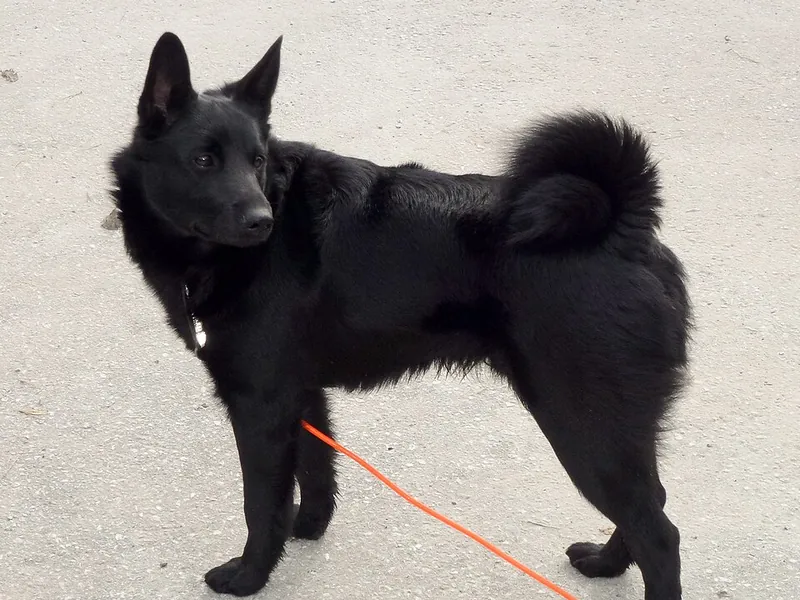
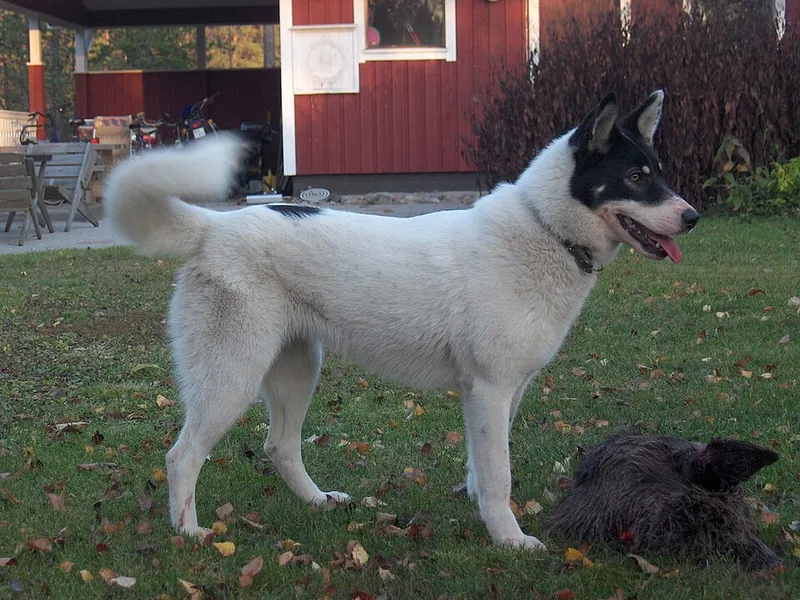
The East Siberian Laika is a strong, medium-to-large spitz with a slightly longer-than-tall body, a broad wedge-shaped head, erect triangular ears and oval eyes. The tail curls over the back in a ring or sickle shape. It is the largest of the recognized laika breeds and looks more substantial than its western cousins.
Adults stand about 21 to 25 inches at the shoulder. Males are taller and heavier, with a broader head, while females are slightly smaller. The standard does not fix a weight range, and our data gives none, but dogs should be lean and athletic.
The double coat has a straight, harsh outer layer and a dense, soft undercoat, forming a ruff around the neck and thicker hair on the hindquarters.
Many colors are accepted, including:
- black, black and tan, and black and white
- gray, gray-agouti and red in various shades
- brown, white, and piebald combinations
Working ability matters more than color to most breeders in Russia.
Temperament and Personality
The East Siberian Laika is typically calm, balanced and friendly toward people, without the sharpness of a guard dog. It is, however, a thinker that works far from its handler and makes its own decisions, which is exactly what a taiga hunter needs.
Toward other animals the picture changes. The breed has intense hunting passion, and many individuals are not reliable with cats, livestock or small pets. Some can also be assertive with unfamiliar dogs, so early, careful socialization matters.
Is the East Siberian Laika Good for First-Time Owners?
Generally no. The East Siberian Laika is friendly toward people, which helps, but its intense hunting drive, independence and exercise needs are difficult for owners without experience of working spitz breeds.
Expect several hours of daily activity, a strong urge to roam, unreliable recall and a dog that thinks for itself. First-time owners also tend to underestimate prey drive toward cats, poultry and small pets. The breed suits experienced owners or hunters in cooler climates who can offer secure fencing, long off-road walks on a long line and a real job, such as hunting or scent work.
Can an East Siberian Laika Live in an Apartment?
No, an apartment is a poor fit. The East Siberian Laika was bred to cover long distances in rough terrain, and confined living without a real outlet leads to restlessness, barking, chewing and escape attempts.
The breed needs a rural or semi-rural home with secure fencing and daily access to forests, fields or trails. Even with space, it needs several hours of activity, ideally hunting or comparable work such as tracking and search games. The thick coat also makes warm apartments uncomfortable in summer. Owners in cooler climates with land and an outdoor lifestyle are the best match.
Do East Siberian Laikas Bark a Lot?
They bark with purpose. Laikas find game and hold it in place by barking until the hunter arrives, so a strong, persistent voice is part of their job.
At home, many East Siberian Laikas are calmer and quieter than the related Russo-European Laika, especially when they get enough exercise. They will alert to visitors and wildlife, though, and bored or under-exercised dogs often become noisy. Training a quiet cue, rewarding calm behavior and providing several hours of activity a day help. Close neighbors and noise-sensitive housing are still a risk with any hunting laika.
Exercise and Training
This breed was built to cover long distances in rough terrain and needs a matching outlet. Several hours of activity a day, including off-road hiking, scent work or actual hunting, is a realistic baseline. Without it, expect escape attempts, digging and noise.
Training requires patience. Laikas learn quickly but question repetitive drills, and their recall competes with a powerful drive to follow game. Use secure fencing, long lines in open country and reward-based training that keeps the dog thinking.
Grooming and Shedding
The double coat has a straight, harsh outer layer and a dense undercoat that protects the dog in severe cold. Brush weekly for most of the year and daily during the seasonal molts, when the undercoat comes out in clumps.
The coat sheds dirt well and rarely needs bathing. Check feet and pads after outings in snow or rough ground, and trim nails if they do not wear down naturally.
Feeding and Nutrition
The East Siberian Laika is a working dog whose needs vary greatly with workload and climate. A dog hunting in winter burns far more energy than a companion walked on trails in summer.
- Feed puppies a food suited to medium-to-large breeds and keep them lean during growth to protect developing joints.
- Puppies do well on three or four meals a day, adults on two.
- Increase portions during hunting season or in very cold weather, then reduce them when activity drops.
- Avoid hard exercise straight after a large meal.
Check body condition with your hands, since the thick coat can hide weight changes. Working laikas should be lean and muscular, with ribs easy to feel. Carry water and a small snack on long outings. Because no reliable breed-specific nutrition research exists, discuss any diet changes with your veterinarian, particularly for imported dogs used to different feeding routines. Food rewards help with recall training, which is the biggest training challenge in the breed.
Health and Lifespan
The East Siberian Laika is regarded as a hardy working breed, and no breed-specific inherited disease is well documented in reliable sources. That partly reflects how little research exists outside Russia. Hip scoring and a general veterinary check of breeding dogs are sensible.
Thick coats make these dogs prone to overheating in warm climates; provide shade and avoid hard exercise in heat. Published lifespan figures vary, and most laika-type dogs are reported to live into their early teens.
East Siberian Laika Price and Cost of Ownership
The East Siberian Laika is extremely rare in the US, and there is no reliable typical US price. Most dogs come from Russia or Eastern Europe, and buying one involves import costs and paperwork. Prices vary by breeder, region and hunting lines. Rescue options are almost nonexistent outside Russia.
Cost drivers to plan for include:
- Import expenses such as transport, health certificates and vaccinations
- Secure, dig-proof fencing and GPS tracking collars for a roaming breed
- Hunting or scent-work training and equipment
- Hip screening and general health checks
Grooming costs are low, as the coat sheds dirt well, but invest in good brushes and rakes for the seasonal molts.
Is the East Siberian Laika Right for You?
This breed is best placed with hunters or very outdoorsy owners in cooler climates who can give it room, freedom to use its nose and a job. It is not a dog for apartments, beginners or homes with free-range cats or chickens.
- Strengths: friendly with people, hardy, independent, low-fuss coat care outside shedding season.
- Challenges: strong prey drive, roaming instinct, dislikes long hours alone.
East Siberian Laika Traits at a Glance
East Siberian Laika FAQ
How big is an East Siberian Laika?
Adults stand about 21 to 25 inches at the shoulder. Weight is not fixed in the standard, but they are lean, athletic medium-to-large dogs.
Are East Siberian Laikas good family pets?
They are generally friendly with people, but their hunting drive and exercise needs make them best for active, experienced families, ideally with a hunting interest.
Do East Siberian Laikas get along with other pets?
Often not with cats or small animals, because their prey drive is very strong. Some can live with other dogs if socialized early.
Can an East Siberian Laika be left alone?
Not for long. Bored laikas tend to bark, dig or try to escape, so they need company and activity.
Do East Siberian Laikas shed?
Yes. The dense double coat sheds heavily during seasonal molts and moderately the rest of the year.