Black Norwegian ElkhoundNorway's lighter, black moose dog
The Black Norwegian Elkhound is a compact, agile spitz from Norway, used to find moose and hold them at bay with its bark. Smaller and lighter than the better-known gray Norwegian Elkhound, it is fearless and independent in the forest and affectionate at home.
Why people love the Black Norwegian Elkhound
- Lighter and more agile than the gray Elkhound
- Hardy working breed built for cold, rugged terrain
- Affectionate and attached to its family at home
- Dense coat resists dirt and rarely needs bathing
- Tireless partner for hikers and hunters
Things to consider
- Very rare outside Scandinavia, often requiring an import
- Vocal, as baying at game is its job
- Independent, with unreliable recall around game
- Heavy seasonal shedding
- Strong prey drive toward small animals and livestock
Is this breed right for you?
10 questions · live resultHistory and Origin
Norway has long used spitz-type dogs for moose (called elk in Europe) hunting. The black variety was developed as a separate breed in the late 19th and early 20th centuries, selected for a lighter, more agile body suited to steep, wooded terrain.
Its job is to search independently, locate a moose, then circle and bark to keep it in place until the hunter arrives. The FCI recognizes it in Group 5 as a breed separate from the gray Norwegian Elkhound. It remains uncommon outside Scandinavia and is not recognized by the AKC or The Kennel Club.
In Norway, Elkhounds are tested on their ability to track and bay moose, and breeding stock often comes from proven hunting lines. This focus on working ability has kept the Black Elkhound hardy and athletic.
Size, Coat and Color
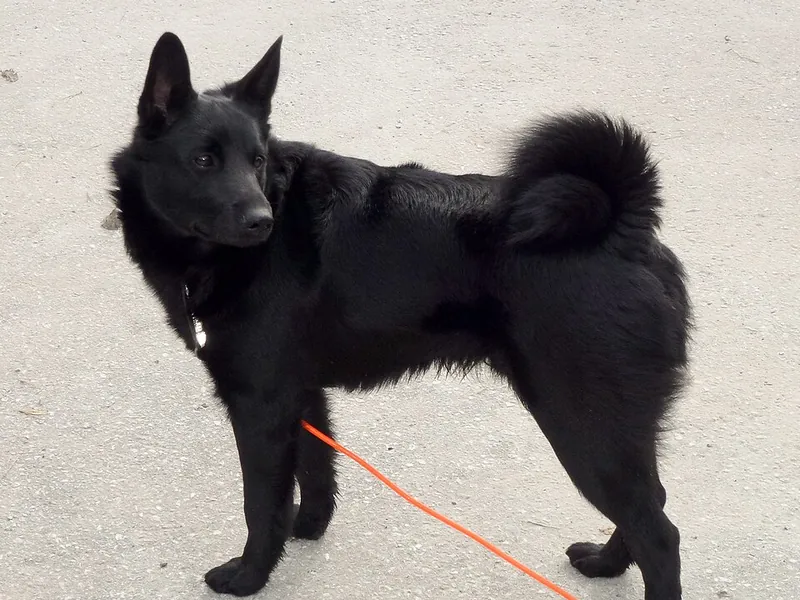
The Black Norwegian Elkhound is a compact, square, lightly built spitz with a wedge-shaped head, small erect pointed ears and a tightly curled tail carried over the back. It is noticeably smaller and lighter in bone than the gray Norwegian Elkhound, which suits it to fast work in steep, wooded country. Adults stand about 17 to 19 inches at the shoulder, with males at the upper end and females slightly smaller and finer. Reliable weight figures are not well documented, but the breed is a lean, medium-small dog.
The double coat consists of a coarse, straight outer coat over a soft, woolly undercoat. It is short on the head and front of the legs and longer on the neck, the backs of the thighs and the tail, forming a modest ruff.
The color is shiny black. A small amount of white on the chest and feet is permitted under the FCI standard. The coat can take on a slightly brownish or reddish tinge when shedding or after a lot of sun.
Temperament and Personality
This breed is energetic, bold and determined. In the field it makes its own decisions, which is essential for its work but means it can be stubborn in everyday training.
At home it is usually affectionate and attached to its family. Like most hunting spitzes, it tends to be vocal and has a strong prey drive, so small pets and livestock require care.
Is the Black Norwegian Elkhound Good for First-Time Owners?
Generally no. The Black Norwegian Elkhound is a specialized hunting spitz, bred to search independently, find moose and hold them at bay by barking. Those traits make it a superb working dog but a demanding first pet.
Beginners often struggle with its independence, unreliable recall when scent or game is involved, strong prey drive and voice. It also needs long daily outings in natural terrain, not just neighborhood walks. A first-time owner who hunts or spends many hours outdoors, has a securely fenced property and works with an experienced breeder or mentor can succeed, but most novices will find a less driven breed easier.
Can a Black Norwegian Elkhound Live in an Apartment?
It is a poor match for most apartments. Although the dog is fairly small, it is energetic, vocal and built to range through forests for hours. Shared walls and limited outdoor space make it hard to meet those needs and keep the neighbors happy.
The breed does best in a rural or semi-rural home with a securely fenced yard and direct access to woods, fields or trails. If an apartment is unavoidable, the owner would need to provide long daily hikes, scent work or tracking, and consistent training to manage barking. The thick coat also makes the dog sensitive to heat in warm apartments.
Can You Get a Black Norwegian Elkhound in the US?
It is possible but difficult. The breed is not recognized by the AKC, and there are very few, if any, established breeders in the US. Most dogs are found in Norway, Sweden and Finland, where they are bred primarily for moose hunting.
Getting one usually means contacting Scandinavian breeders or breed clubs directly and arranging an import. Many breeders are selective and prefer active hunting homes. Expect to plan import paperwork, vaccinations and travel well ahead. Be cautious with US sellers offering black Elkhounds, since a solid black dog may be a mix or a different spitz breed. Ask for FCI-recognized registration papers.
Exercise and Training
Plan for long daily outings in natural terrain, with scent and search work. Hiking, tracking and canicross can substitute for hunting if done regularly.
Training should be consistent, varied and reward-based. Recall is the main challenge, as the dog is bred to range away from its handler. Use long lines in open areas and secure fencing at home.
Grooming and Shedding
The dense double coat has a harsh outer layer and woolly undercoat. Weekly brushing is enough for most of the year, with daily brushing during seasonal shedding when the undercoat comes out heavily.
The coat resists dirt and odors, so bathing is rarely needed. Check paws and coat for ticks after forest walks.
The jet-black coat may show slight reddish tones when shedding or after a lot of sun exposure.
Feeding and Nutrition
The Black Norwegian Elkhound is a lean, working spitz, and its food needs vary a lot between a dog that hunts or hikes daily and one with a quieter routine. During the hunting season, active dogs may need more food and an extra small meal, while in quieter months portions should drop. The dense coat hides the outline, so check body condition with your hands: the ribs should be easy to feel and the waist clearly defined.
Puppies do well on three meals a day until about six months, then two meals. A complete food suited to medium-sized breed puppies supports steady growth. Avoid long, demanding outings until the puppy's joints have matured, since hip dysplasia is screened in the breed.
On long days in the field, offer water regularly and small snacks rather than a large meal before work. Feed the main meal after the dog has cooled down. Like many spitz breeds, Black Elkhounds can be food-driven, so store food securely and count training treats in the daily ration.
Health and Lifespan
There is little published health data on the Black Norwegian Elkhound. It is regarded as a hardy working breed. Responsible breeders screen for hip dysplasia and eye problems, so ask for results on both parents.
The thick coat makes it heat-sensitive. Reliable lifespan data is not available, though comparable spitz breeds commonly live into their early teens.
Black Norwegian Elkhound Price and Cost of Ownership
There is no meaningful US price range for the Black Norwegian Elkhound, because the breed is very rare in North America. Puppies are usually bought from breeders in Norway or neighboring countries, and prices vary by breeder, hunting lines and country. Import costs, including transport, vaccinations, paperwork and possibly an agent, often add significantly to the total. Rescue dogs of this breed are almost never available in the US.
Ongoing costs are moderate. The coat needs no professional grooming, though an undercoat rake and a strong vacuum are useful during heavy sheds.
Breed-specific cost drivers include secure fencing, GPS tracking collars for dogs that range while hunting or hiking, hip and eye screening, and insurance or vet care for injuries sustained in rough terrain or encounters with wildlife.
Is the Black Norwegian Elkhound Right for You?
This breed is best suited to hunters or very active owners in cooler climates who can provide space, exercise and work for its nose. It is not a good choice for apartments, novice owners or homes with free-roaming small animals.
In the US and UK it is very rare, and importing from Scandinavia is often the only option.
For people who love the gray Norwegian Elkhound but want a smaller, lighter dog, the black variety can be worth exploring, provided its hunting needs are understood.
Black Norwegian Elkhound Traits at a Glance
Black Norwegian Elkhound FAQ
How is the Black Norwegian Elkhound different from the gray Norwegian Elkhound?
It is a separate FCI breed: smaller and lighter, with a solid black coat, developed for agility in rough terrain.
How big is a Black Norwegian Elkhound?
Adults stand about 17 to 19 inches at the shoulder and are lean, compact dogs.
Do Black Norwegian Elkhounds bark a lot?
Barking at game is their job, so they are naturally vocal. Training helps manage barking at home.
Do Black Norwegian Elkhounds shed?
Yes. The double coat sheds heavily during seasonal changes.
Are Black Norwegian Elkhounds good family dogs?
They can be affectionate with their families but need a lot of exercise and an experienced owner who can handle their independence.
How long do Black Norwegian Elkhounds live?
Reliable data is scarce, but comparable spitz breeds commonly live into their early teens.