Magyar AgárHungary's hardy, all-weather sighthound
The Magyar Agár, or Hungarian Greyhound, is a powerful sighthound built for endurance rather than pure sprinting. It is quiet and adaptable indoors, yet more watchful than most sighthounds. It suits active owners who can provide safe running space and manage a strong chase instinct.
Why people love the Magyar Agár
- Calm, quiet and gentle indoors
- More watchful than most sighthounds
- Excellent endurance for running and jogging
- Weather-hardy short coat
- Robust breed with no documented breed-specific diseases
Things to consider
- Strong chase instinct toward cats and small animals
- Needs safe, fenced areas for full-speed running
- Reserved with strangers
- Very rare outside Hungary
- Thin skin is prone to cuts during running
Is this breed right for you?
10 questions · live resultHistory and Origin
Sighthounds are believed to have arrived in the Carpathian Basin with the Magyar tribes in the late 9th century. Over centuries they were used to course hare and fox across the Hungarian plains, often with hunters on horseback, and later also for racing.
In the 19th and 20th centuries, crossbreeding with English Greyhounds changed many lines, and Hungarian breeders later worked to preserve the older, sturdier type. The FCI recognizes the Magyar Agár in its sighthound group.
Compared with the English Greyhound, the Magyar Agár has a sturdier frame, broader head and denser coat, traits that suited long hunts in harsh continental weather. It was valued for coursing over long distances rather than short, explosive sprints.
Size, Coat and Colors
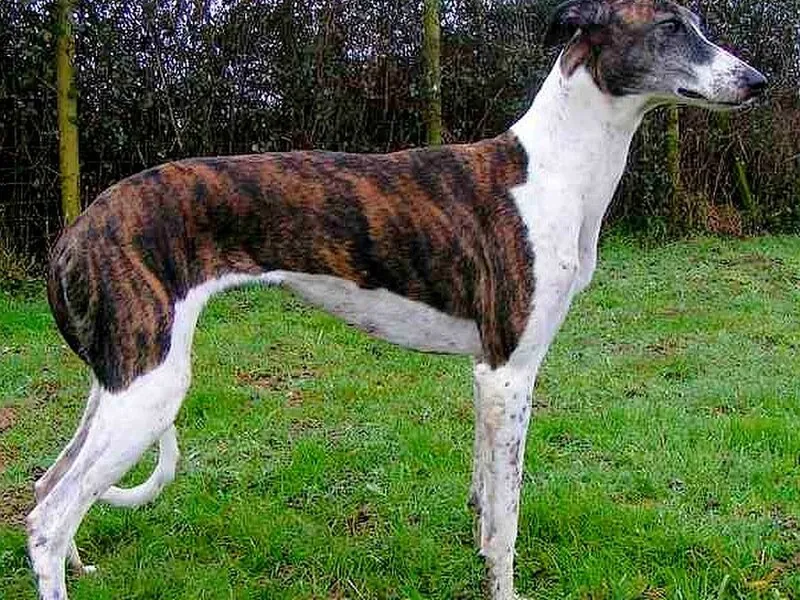
The Magyar Agár is a large sighthound standing about 24 to 28 inches at the shoulder, with males typically taller than females. It has a lean but stronger build than the English Greyhound, with a deep chest, a broader skull, powerful loins and long, muscular legs built for endurance rather than only short sprints. The ears are rose-shaped, folded back at rest and raised when alert, and the long tail curves upward at the tip.
The coat is short, dense and smooth, lying close to the body, and grows noticeably thicker in winter, which makes the breed more weather-hardy than many sighthounds.
Many colors are accepted, including black, fawn, brindle and gray shades, with or without white markings. The FCI standard excludes some colors, such as blue, brown and black and tan. Males are taller and more strongly built than females, with a broader head. Reliable weight figures are not available from our data.
Temperament and Personality
At home the Magyar Agár is calm, gentle and affectionate with its family. It is generally reserved with strangers and, unusually for a sighthound, a capable watchdog.
Its prey drive is strong. It will chase cats, rabbits and other small animals, and many cannot share a home with them. Children are usually fine if they are respectful and calm.
It tends to be loyal to its family and can be somewhat aloof with visitors. Introduce it to new people calmly and let it approach at its own pace.
Is the Magyar Agár Good for First-Time Owners?
The Magyar Agár can suit an active first-time owner who understands sighthounds, but it is not the easiest choice. It is calm and gentle indoors, which helps beginners, yet its chase instinct and need to run fast in safe spaces require planning.
A first-time owner would need regular access to securely fenced areas for full-speed running, a leash habit in open country, careful management around cats and small animals, and gentle, reward-based training, since sighthounds shut down under pressure. The breed is also reserved with strangers, so calm socialization matters. Because puppies are mainly available in Hungary and nearby countries, finding a dog and support is another hurdle for beginners.
Is the Magyar Agár Good with Children?
Generally yes, with respectful, calm children. The Magyar Agár is gentle and affectionate with its family and tends to tolerate household activity well, especially when raised with children.
Like most sighthounds, though, it can be sensitive to rough handling and may not enjoy being chased, grabbed or disturbed while resting. Teach children to let the dog approach and to leave it alone on its bed. Running games in the yard can trigger chasing, which may knock over small children. Supervise visits from children the dog does not know, because the breed is reserved with strangers and appreciates time to warm up.
Can a Magyar Agár Be Left Alone?
Yes, more easily than many breeds. A Magyar Agár that has had a good run or long walk is often content to rest for several hours, and adults can usually manage about four to six hours alone when trained gradually.
Problems are more likely in young dogs or dogs that have not had enough exercise, which may become restless, chew or vocalize. Before leaving, give real exercise, provide a soft, padded bed, since lean sighthounds can get pressure sores on hard floors, and keep the house at a comfortable temperature. Build alone time slowly from puppyhood. For very long workdays, a midday walk is still a good idea.
Exercise and Training
Expect to give at least an hour of exercise daily, including chances to run at full speed in a securely fenced area. The breed has notable endurance and enjoys long walks and jogging.
- Lure coursing is an excellent outlet.
- Recall is unreliable around moving prey; keep it leashed in open areas.
- Use gentle, reward-based training; sighthounds shut down under pressure.
- Its coat is weather-resistant, but provide warmth in harsh cold.
Many owners use secure fields or dog parks designed for sighthounds. Young dogs should not be pushed into intense endurance running until fully grown.
Grooming and Shedding
The short, dense coat thickens in winter, making the breed hardier than many sighthounds. Weekly brushing with a rubber mitt and occasional bathing are enough. Check nails and teeth regularly.
Shedding is moderate, heavier when the winter coat sheds in spring. Lean sighthounds can get pressure sores on hard floors, so provide a soft bed.
Feeding and Nutrition
Sighthounds naturally carry very little body fat, and a healthy Magyar Agár often shows the outline of a few ribs and the hip bones. Owners new to the breed sometimes worry the dog looks thin and overfeed it. Ask your vet or breeder to show you the right body condition, and feed to maintain it.
The Magyar Agár is deep-chested, which raises the risk of bloat. Feed at least two meals a day, avoid running or hard exercise for an hour or more before and after meals, and let the dog rest after eating.
- Puppies should grow steadily on a diet suited to large-breed growth, with no intense endurance running until fully grown.
- Active dogs that run or course regularly need more food than quieter companions.
- The winter coat helps, but lean dogs living in cold climates may need slightly more food in winter.
- Offer water after running, once the dog has cooled down.
Health and Lifespan
The Magyar Agár is described as robust and weather-hardy, and sources list no breed-specific diseases. Typical lifespan is 12 to 14 years.
Like other lean sighthounds, it may be sensitive to some anesthetics, so tell your vet about the breed. Protect thin skin from injuries during running.
Keep the dog fit and lean, check for injuries after hard runs, and ask breeders about the general health history of the parents.
Magyar Agár Price and Cost of Ownership
The Magyar Agár is not recognized by the AKC and is very rare in the US, so there is no US price range. Most puppies are bred in Hungary and neighboring countries, and importing one adds transport, veterinary paperwork and travel costs. Prices vary by breeder, region and lines.
Adoption of a Magyar Agár is rare in the US, but sighthound rescues regularly place retired racing Greyhounds and other sighthounds with similar care needs.
Breed-specific cost drivers include access to secure running areas or fencing high enough for a large sighthound, soft bedding, coats for harsh winters, and vet care for cuts and injuries from running. Make sure your vet is familiar with sighthound anesthesia, since lean dogs may need adjusted protocols.
Is the Magyar Agár Right for You?
This breed suits active people with access to safe running areas and a calm home. It can adapt to an apartment if it gets proper exercise.
It is not ideal for homes with cats or small pets, or for owners who expect off-leash freedom in open country.
It also suits owners who want a calm house dog that turns into an athlete outdoors. Puppies are mostly available in Hungary and nearby countries.
Magyar Agár Traits at a Glance
Magyar Agár FAQ
How big is a Magyar Agár?
It stands about 24 to 28 inches tall at the shoulder and has a strong, athletic build.
Is the Magyar Agár the same as a Greyhound?
No. It is a separate Hungarian breed, sturdier and more endurance-oriented than the English Greyhound.
Is the Magyar Agár good with cats?
Often not. Its strong chase instinct makes small animals risky.
Is the Magyar Agár calm indoors?
Yes. When exercised, it is quiet and relaxed at home.
How long does a Magyar Agár live?
About 12 to 14 years.
Do Magyar Agárs need a lot of exercise?
Yes. They need at least an hour daily, including safe off-leash running in fenced areas.