Istrian Coarse-haired HoundRugged, wiry scenthound from Istria
The Istrian Coarse-haired Hound is the wire-coated sibling of the Istrian Shorthaired Hound, built for hunting in harsh, thorny terrain. Calm and devoted to its handler, it is a passionate trailing dog that belongs with hunters or very active rural owners.
Why people love the Istrian Coarse-haired Hound
- Calm, gentle and loyal to its handler
- Weatherproof wiry coat suits rough terrain
- Generally sociable with other dogs
- Tireless, persistent tracker
- Moderate, functional build with no extremes
Things to consider
- Very strong hunting drive, recall unreliable on scent
- Needs long daily exercise and scent work
- Uses its voice on a trail and when lonely
- Rare outside the Balkans
- No reliable lifespan or health data
Is this breed right for you?
10 questions · live resultHistory and Origin
Like its smooth-coated relative, the Istrian Coarse-haired Hound originates on the Istrian peninsula in today's Croatia. It is commonly said to have been developed in the 19th century by crossing the native Istrian Shorthaired Hound with a rough-coated French griffon hound, producing a dog with the same nose and stamina but a coat better suited to cold winds, scrub and thornbushes.
Its job has always been to trail hare and fox, and it is also used for wild boar. The FCI lists it as a separate breed in Group 6 (scenthounds). It stands roughly 19 to 21 inches tall and remains a working hunting dog, rarely seen outside the Balkans.
Size, Coat and Colors
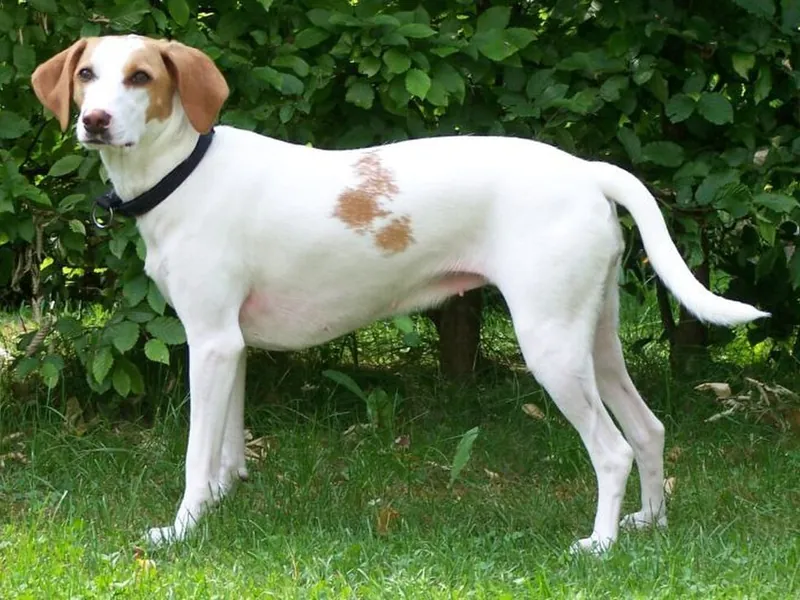
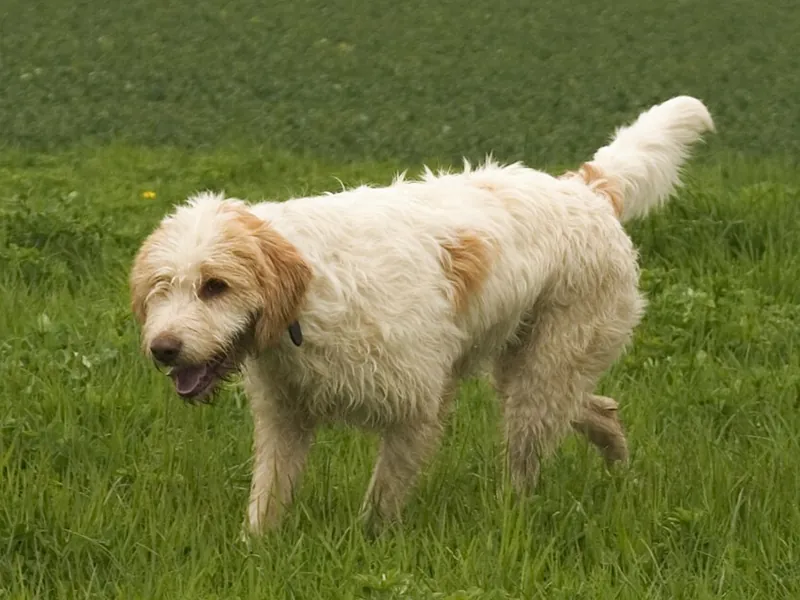
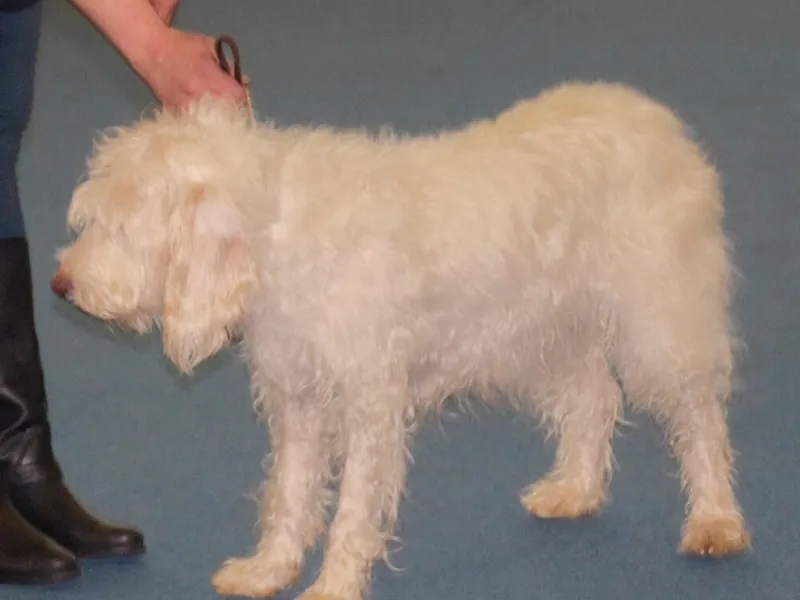
The Istrian Coarse-haired Hound is a medium-size, strongly built scenthound standing about 19 to 21 inches at the shoulder. It is slightly longer than tall, with a deep chest, solid bone and a serious, steady expression framed by a bearded muzzle. Reliable weight figures are not widely published.
Males are usually slightly taller and more substantial than females.
The coat is what sets it apart from its smooth-coated sibling:
- A harsh, bristly outer coat about 2 to 4 inches long
- A dense undercoat for protection against wind and thorns
- Coarser hair on the face that gives a rugged, bearded look
The color is white with orange markings, usually on the ears and head, sometimes with orange patches or ticking on the body. The ears are broad, hang flat and are fairly thin. The tail is thick at the root and tapers, carried in a slight sabre curve.
Temperament and Personality
The breed standard describes a calm, balanced dog that is loyal to its handler and easy to train for hunting work. Compared to the shorthaired variety, it is often described as a little more serious and steady. It is gentle at home and generally reserved with people it does not know.
Its hunting drive is very strong. On a fresh track it works persistently and gives voice, and it can be hard to call off. That focus is what hunters value, and it is also what pet owners need to plan around.
Is the Istrian Coarse-haired Hound a Good Family Dog?
In the right family, yes. At home the Istrian Coarse-haired Hound is calm, gentle and loyal, and it usually gets along with other dogs. Its needs are what make it a specialist breed.
It fits families who:
- Live in a rural area with secure fencing
- Can give hours of outdoor activity and scent work every day
- Hunt or do tracking as a hobby
- Have no free-roaming cats or small pets
With children, it is generally patient, but supervision is wise with a strong, active dog. In a suburban home without much time for exercise, frustration and noise are likely.
Do Istrian Coarse-haired Hounds Bark a Lot?
They are not constant barkers at home, but they do use their voice. On a trail, the Istrian gives tongue so the hunter can follow, and this bay is loud and carries far.
At home, barking and howling usually come from boredom or isolation. The breed tolerates being alone poorly, and an under-exercised hound may vocalize for long periods. Plenty of exercise, scent games and company keep noise down. It is not a good fit for apartments or homes with close neighbors who are sensitive to noise.
Is the Istrian Coarse-haired Hound Good for First-Time Owners?
Generally no. The Istrian Coarse-haired Hound is easy to live with indoors, but its working drive makes it challenging for a beginner. Once it finds a fresh track, it focuses completely and can ignore recall.
Owners need to be ready for:
- Long daily exercise on varied terrain
- Regular scent work, tracking or hunting
- A long line or secure land for free running
- A loud voice when the dog is excited or alone
It is best suited to hunters and experienced scenthound owners. Finding a puppy outside Croatia and the Balkans is also difficult.
Exercise and Training
This hound needs a lot of exercise: long daily walks, runs on varied terrain and frequent scent work. Activities that suit it include tracking, scent trailing and hunting itself. Mental work through its nose tires it more effectively than simple running.
- Start recall training early, but keep a long line on in unfenced areas.
- Use calm, consistent, reward-based training. It is cooperative with a handler it trusts.
- Do not leave it alone for long stretches. It tolerates isolation poorly and may vocalize.
Grooming and Shedding
The outer coat is harsh and bristly, about 2 to 4 inches long, with a dense undercoat that protects against weather. Brush it once or twice a week to pull out dead hair and debris; seasonal shedding of the undercoat calls for more frequent brushing. Occasional hand-stripping keeps the coat tidy, but it does not need trimming.
After outings in brush, check the coat, paws and ears for burrs, grass seeds and ticks. Clean the drop ears regularly.
Feeding and Nutrition
The Istrian Coarse-haired Hound should be lean and muscular. The wiry coat can hide extra weight, so check by feel: ribs easy to find under the coat, with a defined waist. A working hound carrying extra pounds is more prone to joint strain and injuries in rough terrain.
Puppies grow into a medium frame. A diet suited to medium breed puppies, fed in measured meals three times a day until about six months and twice daily for adults, supports steady growth. Avoid heavy exercise and long runs on hard ground until growth plates close.
Food needs vary a lot with the hunting season. A dog working several days a week in cold weather may need noticeably more, while the same dog in summer needs less. Adjust portions to body condition rather than a fixed amount.
Like most scenthounds, Istrians will scavenge. Secure trash cans and food. Carry treats on walks to reward recall, deducting them from the daily ration.
Health and Lifespan
No well-documented breed-specific hereditary diseases are reported for the Istrian Coarse-haired Hound, and its build is moderate and functional. General risks for a medium working hound include ear infections, hunting injuries and joint strain if puppies are over-exercised.
There are no reliable breed-specific lifespan figures. Choose a breeder who can share health information on both parents, including hip evaluations where available.
Istrian Coarse-haired Hound Price and Cost of Ownership
The Istrian Coarse-haired Hound is extremely rare in the US, with no reliable published price. Almost all breeders are in Croatia and neighboring countries, so getting a puppy means importing one. Prices vary by breeder, region and lines, and import adds transport, health certificates and sometimes a trip to collect the puppy.
Adoption in the US is very unlikely.
Breed-specific ongoing costs:
- Hip evaluations where available, and regular health checks
- Tracking classes or hunting gear
- Secure fencing and long lines
- Ear care and treatment for ear infections
- Tick prevention for a dog that works in brush
Grooming is mostly home brushing with occasional hand-stripping. Insurance can help with field injuries.
Is the Istrian Coarse-haired Hound Right for You?
This breed fits hunters and outdoor-focused owners in rural areas who can give it daily work for its nose. It is not a good choice for apartment life, for owners with long workdays or for households hoping for off-leash walks in open country.
- Good fit: hunting homes, experienced scenthound owners, properties with secure fencing.
- Poor fit: urban living, first-time owners wanting an easygoing companion.
Istrian Coarse-haired Hound Traits at a Glance
Istrian Coarse-haired Hound FAQ
What is the difference between the Istrian Coarse-haired and Shorthaired Hound?
Both are Croatian scenthounds with white coats and orange markings. The coarse-haired variety has a harsh, wiry coat with undercoat and is often described as calmer and slightly more serious.
How big do Istrian Coarse-haired Hounds get?
They usually stand about 19 to 21 inches at the shoulder.
Do Istrian Coarse-haired Hounds shed?
Yes, moderately, mostly the undercoat during seasonal changes. Weekly brushing keeps it under control.
How much exercise does an Istrian Coarse-haired Hound need?
A lot. Plan on long daily walks or runs plus regular scent work, tracking or hunting.
Is the Istrian Coarse-haired Hound good with other pets?
It usually gets along with other dogs, but its strong prey drive makes cats and small animals a risk unless it was raised with them.