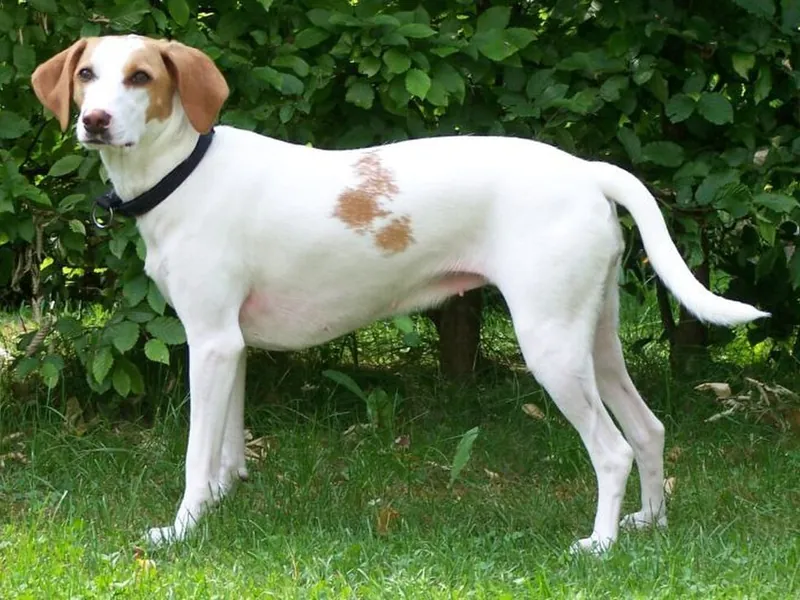
French White and Black HoundLarge French deer hound with a powerful voice
The French White and Black Hound, or Français Blanc et Noir, is a large, rangy pack hound from France, bred to hunt deer with a fine nose and a powerful voice. Friendly and easy to manage in a kennel, it is still a specialist for organized hunting packs rather than a dog for typical family homes.
Why people love the French White and Black Hound
- Friendly and easy to handle around people
- Very sociable with other dogs
- Tireless stamina for long hunting days
- Easy-care short coat
- Functional, moderate build bred for soundness
Things to consider
- Very high exercise needs
- Strong prey drive makes off-leash walks risky
- Pack-raised dogs need time to adjust to home life
- Loud, carrying voice
- Almost exclusively found in French hunting packs
Is this breed right for you?
10 questions · live resultHistory and Origin
France has a long tradition of vénerie, hunting with packs of hounds, usually followed on horseback. Large white-and-black hounds descended from the old Saintongeois and Gascon types were part of that tradition, and in the 19th and 20th centuries some English Foxhound blood was added to increase speed and stamina.
French huntsmen worked to fix a consistent type, and the breed standard was established in the mid-20th century. Today the Français Blanc et Noir is recognized by the FCI and is used mainly on deer, especially roe and red deer, and sometimes on boar. It is almost exclusively found in French hunting packs.
Size, Coat and Colors
The French White and Black Hound is a large, powerful scenthound built for long days behind deer. Dogs stand about 24 to 28 inches at the shoulder, with males at the upper end and females somewhat smaller. The FCI standard does not set a weight, and no reliable weight figures are published, but the breed is substantial without being heavy.
The head is long and fairly strong, with a slightly domed skull and a long muzzle. The ears are set low and turn slightly as they hang, reaching well down the muzzle. The chest is deep and the back straight, and the tail is long and carried in a gentle curve.
The coat is short and dense. The color pattern is distinctive:
- White base with a black blanket or large black patches
- Blue mottling or black speckles, often on the legs
- Tan markings above the eyes, on the cheeks and sometimes under the ears and on the legs
Males are noticeably more powerful in build.
Temperament and Personality
The FCI standard describes the breed as friendly and easy to handle in the kennel, qualities that matter when dozens of hounds live and travel together. It is generally good with people and very sociable with other dogs.
Its whole focus, however, is the hunt. These hounds have a very strong prey drive and are used to following a trail for hours. Most have little experience of indoor life, and those that join private homes need time to adjust to household routines.
Do French White and Black Hounds Bark a Lot?
Yes, they are vocal hounds. Their deep, carrying voice is part of how they work, letting huntsmen follow the pack over long distances.
On scent, they give voice almost continuously. At home, a well-exercised hound with company is usually quieter, but boredom, loneliness or nearby wildlife can trigger baying and howling. This makes the breed a challenge in suburbs or near close neighbors. Daily exercise, a canine companion and a predictable routine help reduce noise but rarely eliminate it entirely.
Are French White and Black Hounds Good With Kids?
French White and Black Hounds are generally friendly and easy to handle, and many are gentle with children. Their pack background makes them tolerant of handling and social with people.
Most dogs, however, are raised in kennels, not homes. A retired pack hound may be unfamiliar with indoor life, household noises and children's behavior. Its size and energy can also overwhelm young kids. Introductions should be calm and supervised, and children should learn to respect the dog's space during meals and rest. Families with older, calm children and experience with hounds are the best match.
Are French White and Black Hounds Good With Cats?
Generally not. These hounds are bred to follow game with intensity, and cats and small animals may trigger a strong chase response.
Some hounds raised with cats from puppyhood learn to accept them, but most dogs of this breed come from hunting packs with little exposure to household pets. Introductions should be slow, controlled and supervised, with secure spaces for the cat. Outdoors, many will chase cats regardless. Homes with rabbits, poultry or other small animals should keep them securely separated.
Exercise and Training
Exercise needs are very high. A pack hound may run for many hours on a hunting day.
- Pack hunting is the natural outlet; otherwise long daily runs on a long line or in large fenced land.
- Fencing must be high and secure; a hound on a trail will travel far.
- Training is built on pack routines and the huntsman's voice and horn rather than one-to-one obedience.
- It does best with other dogs for company.
Grooming and Shedding
The short, dense coat is white with a black blanket or large black patches, often with blue mottling on the legs and tan markings above the eyes and on the cheeks. Brush weekly with a hound glove.
After hunting days, check the feet, pads, ears and skin for cuts and thorns. The long ears should be kept clean and dry.
Feeding and Nutrition
A French White and Black Hound's food needs depend heavily on its workload. Pack hounds on regular hunting days burn far more energy than retired hounds living in a home. Adjust portions to body condition, aiming for a lean, athletic dog with easily felt ribs.
As a large, deep-chested hound, the breed may share the general risk of bloat. Feed two or more meals a day, allow time to rest before and after meals, and avoid feeding immediately before a hunt.
Hounds coming from packs are often used to set feeding routines and may eat quickly. A slow-feeder bowl and a calm, separate feeding area help, especially in homes with other dogs.
Retired pack hounds moving into homes often gain weight as activity drops. Reduce portions gradually and add long walks or scent games.
Young hounds should grow steadily on a diet suited to large breeds, without forced long runs before growth is complete.
Fresh water should always be available, especially after exercise.
Health and Lifespan
No breed-specific health data were found in reliable sources, and lifespan figures are not available. Hunting packs select for stamina and soundness, which tends to keep conformation moderate and functional.
As a large, deep-chested hound, it may share general large-breed risks such as hip problems and bloat. Feed smaller meals and avoid hard exercise right after eating.
French White and Black Hound Price and Cost of Ownership
The French White and Black Hound is almost never offered as a pet puppy in the US, and there is no reliable price range. Dogs are bred mainly within French hunting packs, and buying one usually means contacting French hunting associations. Prices vary by breeder, region and lines, and import, health certificates and transport add significant costs.
Retired pack hounds are occasionally rehomed in France, which is often the most realistic route for experienced hound owners.
Ongoing cost drivers include:
- High, secure fencing
- GPS tracking collars for any off-leash work
- Food for a large, active hound
- Insurance covering injuries and hip conditions
- Hunting licenses, pack fees or club memberships if the dog is worked
Is the French White and Black Hound Right for You?
This hound fits hunting packs and very experienced hound keepers.
- Good match: packs, rural properties with large fenced areas and other hounds.
- Poor match: apartments, suburbs, single-dog households, owners wanting off-lead walks.
Occasionally retired pack hounds are rehomed. They can be gentle companions, but they need secure fencing and patience while they learn house life.
French White and Black Hound Traits at a Glance
French White and Black Hound FAQ
How big is a French White and Black Hound?
It is a large hound, standing about 24 to 28 inches at the shoulder.
What does the French White and Black Hound hunt?
Mainly deer, especially roe and red deer, and sometimes wild boar, in packs.
Is the French White and Black Hound a good pet?
Generally not. It is bred for pack hunting and has very high exercise needs and strong prey drive.
Is it good with other dogs?
Yes. As a pack hound, it is usually very sociable with other dogs.
How is it different from the Grand Anglo-Français Blanc et Noir?
Both are large white-and-black French hounds; the Anglo-Français has more English Foxhound ancestry, while the Français Blanc et Noir keeps more of the old French type.