Spanish HoundSpain's long-eared, deep-voiced trailing hound
The Spanish Hound, or Sabueso Español, is a sturdy scenthound with long ears and a melodic voice, used in Spain to trail hare and track wounded game. Gentle and loyal at home, it is still a dedicated hunter that needs a rural, active owner.
Why people love the Spanish Hound
- Calm, affectionate and undemanding indoors
- Excellent blood-tracking and trailing ability
- Short coat needs only weekly care
- Loyal and attached to its family
- Melodic voice valued in the field
Things to consider
- Nearly impossible to call off a scent
- Vocal when trailing, bored or lonely
- Tolerates being alone poorly
- Long ears prone to injury and infection
- Very rare outside Spain
Is this breed right for you?
10 questions · live resultHistory and Origin
Scenthounds have hunted in the Iberian Peninsula for centuries, and the Sabueso Español is considered one of Spain's oldest hound types. It developed mostly in the north of the country, where hunters needed a determined trailing dog for mountainous, wooded terrain.
Traditionally it hunted hare and other game by following scent and giving voice. Today it is also valued as a blood-tracking dog, finding wounded deer and boar after a hunt. The breed is recognized by the FCI but remains uncommon outside Spain.
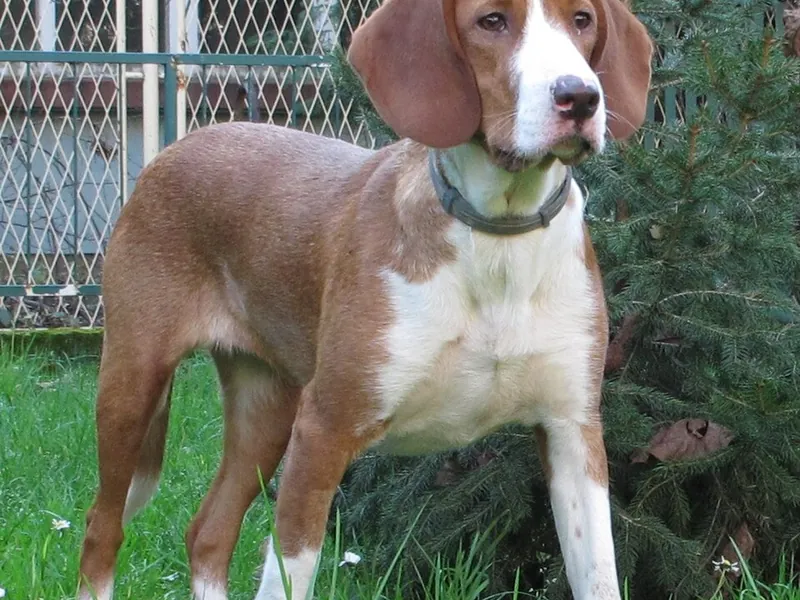
Spanish sources distinguish the Sabueso Español from other regional hounds by its heavy head, long low-set ears and slightly elongated body. Females are noticeably smaller than males, and the breed's deep, musical voice is considered part of its working character.
Size, Build and Colors
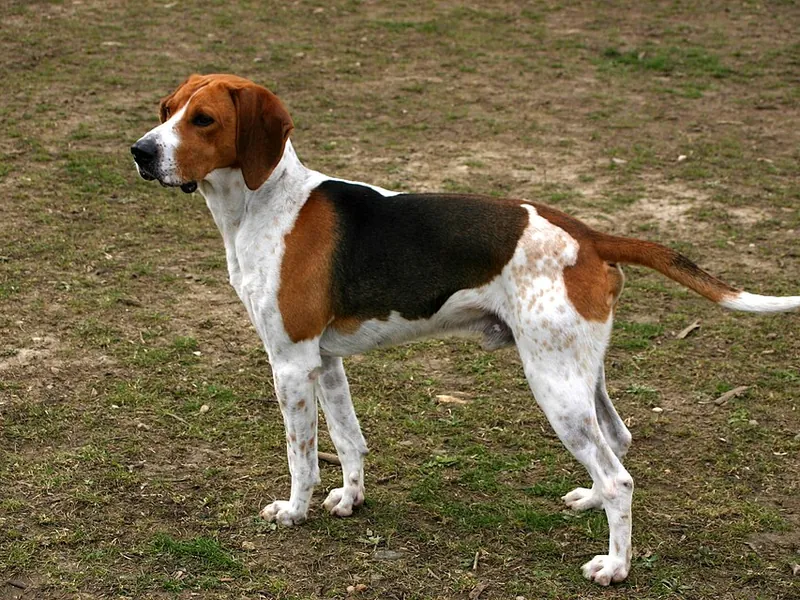
The Spanish Hound is a sturdy, medium-sized scenthound standing about 19 to 22 inches at the shoulder. It has a slightly elongated body, heavy bone and loose skin. Females are noticeably smaller than males, a feature emphasized in Spanish descriptions of the breed.
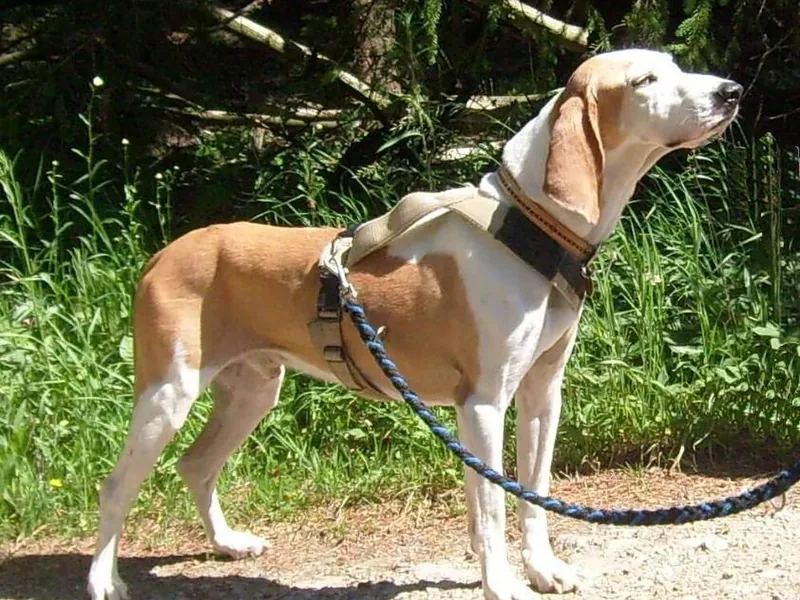
The head is heavy and long, with long, low-set ears that hang in folds and reach well past the muzzle. Loose skin forms a slight dewlap on the throat. The eyes are dark and gentle, and the expression is calm.
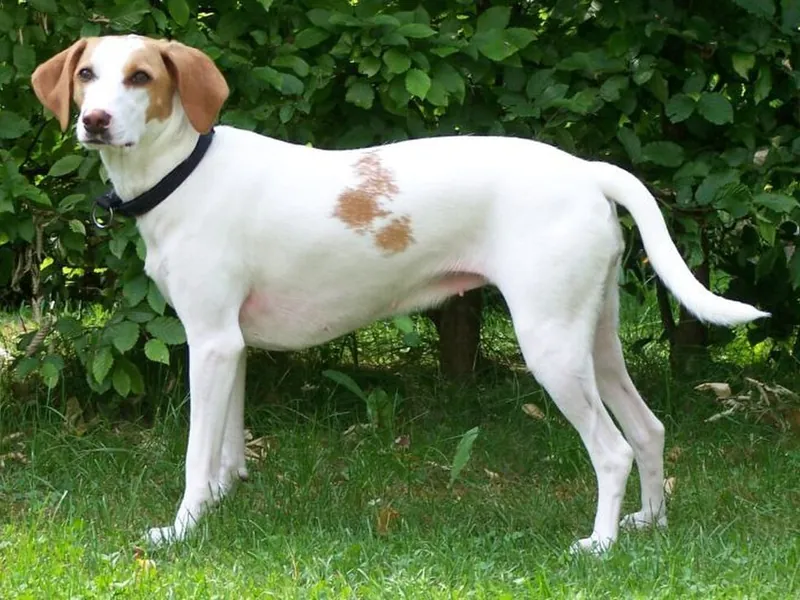
The coat is short, dense and fine. Typical colors are:
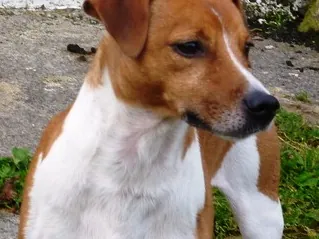
- White with orange patches, from light to deep orange
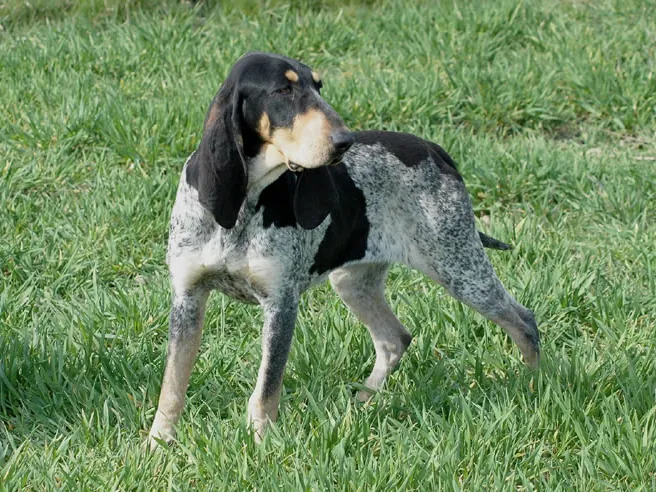
- White with black patches
The patches are often large and may cover the ears and head. The tail is thick at the base and carried low, raised slightly when working. The overall impression is of a powerful, enduring trailing hound rather than a fast runner.
Temperament and Personality
In the house the Spanish Hound is calm, affectionate and fairly undemanding. Many are quite attached to one person or family and like to rest close by.
On a trail it is a different dog: stubborn, focused and almost impossible to call off. It barks freely while hunting and may use its voice at home when bored or lonely. It tolerates being left alone poorly and does best with company for most of the day.
Are Spanish Hounds Good with Cats?
Some Spanish Hounds live with cats they are raised with, but their strong hunting drive means caution is essential.
Bred to trail hare and other game, they are naturally interested in small animals. A puppy that grows up with a household cat may learn to accept it, but adults without cat experience are likely to chase. Introductions should be slow and supervised, with escape routes for the cat. Small pets such as rabbits and guinea pigs should always be kept separate.
Can a Spanish Hound Live in an Apartment?
Spanish Hounds are better suited to rural homes with a yard than to apartments.
Indoors they are calm and undemanding, but their voice is the main problem. A bored or lonely Spanish Hound may bark or howl, which carries through walls. They also need generous daily exercise, ideally including scent work. A house with a fenced yard in a quieter setting, with access to fields or forests, suits them best. If apartment living is unavoidable, owners must commit to long daily outings and noise management.
Are Spanish Hounds Good for First-Time Owners?
Spanish Hounds can suit first-time owners who are active, patient and prepared for hound behavior, but they are not the easiest choice.
Their calm, affectionate nature at home is a plus. The challenges are a nose that overrides commands, a vocal nature and poor tolerance of being alone. Recall training needs a long line and patience. First-time owners should plan secure fencing, scent work and company for the dog most of the day. The breed is very rare outside Spain, so finding a puppy and breed support may also be difficult.
Exercise and Training
Daily exercise should be generous: long walks, hikes and, ideally, regular scent work. A bored hound will invent its own projects, often loudly.
- Keep it on a lead or long line in open country; prey drive is very strong.
- Tracking sports and blood-tracking training suit it perfectly.
- Teach calm behavior at home with chew items and a predictable routine.
- Training must be patient and positive. It is willing, but its nose often wins.
A practical routine is a long morning walk with plenty of time to sniff, a shorter evening outing and two or three short scent games at home. Hide treats or a scented toy and let the dog search; ten minutes of nose work often tires it more than a much longer walk.
Grooming and Shedding
The short, dense coat needs only a weekly rub with a grooming mitt. It is usually white with orange or black patches.
The ears deserve more attention than the coat. They are long and heavy, which makes them prone to injuries in brush and to infections. Check them after every outing, keep them clean and dry, and look for scratches on the ear tips.
Feeding and Nutrition
Spanish Hounds are sturdy, food-motivated dogs that can gain weight easily, especially when exercise drops outside hunting season. Check body condition regularly: you should feel the ribs and see a waist. Extra weight strains joints and reduces stamina.
Their long, heavy ears can dip into food and water bowls, leading to dirty, wet ears and infections. A narrow, deep bowl helps keep them out. Wipe the ears after meals if needed.
- Feed two meals a day for adults, three or four for young puppies.
- Avoid strenuous exercise right before and after meals.
- Use food rewards for recall and tracking training, and count them in the daily ration.
- Secure bins and counters, as hounds are skilled food thieves.
Puppies should eat a complete puppy food suited to medium to large breeds, with steady growth.
Health and Lifespan
No breed-specific inherited diseases are documented in reliable sources, and reliable lifespan figures are not available. The most common day-to-day issues relate to working life: ear infections, cuts, and wear on pads and joints.
Choose a breeder who health-checks breeding dogs, including hips, and keep the dog at a working weight. Loose skin and long ears need routine checks for ticks and grass seeds.
Spanish Hound Price and Cost of Ownership
Spanish Hounds are very rare outside Spain and essentially unavailable from US breeders. Anyone seeking one would likely need to import, adding travel, vaccinations and paperwork costs. Prices vary by breeder, region and lines.
Spanish hunting dog rescues sometimes rehome hounds abroad, including Sabuesos, which can be an option for experienced adopters.
Breed-specific ongoing costs include:
- Import or rescue transport fees.
- Ear cleaning supplies and vet visits for ear infections or injuries.
- Secure fencing for a scent-driven hound.
- Tracking or mantrailing classes.
Food costs are moderate, rising with activity.
Expect a long search, and be prepared to answer detailed questions from breeders or rescues about your experience with hounds.
Is the Spanish Hound Right for You?
This breed suits rural owners who hunt, track or hike daily.
- Good match: hunters, blood-tracking enthusiasts, active families in the country with secure fencing.
- Poor match: apartments, quiet neighborhoods, homes where the dog would be alone for hours, households with small pets.
If you are drawn to its gentle face, be honest about the hunting instinct behind it.
Spanish Hound Traits at a Glance
Spanish Hound FAQ
How big do Spanish Hounds get?
They stand about 19 to 22 inches at the shoulder and have a solid, slightly long body with long ears.
Are Spanish Hounds noisy?
They are vocal, especially on a trail, and may bark or howl when bored or left alone.
Is the Spanish Hound a good family dog?
It is gentle and affectionate indoors, but it needs an active family that can meet its exercise and hunting needs.
Do Spanish Hounds need a lot of grooming?
No. The short coat is easy, but the long ears need regular checks and cleaning.
Can a Spanish Hound be off leash?
Only in securely fenced areas. Once it picks up a scent, recall becomes unreliable.
What is the Spanish Hound used for today?
Besides hunting hare, it is widely valued for blood tracking, finding wounded game after a hunt.