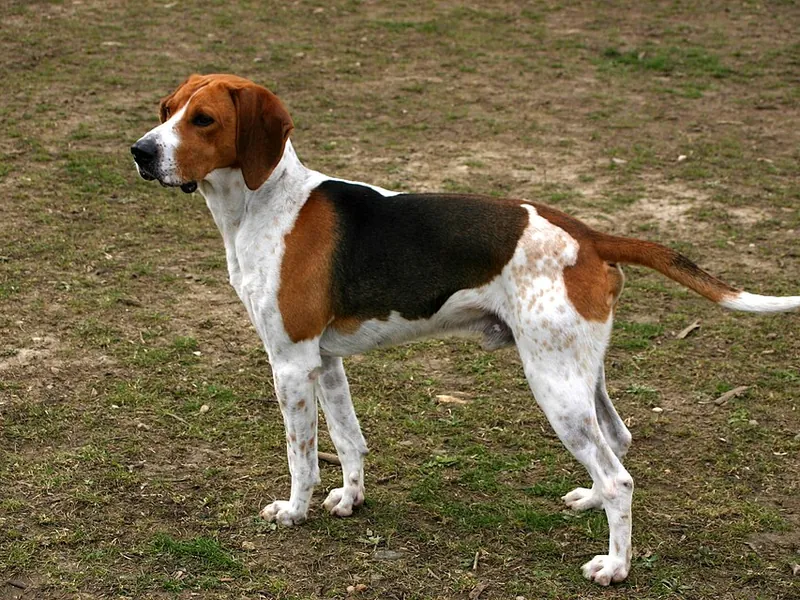
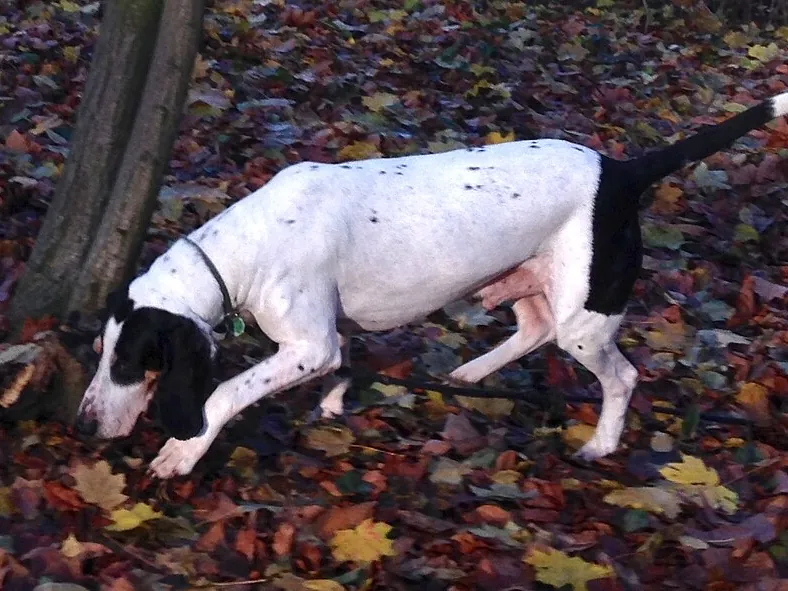
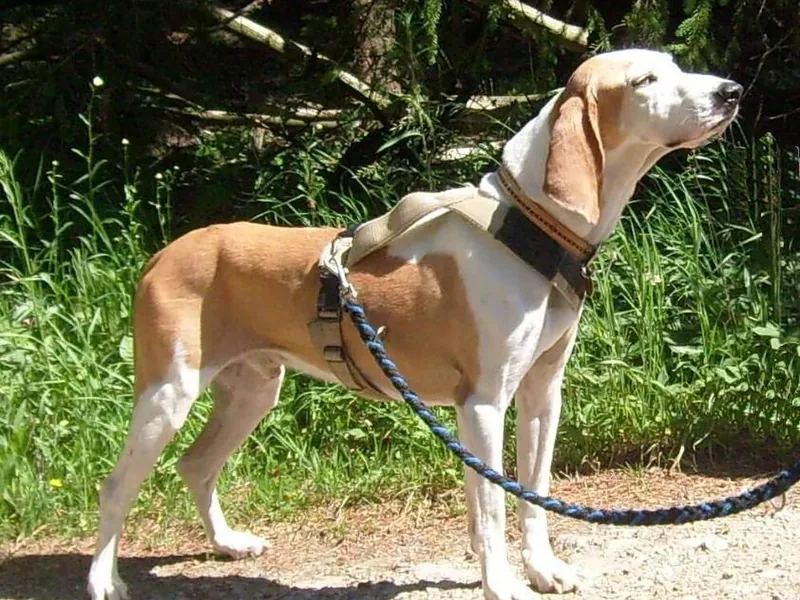
Petit Bleu de GascogneGascony's gentle hare hound
The Petit Bleu de Gascogne is a medium-sized French scent hound with the same blue-mottled coat and musical voice as its larger relative, refined for hunting hare. Affectionate and soft at home, it is still a pack hunter at heart and needs space, scent work and company.
Why people love the Petit Bleu de Gascogne
- Calm, gentle and affectionate with its people
- Sociable with other dogs after generations of pack life
- Short coat needs only a weekly brush
- Fine nose and musical voice for hare hunting
- Striking blue-mottled coat
Things to consider
- Loud, sustained baying on scent
- Recall easily overridden by scent
- Needs long daily outings with real nose work
- Very rare outside France
- Unsettled and vocal when left alone
Is this breed right for you?
10 questions · live resultHistory and Origin
The Petit Bleu was developed in Gascony, southwest France, by selecting smaller hounds from Grand Bleu de Gascogne stock. The aim was a lighter, handier dog for hunting hare in packs, where finesse of nose matters more than size. The word petit refers to its frame compared with the Grand Bleu, not to a small dog.
It has always been a working hound, kept by French hunting packs rather than as a pet, and it remains rare outside France. The FCI recognizes it in Group 6. Very little information exists about it as a household dog, so much of what owners report comes from hunting kennels.
Size, Coat and Colors
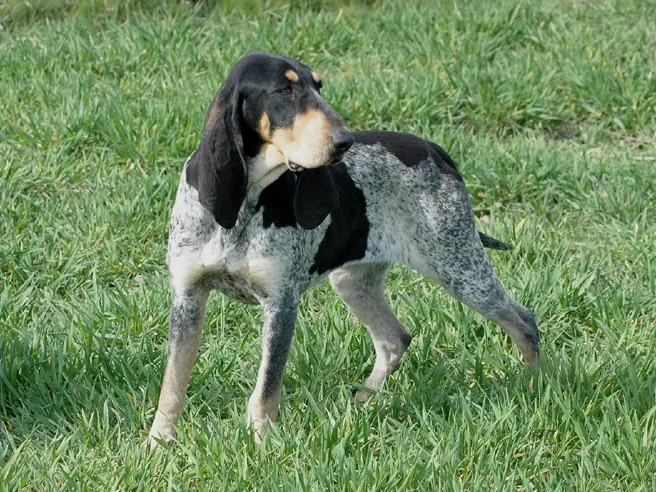
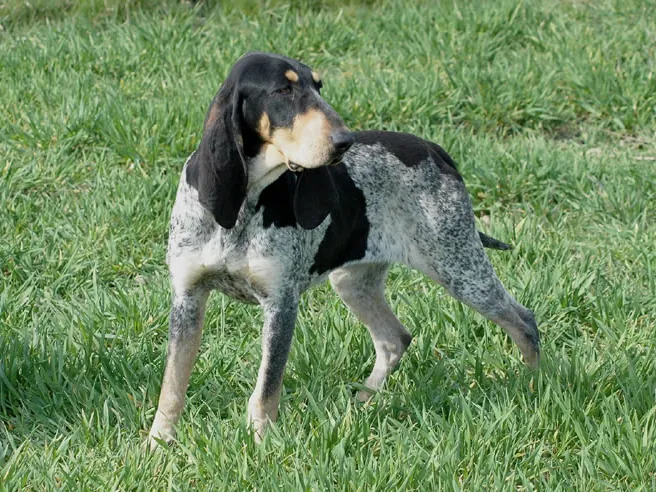
The Petit Bleu de Gascogne is a medium-sized, lean and elegant scent hound with a long head and long, thin, folded ears. Adults stand 20 to 23 inches at the shoulder. Despite the word petit, it is not a small dog; the name compares it with its larger relative, the Grand Bleu de Gascogne. Males are typically taller and stronger than females.
The coat is short, dense and fairly thick, with a weather-resistant feel.
The breed's signature is its color. The base is white so heavily mottled with black that the overall impression is a slate blue. Typical features include:
- Black patches, often covering the ears and around the eyes
- Tan markings above the eyes, giving a four-eyed look
- Tan on the cheeks, inside the ears, on the legs and under the tail
The ears are set low, thin and curled inward, reaching at least to the nose. The eyes are dark brown with a gentle, slightly sad expression. The tail is long and carried in a gentle sabre curve.
Temperament and Personality
Breed descriptions consistently call the Petit Bleu calm, gentle and affectionate with people. It tends to be sociable with other dogs, which reflects generations of pack life, and it is rarely a guard or watchdog.
On a trail, though, it becomes single-minded. It gives tongue freely, meaning it bays while following scent, and its voice is loud and sustained. It is happiest in company and can become vocal and unsettled if left alone for long periods.
Many Petit Bleus are described as soft and almost clingy with their own people, enjoying a spot on the sofa after a long day outdoors. That gentleness makes them sensitive to scolding.
Is the Petit Bleu de Gascogne Good for First-Time Owners?
Usually not. The Petit Bleu is gentle and affectionate, but its voice, hunting drive and exercise needs make it demanding for most beginners.
Challenges include:
- Loud, sustained baying that neighbors will hear
- Recall that fails once on a scent
- Long daily outings with real nose work
- Finding a dog outside France
A first-time owner who hunts or does tracking, lives rurally and has secure fencing can make it work. For most new owners, a quieter, less driven breed is a better choice.
Are Petit Bleu de Gascognes Good with Cats?
It depends on the dog and its upbringing. As pack hounds, Petit Bleus are generally sociable, and some live peacefully with cats they were raised with.
They are still bred to hunt hare by scent, so a running cat outdoors can trigger chasing, especially in the yard. Many dogs from hunting kennels have little experience with cats.
If you have cats, introduce a puppy early, supervise closely and give the cat safe high spots. Small pets such as rabbits and rodents should be kept separate. An adult hound without cat experience may never be fully reliable.
Is the Petit Bleu de Gascogne Easy to Train?
Moderately. Petit Bleus are gentle and attached to their people, and they respond well to calm, food-based training.
The challenge is focus. Once on a scent, the dog is single-minded, and recall becomes unreliable. Training priorities include:
- Leash manners and use of a long line in open areas
- Recall practice in low-distraction, fenced spaces
- Scent games and tracking, which use the dog's strengths
The breed is sensitive, so heavy corrections tend to backfire. Short, upbeat sessions and patience produce a cooperative, pleasant companion.
Exercise and Training
Plan on long daily outings with real opportunities to sniff and track. A short walk around the block will not satisfy a hound bred to work hare across open country for hours.
- Use a long line in unfenced areas; recall is easily overridden by scent.
- Scent games, tracking classes and pack walks with other dogs are excellent outlets.
- Keep training upbeat, food-based and consistent; heavy correction does not suit soft hounds.
Grooming and Shedding
The short, dense coat needs only a weekly brush with a rubber mitt. It does shed, so it is not a good choice for allergy sufferers.
Like all long-eared hounds, the Petit Bleu needs regular ear checks and cleaning to prevent infections. Inspect feet and coat for burrs, ticks and small cuts after outings in cover.
Feeding and Nutrition
The Petit Bleu is a lean, athletic hound built for long days on hare tracks. Its food needs vary a lot between a working dog in hunting season and a companion with daily walks. Adjust portions with activity and season, and keep the dog lean, with ribs easy to feel and a defined waist.
Puppies grow into medium-sized dogs. A complete puppy food fed in measured portions supports steady growth and helps protect hips.
- Feed adults two meals a day rather than one large meal.
- Avoid hard exercise right before and after eating.
- On hunting days, a small breakfast and the main meal after work is easier on digestion.
- Use a deep, narrow bowl or snood so the long ears stay out of the food.
Scent hounds are often enthusiastic eaters and may raid trash cans or counters, so store food securely. Count training treats in the daily total. No breed-specific food sensitivities are documented.
Health and Lifespan
No breed-specific inherited diseases are well documented for the Petit Bleu de Gascogne, partly because the population is small and mostly kept by hunters. General concerns for hounds of this build include hip dysplasia and ear infections. Ask breeders whether parents have been hip scored and examined by a vet.
Reliable lifespan data is lacking; medium-sized hounds commonly live around 12 to 14 years with good care.
Petit Bleu de Gascogne Price and Cost of Ownership
The Petit Bleu de Gascogne is very rare in the US and not recognized by the AKC. Most dogs are kept by French hunting packs, so getting one usually means importing from France and building contact with breeders there. Prices vary by breeder, region and lines, and import costs add significantly.
Hound rescues sometimes place blue-ticked hounds, though purebred Petit Bleus are very unlikely to appear.
Breed-specific ongoing costs include:
- Import, travel and paperwork if buying from France
- Ear cleaning supplies and treatment of ear infections
- Secure fencing and long lines
- Tracking classes or hunting club fees
- Hip evaluation if breeding
- Insurance that covers hunting injuries
Is the Petit Bleu de Gascogne Right for You?
The Petit Bleu is best for rural owners, especially hunters or tracking enthusiasts, who have secure fencing, time outdoors and neighbors who will not mind a baying hound. It can be a kind, easygoing housemate when its needs are met.
It is not suited to apartments, long workdays or owners wanting off-leash freedom in open areas.
Before committing, visit a hunting kennel or breeder and listen to the dogs giving voice. If that sound in your backyard would be a problem, a quieter breed is a better choice.
Petit Bleu de Gascogne Traits at a Glance
Petit Bleu de Gascogne FAQ
How big does a Petit Bleu de Gascogne get?
Adults stand roughly 20 to 23 inches at the shoulder. It is a medium-sized, lean hound despite the word petit in its name.
Is the Petit Bleu de Gascogne a good family dog?
It is usually gentle and affectionate, but its exercise needs, voice and hunting drive make it best for active rural families.
Do Petit Bleus bark a lot?
They bay loudly, especially on scent or when bored or alone. This is a vocal breed.
Are Petit Bleu de Gascognes good with other dogs?
Generally yes. As pack hounds they tend to enjoy canine company and often do well with a second dog.
How long do Petit Bleu de Gascognes live?
Data is limited, but similar medium-sized hounds commonly live about 12 to 14 years.
Do Petit Bleu de Gascognes shed?
Yes. The short coat sheds steadily, though a weekly rub with a hound mitt keeps loose hair under control.