AriégeoisElegant Pyrenean hound with a passion for hare
The Ariégeois is a light, elegant scenthound from the Ariège region of southwestern France, bred to hunt hare in hilly country. Affectionate and willing at home but passionate in the field, it suits hunters and very active rural households.
Why people love the Ariégeois
- Gentle, affectionate nature at home
- More cooperative than many scenthounds
- Sociable with other dogs thanks to pack background
- Easy-care short coat
- Moderate, athletic build without extreme features
Things to consider
- Scent overrides recall in open country
- Needs a lot of daily activity
- Gives voice on scent and when lonely
- Small pets are at risk from its hunting drive
- Very rare outside France
Is this breed right for you?
10 questions · live resultHistory and Origin
The breed comes from the Ariège department, in the foothills of the French Pyrenees. Local hunters developed it around the beginning of the 20th century by crossing native medium-sized hounds with the large Gascon hounds of the region, aiming for a lighter, faster dog that could handle steep terrain.
The result was a hound with the white-and-black coloring and fine head of its Gascon relatives, but a more compact frame. It is used mainly on hare, and also on roe deer and wild boar. It is recognized by the FCI and remains rare outside France.
French hunters describe the Ariégeois as a briquet, meaning a medium-sized hound, lighter than the big pack hounds of the southwest. That size made it practical for hunters on foot in steep valleys, where heavier hounds tired faster.
Size, Coat and Colors
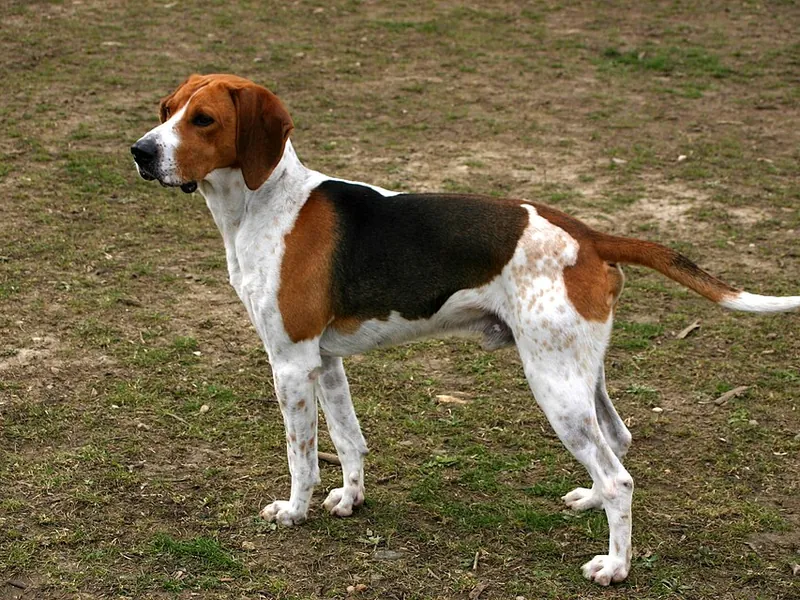
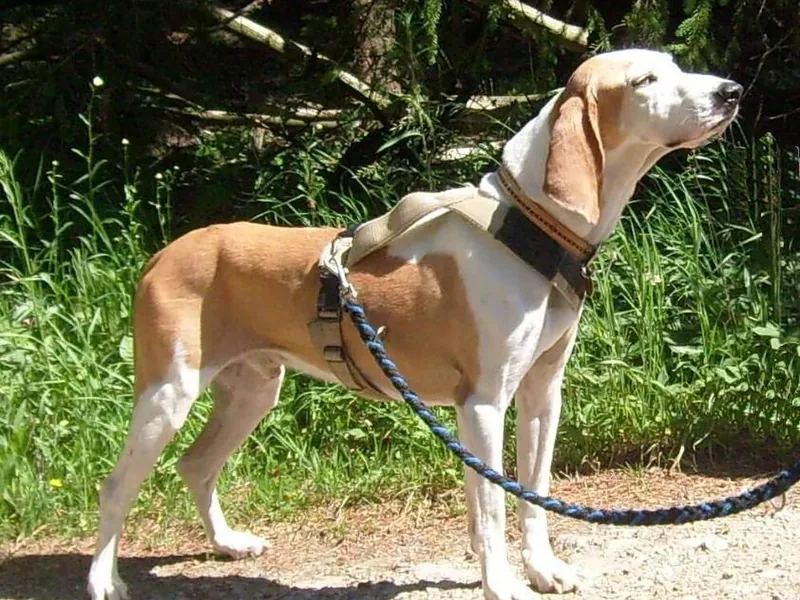
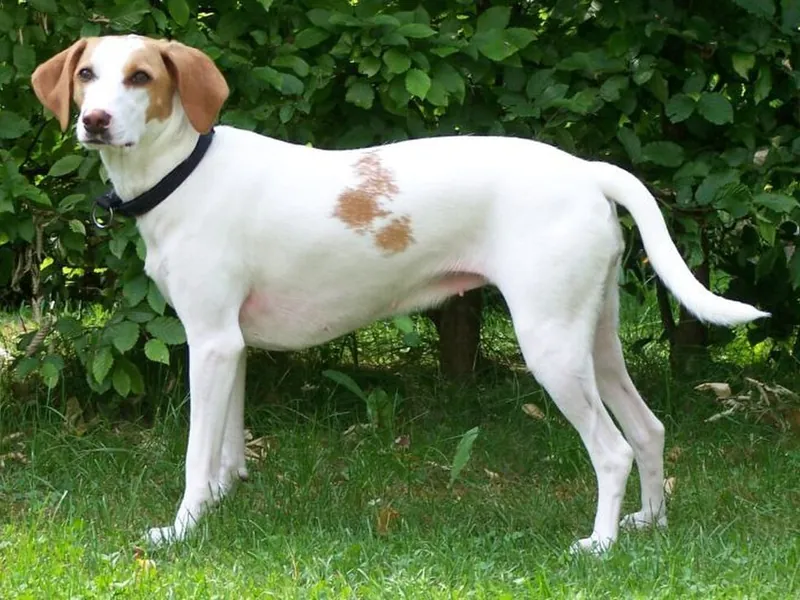
The Ariégeois is a medium-sized, light and elegant scenthound. Dogs stand about 20 to 23 inches at the shoulder, with females generally at the lower end. The FCI standard does not set a weight, and reliable weight figures are not published, but the breed is noticeably lighter and more finely built than the large Gascon hounds it descends from.
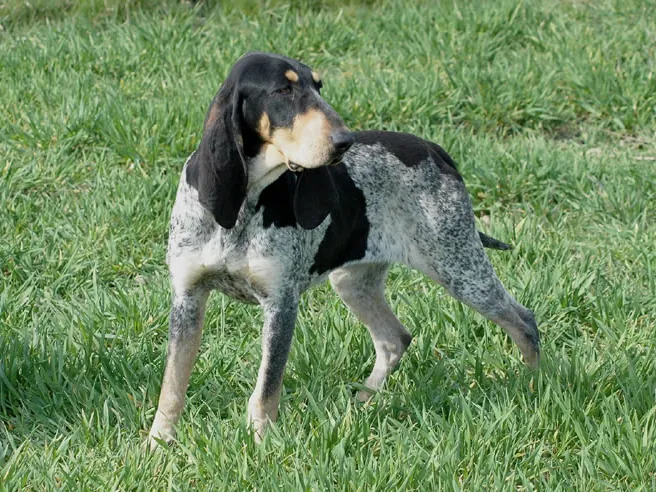
The head is long and fine, with a slightly arched skull and a long, straight muzzle. The ears are thin, supple and set low, hanging in a slight curl below the jawline. The neck is light and long, the chest moderately deep and the tail fine and carried in a saber curve.
The coat is short, fine and close-fitting. The standard color is:
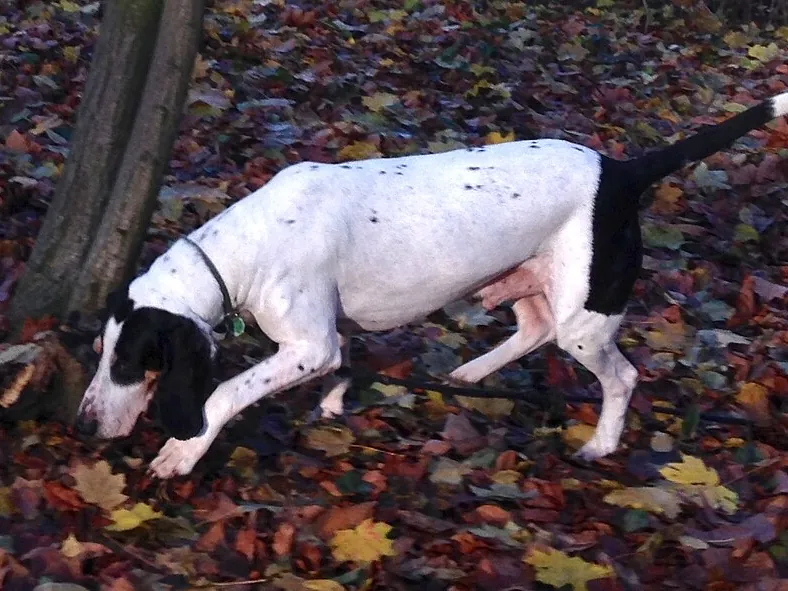
- White with black patches, clearly defined, sometimes with black speckling
- Tan markings above the eyes and on the cheeks, which should not be too intense
Males tend to be slightly taller and more solid than females, with a stronger head. The overall impression is of a balanced, lightly built hound made for long days in steep terrain.
Temperament and Personality
The Ariégeois is known for an affectionate, gentle nature. With its people it is soft and cooperative, and it usually accepts direction more readily than many scenthounds.
In the field it shows real passion and perseverance, working with its nose down and its voice going. It usually gets on well with other dogs, which reflects its pack background, but small animals are a different matter. It dislikes being left alone for long.
Is the Ariégeois a Good Family Dog?
The Ariégeois can be a gentle, affectionate family dog in the right setting, but it remains a working hound first. It is typically calm and friendly with people at home, including children who treat it kindly.
The challenges are exercise, voice and freedom. Families need time for long daily outings, a securely fenced yard and a plan for scent games or hunting. Off-leash walks in open country are risky because scent overrides recall. Rural families with active lifestyles and space to roam safely tend to do best with the breed.
Is the Ariégeois Good With Cats?
The Ariégeois is not naturally suited to homes with cats or small pets. It was bred to hunt hare and other game, and a running cat can trigger that instinct.
Some hounds raised from puppyhood with a calm, confident cat learn to accept it, but they may still chase cats outdoors or unfamiliar animals. Introductions should be slow and supervised, with gates and escape routes for the cat. Homes with rabbits, guinea pigs or poultry should keep them securely separated. If you already have a cat, a breeder or rescue that knows the dog's history can help assess the risk.
Can an Ariégeois Be Left Alone?
The Ariégeois copes poorly with long periods alone. As a pack hound, it is used to company, and a lonely dog may bay, howl or become destructive.
Short absences can be taught gradually, starting with a few minutes and a long-lasting chew after exercise. Many owners find that a second dog helps, since the breed is sociable with other dogs and was bred to live in packs. For long workdays, arrange a dog walker or a trusted person to visit. Neighbors are likely to hear a bored Ariégeois, so plan ahead.
Exercise and Training
This is a working hound that needs a lot of daily activity. Long walks are a minimum; hunting, tracking or regular runs in safe areas are better.
- Use a long line in open land; scent will override recall.
- Reward-based training works well thanks to its cooperative nature.
- Scent games at home help on days with less time outdoors.
- Company of another dog can help it cope with quiet periods.
A good weekly plan combines daily long walks with two or three sessions of focused nose work or free running in a fenced field. Young dogs should build stamina gradually; avoid forced long runs before growth plates close, usually around 12 to 18 months.
Grooming and Shedding
The coat is short, fine and dense, mostly white with black patches and tan markings on the face. A quick weekly brush is all it needs.
Its thin, long ears need regular checks for cuts and dirt. After hunting or hiking, look over the feet and skin for thorns, ticks and small injuries.
Feeding and Nutrition
The Ariégeois is a lean working hound, and its food needs depend closely on its activity. A dog hunting several days a week during the season may need substantially more than in the off-season or as a family companion. Adjust portions to body condition: ribs should be easy to feel and a waist visible.
Hounds are often keen eaters and opportunistic thieves. Measure meals, secure counters and trash, and avoid free feeding.
On hunting or long training days, feed a small meal several hours before activity and the main meal after the dog has cooled down. This supports stamina and reduces the risk of digestive upset and bloat in a dog with a moderately deep chest.
Young dogs should grow steadily on a diet suited to their adult size, with no forced long runs before growth is complete.
Fresh water should always be available, and hunting dogs should be offered water regularly during long outings.
Food rewards work well for recall and scent training. Use small, high-value treats and subtract them from the day's meals.
Health and Lifespan
No breed-specific health problems are listed in the main sources, and reliable lifespan figures are not available. The Ariégeois has a moderate, athletic build with no extreme features.
Choose a breeder who screens hips and keeps working dogs in good condition. Keep the dog lean, provide routine ear care and schedule yearly veterinary checks.
Ariégeois Price and Cost of Ownership
The Ariégeois is almost never bred in the US, and there is no reliable US price range. Most dogs are bred in France by hunters and hound breeders, and buying one usually means contacting French breeders or hunting clubs and arranging import. Prices vary by breeder, region and lines, and transport, health certificates and paperwork add significantly to the total.
Retired or surplus hunting hounds are sometimes rehomed in France, which can be an option for experienced hound owners.
Ongoing cost drivers include:
- Secure, high fencing to contain a scenthound
- GPS collar or tracking device for hunting or open-country walks
- Ear care and treatment of minor field injuries
- Insurance covering injuries and hip conditions
- Hunting licenses and club fees if the dog is worked
Is the Ariégeois Right for You?
The Ariégeois is a rural hound for active people.
- Good match: hunters, scent-sport fans, families in the country with secure fencing and time outdoors every day.
- Poor match: apartments, homes where the dog is alone during long workdays, households with free-roaming small pets.
Its gentle nature makes it pleasant to live with, provided its hunting drive is respected.
Ariégeois Traits at a Glance
Ariégeois FAQ
How big is an Ariégeois?
It stands about 20 to 23 inches at the shoulder with a light, elegant build.
What was the Ariégeois bred to hunt?
Mainly hare, though it is also used on roe deer and wild boar.
Are Ariégeois good with other dogs?
Usually yes. As pack hounds, most get along well with other dogs.
Is the Ariégeois easy to train?
It is more cooperative than many scenthounds, but recall around scent always needs management.
Can an Ariégeois live in an apartment?
It is not well suited. It needs lots of space and daily exercise and handles being alone poorly.
Does the Ariégeois bark a lot?
It gives voice while hunting and may bay when bored or lonely, but a well-exercised Ariégeois is usually quiet indoors.