DachshundBold badger hound with a long back
The Dachshund was built in Germany to follow badgers underground, and that job still shows in its courage, deep bark and independent streak. It comes in three coats and two main sizes, fits smaller homes and suits owners who enjoy a characterful dog and are willing to protect its long back.
Why people love the Dachshund
- Big personality in a portable, sturdy body
- Three coat types to suit different grooming preferences
- Often lives well into the mid-teens
- Adapts to apartments when stairs and jumping are managed
- Deeply loyal and affectionate with its own people
Things to consider
- High risk of back disease (IVDD) throughout life
- Persistent barker without early training
- House training is often slow
- Strong urge to dig and chase small animals
- Independent streak makes recall unreliable
Health note: this breed is affected by health concerns linked to its body shape. Read the health section and choose a breeder who health-tests and breeds for moderate features.
Is this breed right for you?
10 questions · live resultHistory and Origin
Dachshund simply means badger dog in German. Foresters and hunters in the German states developed the breed from the 1600s onward to locate badgers, follow them into their burrows and hold them at bay with loud barking until the hunter could dig down. The short legs, deep chest and paddle-shaped front feet were practical tools for that work, and smaller dogs were later used on rabbits and foxes.
Three coat varieties developed: smooth, wirehaired and longhaired. In Germany the breed is still tested as a working hound and is usually called Teckel or Dackel. The AKC recognized the breed in 1885 and shows it in two sizes, standard and miniature, while the FCI also recognizes an even smaller rabbit size measured by chest circumference.
Sizes, Coat Types and Colors
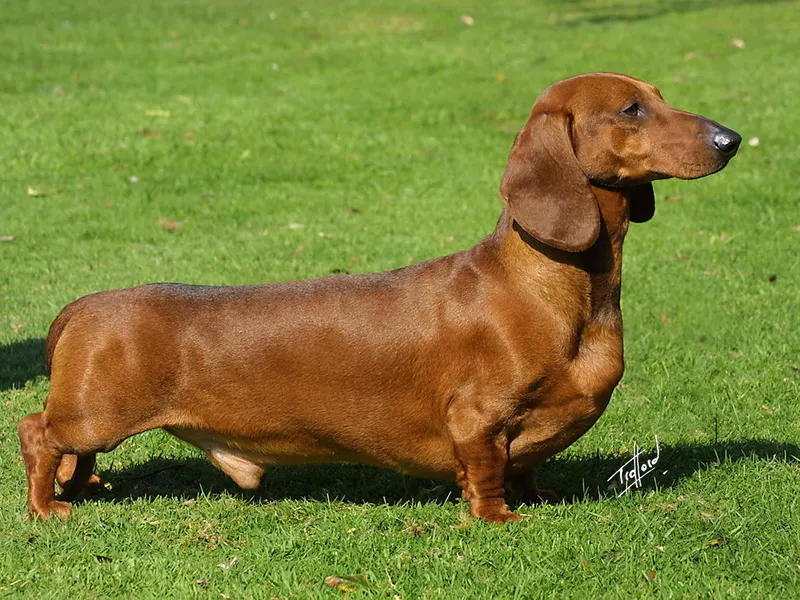
The Dachshund is long, low and muscular, with a deep chest, short legs and paddle-shaped front feet. Height sits around 5 to 9 inches at the shoulder, and weight runs from about 11 to 32 lb depending on size.
In the US there are two sizes. Miniatures weigh 11 lb or less as adults, while standards usually weigh 16 to 32 lb. Dogs between the two, often called tweenies, are common in pet litters. FCI countries add a third, smaller rabbit size measured by chest girth.
Each size comes in three coats: smooth (short and shiny), wirehaired (harsh outer coat with beard and eyebrows) and longhaired (sleek with feathering on ears, chest and legs). Colors include solid red and cream, two-colored combinations such as black and tan or chocolate and tan, and wild boar in wirehairs. Patterns include dapple, brindle and sable. Breeding two dapples together carries a high risk of deafness and eye defects, so reputable breeders avoid it. Males are usually a little heavier and broader in the head than females.
Temperament and Personality
A Dachshund is curious, brave and very sure of itself. Many are affectionate and playful with their own family yet reserved with strangers, and they announce visitors with a bark that sounds like it belongs to a much bigger dog. Barking is one of the most common complaints from owners, so plan to teach a quiet cue early.
The hunting instinct is strong. Expect digging, tunneling under blankets and intense interest in small animals. Dachshunds can live with cats they grow up with, but pet rodents should be kept secure. They bond closely with their people and often struggle when left alone for long stretches, which can show up as howling or destructive chewing.
Is the Dachshund Good for First-Time Owners?
Yes, for first-time owners who are patient and prepared to protect the dog's back. The small size and moderate exercise needs make daily life manageable, and the breed bonds closely with beginners and experienced owners alike.
The learning curve comes from three areas. Dachshunds bark readily, so a quiet cue needs teaching early. They make their own decisions, so training works through food rewards and short sessions rather than repetition. And the spine needs lifelong care: a lean weight, a harness instead of a collar, ramps or carrying on stairs and lifting with support under the chest and rear. A first-time owner who sets these habits from puppyhood usually does very well with the breed.
Are Dachshunds Hard to Potty Train?
Dachshunds are known as one of the slower breeds to house train, and many take several months longer than average. Their small bladders, stubborn streak and dislike of wet or cold weather all play a part.
What helps most:
- Take the puppy out after every meal, nap and play session, and on a fixed schedule.
- Reward immediately outdoors with a small treat.
- Use a crate sized for the dog during short absences.
- Clean accidents with an enzyme cleaner so the scent does not draw the dog back.
- Offer a covered potty area or a coat in bad weather.
Punishing accidents usually makes a Dachshund hide when it needs to go, which slows progress.
Can Dachshunds Be Left Alone?
Adult Dachshunds can usually manage four to six hours alone once they are trained and exercised, but they are not well suited to full workdays on their own. They bond closely with their people and many react to boredom or loneliness by barking, digging at doors or chewing.
Build alone time gradually from puppyhood, starting with a few minutes. Before you leave, give a sniffing walk and a food puzzle. Keep the dog in a safe area without furniture to jump from, since a lonely Dachshund that leaps off a sofa repeatedly risks its back. For longer days, a dog walker or a trusted neighbor at midday makes a real difference. Neighbors in apartments will often be the first to tell you if alone time is going badly.
Exercise and Training
Around an hour of daily exercise, split into two or three walks with plenty of time for sniffing, keeps a Dachshund fit and content. Scent games, such as hiding treats in the yard or in a cardboard box, satisfy the hunting brain without strain. Keep the dog lean, because extra weight puts direct stress on the spine.
Training takes patience. This breed was selected to make its own decisions underground, so it often weighs whether a command is worth following. Short sessions with food rewards work better than repetition or harsh corrections. House training can be slow, especially in cold or wet weather, so a consistent routine matters.
- Use a harness rather than a collar to reduce strain on the neck and back.
- Discourage jumping on and off furniture; ramps or steps help.
- Support the chest and hindquarters together when lifting the dog.
Grooming and Shedding
Care depends on the coat. Smooth Dachshunds need a weekly brush or wipe with a damp cloth and shed moderately. Wirehaired dogs have a harsh outer coat that should be hand-stripped a few times a year, plus tidying of the beard and eyebrows. Longhaired Dachshunds need brushing several times a week, with attention to the feathering behind the ears and on the legs, where tangles form first.
All varieties need regular nail trims and dental care.
Feeding and Nutrition
Weight control is the single most important feeding goal for a Dachshund. Every extra pound adds load to a spine that is already prone to disc disease, so you should be able to feel the ribs easily and see a waist from above. Weigh food rather than scooping it, and adjust portions to the dog's body condition rather than the bag.
Miniatures and standards have very different needs, and tweenies sit in between, so use the calorie table on this page for your dog's actual weight. Adults do well on two measured meals a day. Puppies need three to four small meals until about six months.
- Count training treats as part of the daily ration and use tiny pieces, since training a Dachshund takes a lot of rewards.
- Choose kibble that suits a small jaw, and add daily tooth brushing, because small breeds build up tartar quickly.
- Neutered dogs and seniors often need less food than before.
Begging is an art form in this breed. Keep table scraps out of the routine from day one.
| Adult weight | Less active | Typical adult | Very active |
|---|---|---|---|
| 11 lb | 330 kcal | 370 kcal | 470 kcal |
| 22 lb | 550 kcal | 630 kcal | 790 kcal |
| 32 lb | 730 kcal | 830 kcal | 1,040 kcal |
Estimates use the resting energy formula veterinarians work with (70 × body weight in kg0.75) and standard activity factors. Use the feeding guide on your food as a starting point and adjust to body condition. Puppies, seniors, pregnant animals and pets that need to lose weight have different needs, so ask your vet.
Health and Lifespan
The Dachshund's short legs come from chondrodystrophy, a genetic trait linked to the FGF4 gene that also makes the discs in the spine age early. Intervertebral disc disease (IVDD) is the main concern: roughly one in four Dachshunds is affected during its life, with signs ranging from back pain to hind-leg weakness or paralysis. Sudden reluctance to move, yelping when picked up or a wobbly gait need prompt veterinary attention.
Other conditions seen in the breed include progressive retinal atrophy (PRA), dry eye (keratoconjunctivitis sicca) and heart disease, particularly in miniatures. Several veterinary and welfare bodies caution against breeding for extremely short legs and long backs. Choose a breeder who avoids exaggerated proportions and uses the available eye and DNA tests. Typical lifespan is 12 to 16 years.
Dachshund Price and Cost of Ownership
Typical breeder price in the US$1,000 to $3,500
A Dachshund puppy from a reputable breeder in the US typically costs about $1,000 to $3,500. Prices vary by breeder, region and lines, and miniatures, longhairs and in-demand colors are often at the upper end. Unusually cheap puppies, or sellers advertising double dapples or rare colors as a premium, are warning signs.
Dachshund rescues and general shelters regularly have adults and seniors, and adoption is a good option for people happy to skip puppyhood.
The main ongoing cost driver is the back. IVDD treatment can range from medication and crate rest to spinal surgery, so pet insurance taken out early, before any back signs appear, is worth comparing. Wirehairs need hand-stripping a few times a year, which adds grooming fees unless you learn it yourself. Budget also for dental cleanings, ramps or steps for furniture and a well-fitted harness.
Is the Dachshund Right for You?
The Dachshund suits people who want a small but sturdy companion with plenty of personality, can provide company for most of the day and are comfortable with a dog that barks and has its own opinions. It adapts to apartments if neighbors tolerate some noise and stairs can be avoided or managed with a carry.
It is a weaker match for homes with very young children who may lift the dog awkwardly, for owners who are away all day, or for anyone wanting quick, reliable obedience.
Dachshund Traits at a Glance
Dachshund FAQ
Are Dachshunds good family dogs?
They can be, especially with older children who handle them gently. Dachshunds are devoted to their family but may snap if squeezed or picked up roughly, and their backs are vulnerable to injury.
How big do Dachshunds get?
Most stand about 5 to 9 inches at the shoulder and weigh up to about 32 lb. Miniatures weigh about 11 lb or less, while standards weigh about 16 to 32 lb, so check the size of the parents.
Do Dachshunds bark a lot?
Yes, they are one of the more vocal small breeds. They were bred to bark at quarry underground, so alerting comes naturally, but early training and enough activity keep it manageable.
How do I protect my Dachshund's back?
Keep the dog slim, use a harness, limit jumping from furniture and stairs, and lift it with one hand under the chest and one under the rear. See a vet quickly if you notice pain or weakness.
Are Dachshunds hypoallergenic?
No. Dachshunds shed moderately, with well-stripped wirehaired dogs usually shedding least, so people with allergies should spend time with the breed before committing.
How long do Dachshunds live?
A typical lifespan is 12 to 16 years. Many reach their mid-teens when kept lean and protected from back injuries.