Parson Russell TerrierTireless English terrier built for the hunt
The Parson Russell Terrier is a small, athletic working terrier bred to run with foxhounds and bolt foxes from their dens. It is clever, fearless and endlessly energetic, and it suits active owners who enjoy training and can channel a strong hunting drive.
Why people love the Parson Russell Terrier
- Small, sturdy and long-lived
- Clever and quick to learn
- Tireless partner for hiking and dog sports
- Affectionate with its people
- Easy-care smooth or broken coat
Things to consider
- Intense prey drive toward cats and small pets
- Digs, climbs and escapes from yards
- Barks when bored or under-exercised
- Can be argumentative with same-sex dogs
- Needs at least an hour of vigorous daily exercise
Is this breed right for you?
10 questions · live resultHistory and Origin
The breed is named after the Reverend John Russell, a hunting parson from Devon, England, who in the early 1800s bred terriers that could keep up with mounted foxhunts. His foundation female, Trump, is said to have been bought from a milkman in Oxford around 1819.
The Parson Russell is the longer-legged, more squarely built relative of the Jack Russell Terrier. Its chest should be small enough to be spanned by two hands, allowing it to follow a fox underground. The Kennel Club recognized the breed in 1990, and the AKC recognized it in 1997, originally as the Jack Russell Terrier before the name changed in 2003.
Size, Coat Types and Colors
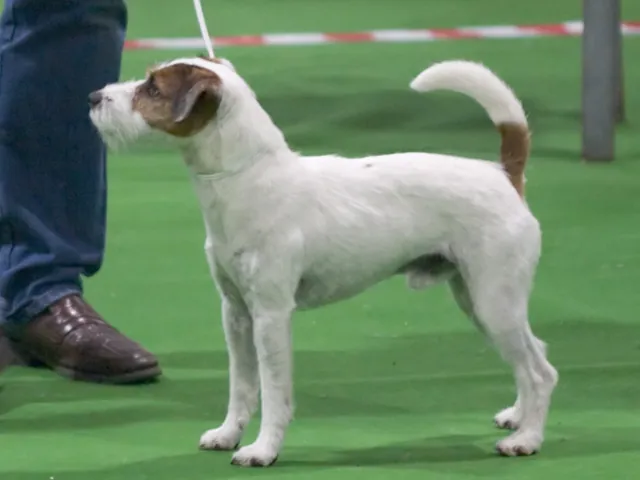
The Parson Russell Terrier is a square, athletic working terrier built for speed and endurance, with long legs compared with the Jack Russell. It stands about 12 to 15 inches at the shoulder and weighs roughly 13 to 18 lb. Under the AKC standard, the ideal is 14 inches for males and 13 inches for females, with males slightly heavier and more substantial.
A key feature is the chest: small and flexible enough to be spanned by two average hands behind the elbows, allowing the dog to follow a fox underground.
Two coat types are recognized:
- Smooth: short, dense and coarse, lying flat
- Broken: harsh and wiry, with a slight beard and eyebrows
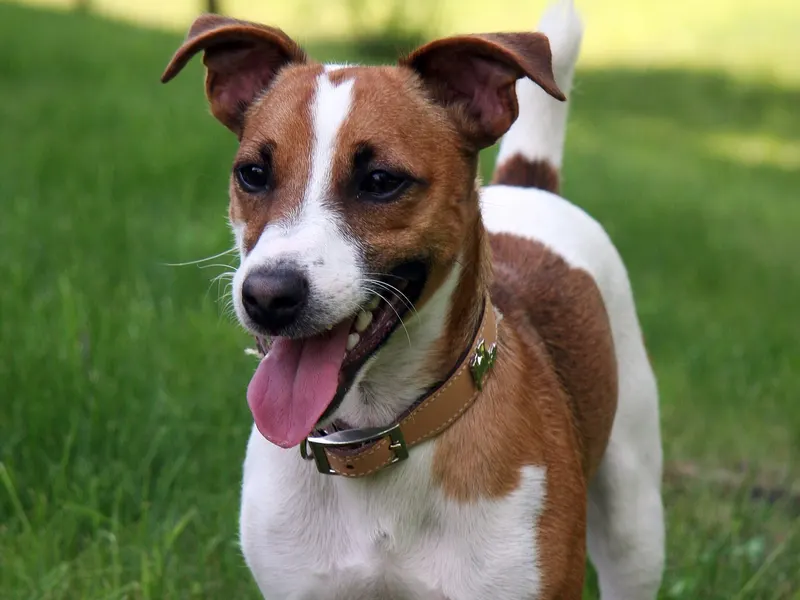
Color is white or predominantly white with tan, black or brown markings, or a combination of these (tricolor). Markings are usually limited to the head and the base of the tail. Grizzle (a mix of colors) is also accepted. Ears are small, V-shaped and folded forward.
Temperament and Personality
Parsons are lively, bold and inquisitive. They are affectionate with their people but very independent, a trait bred in for dogs that had to make decisions underground.
Their prey drive is intense: squirrels, rabbits, cats and pet rodents are fair game in their eyes. Some can be pushy or argumentative with other dogs, particularly of the same sex. A bored Parson tends to bark, dig and invent its own entertainment. They do not cope well with long hours alone.
Parsons are clever problem solvers: many learn to open cupboards, unzip bags and find hidden treats. They are often great companions for adults who enjoy training and want a small dog that can hike for hours.
Is the Parson Russell Terrier Good for First-Time Owners?
Usually not, unless the first-time owner is very active and keen on training. The Parson's size is manageable, but its energy, independence and prey drive are a lot to handle.
Beginners often struggle with escape attempts, digging, barking and the dog's strong chase instinct. A Parson needs at least an hour of vigorous exercise daily and plenty of mental work. A first-time owner who still wants the breed should commit to training classes, a sport such as agility or earthdog, and secure fencing, and should avoid homes with cats or small pets.
Is the Parson Russell Terrier a Good Family Dog?
It can be a fun family dog in an active household with older children. Parsons are affectionate and playful, and they enjoy games and outdoor adventures.
The breed is better suited to families with older, respectful children than toddlers, as it is energetic and may not tolerate rough handling. Homes with cats, rabbits or rodents are a poor match because of its intense prey drive. Families need to provide plenty of exercise, training and supervision. A Parson left alone or under-exercised is likely to bark, dig and find its own entertainment.
Is the Parson Russell Terrier a Good Apartment Dog?
It can live in an apartment, but only with a lot of daily exercise. Its size suits smaller homes, but its energy level is high.
Apartment owners should plan for at least an hour of vigorous exercise daily, plus training games and puzzle toys. Parsons can be vocal, so teaching a quiet cue early helps in buildings with close neighbors. They do not cope well with long hours alone. A home with a securely fenced yard is easier, but even then the yard needs to be dig-proof and climb-proof.
Exercise and Training
This breed needs a lot of exercise for its size: at least an hour of vigorous activity daily, plus mental challenges. Earthdog trials, agility, flyball and scent work are excellent outlets.
- Keep training short, fun and varied; Parsons learn fast but get bored.
- Teach recall early, but use a long line in areas with wildlife.
- Secure the yard; they dig under and climb over fences.
- Provide a digging pit or sandbox to redirect the urge to dig.
Grooming and Shedding
Parsons come in smooth and broken (rough) coats, both dense and weatherproof. Weekly brushing is enough for most; broken coats benefit from hand-stripping a few times a year to keep the texture. Shedding is light to moderate.
Check for burrs, scratches and ticks after outings, as these dogs push through dense undergrowth.
Most Parsons are predominantly white, with tan, lemon or black markings, mainly on the head and at the base of the tail. Bathe only when needed to preserve the coat's natural weatherproofing.
Feeding and Nutrition
Parsons are active, but their food needs vary greatly between a working terrier and a companion with daily walks. Adjust portions by body condition, aiming for a lean, athletic shape with a visible waist.
- Feed adults two meals a day; puppies usually get three or four meals until around six months.
- Use part of the daily ration for training, as Parsons train often and quickly learn to expect rewards.
- Puzzle feeders and scatter feeding channel their problem-solving and foraging instincts.
Parsons are clever at finding food, opening cupboards and raiding bags, so store food and medications securely. Small dogs are prone to tartar, so combine daily tooth brushing with vet-approved dental chews. Keep the dog lean to protect its knees, as luxating patellas are reported in the breed. No breed-specific diet-related conditions are documented.
| Adult weight | Less active | Typical adult | Very active |
|---|---|---|---|
| 13 lb | 370 kcal | 420 kcal | 530 kcal |
| 18 lb | 470 kcal | 540 kcal | 680 kcal |
Estimates use the resting energy formula veterinarians work with (70 × body weight in kg0.75) and standard activity factors. Use the feeding guide on your food as a starting point and adjust to body condition. Puppies, seniors, pregnant animals and pets that need to lose weight have different needs, so ask your vet.
Health and Lifespan
Parson Russells are generally hardy and commonly live 13 to 15 years. Inherited eye disease is the main concern: primary lens luxation (PLL), for which a DNA test exists, as well as cataracts. Kneecap luxation and deafness are also reported.
Ask breeders for PLL DNA results and current eye examinations, and consider hearing tests (BAER) for puppies.
Parson Russell Terrier Price and Cost of Ownership
Typical breeder price in the US$1,000 to $2,500
A Parson Russell Terrier puppy from a reputable US breeder typically costs around $1,000 to $2,500. Prices vary by breeder, region and lines. The breed is less common in the US than the Jack Russell, so waiting lists are normal. Ask for PLL DNA results, eye exams and BAER hearing tests.
Russell terrier rescues regularly have Parsons and Jack Russell mixes available, often adults whose energy level is known.
Breed-specific ongoing cost drivers include:
- Dig-proof and climb-proof fencing
- Hand-stripping for broken coats if you want to maintain texture
- Training classes and dog sport fees
- Eye exams and treatment if lens luxation develops
Is the Parson Russell Terrier Right for You?
A Parson suits experienced, energetic owners who enjoy dog sports, outdoor time and training a clever, independent dog.
It is less suited to homes with cats or small pets, to quiet households, to owners who are away much of the day, or to people expecting a calm small lapdog.
Parson Russell Terrier Traits at a Glance
Parson Russell Terrier FAQ
What is the difference between a Parson Russell and a Jack Russell?
Parsons are longer-legged and squarely built, standing about 12 to 15 inches tall, while Jack Russells are typically shorter-legged and longer than tall.
How big do Parson Russell Terriers get?
They usually stand 12 to 15 inches tall and weigh 13 to 18 lb.
Are Parson Russell Terriers good with cats?
Often not. Their prey drive is very strong, although some live with cats they were raised with.
Do Parson Russell Terriers bark a lot?
They can, especially when bored or under-exercised.
How much exercise does a Parson Russell need?
At least an hour of active exercise a day, plus mental work.
How long do Parson Russell Terriers live?
Most live 13 to 15 years.