Czechoslovakian WolfdogThe wolf-like working dog from Czechoslovakia
The Czechoslovakian Wolfdog looks strikingly like a wolf and has the stamina to match. Intelligent, loyal and highly independent, it is one of the most demanding breeds to own and suits only experienced owners who can offer intensive socialization, training and exercise.
Why people love the Czechoslovakian Wolfdog
- Remarkable endurance for long hikes and runs
- Deeply loyal to its family
- Generally robust and long-lived
- Rarely barks; communicates with body language
- Striking wolf-like appearance
Things to consider
- Needs about two hours of exercise daily
- Not suitable for first-time owners
- Escape artist; needs very secure fencing
- Wolfdog rules vary by jurisdiction
- Can howl or destroy things when left alone
Is this breed right for you?
10 questions · live resultHistory and Origin
The breed began as a military experiment in 1955 in former Czechoslovakia, when Karel Hartl and colleagues crossed German Shepherds with Carpathian wolves. The aim was a dog with the shepherd's trainability and the wolf's stamina, senses and resilience for border patrol work.
Later generations were bred dog to dog, and the breed was nationally recognized in 1982. Slovakia holds the FCI patronage. Today the dogs are used in search and rescue, tracking and herding, and as companions for dedicated owners. The AKC lists the breed as the Czechoslovakian Vlciak in its Foundation Stock Service.
Size, Coat and Wolf-Like Look
The Czechoslovakian Wolfdog is a tall, lean dog built for endurance. Breed standards set minimums rather than maximums: females stand at least 24 inches and weigh at least 44 lb, while males are clearly taller and heavier. The body is rectangular, slightly longer than tall, with a deep but not wide chest and long, straight legs.
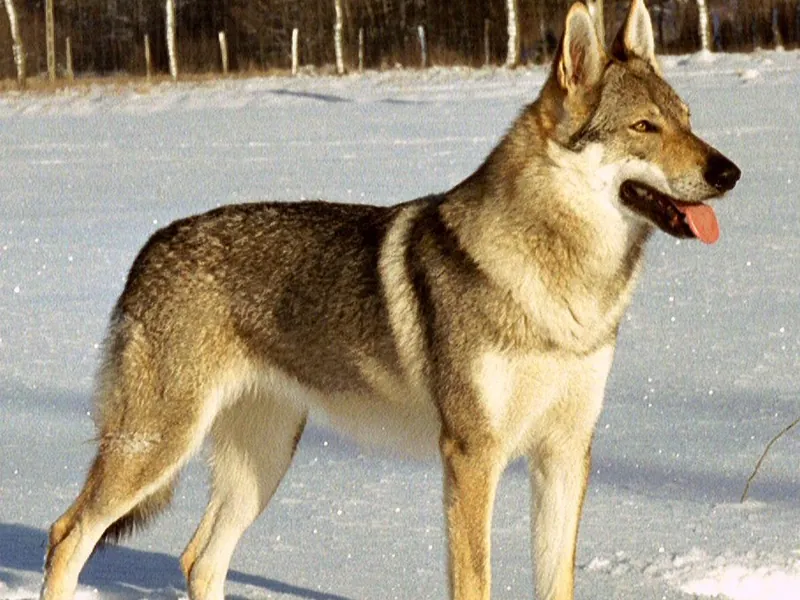
The resemblance to a wolf is deliberate. The head is wedge-shaped with a flat forehead, short triangular erect ears and slanted amber eyes. The tail is set high and hangs straight, lifting in a sickle when the dog is excited.
The coat is straight and close, with a dramatic seasonal difference: in winter a thick undercoat creates a dense, full coat that covers the belly and inner thighs, while the summer coat is much thinner. The color is yellowish gray to silver gray with a characteristic light mask. Dark gray with a light mask is also accepted. Females are more lightly built and usually have a slightly finer head.
Temperament and Personality
Czechoslovakian Wolfdogs are deeply loyal to their family and often attached to one handler. They are typically wary of strangers and need extensive early socialization to be confident in public. They tend to communicate with body language, howls and whines rather than barking.
They are fast learners but highly independent and can be easily bored. Many are sociable with dogs they know, while same-sex tension can occur. Small pets may trigger a hunting response unless the dog was raised with them.
Adolescence can be especially demanding: many CSVs test boundaries between about 1 and 3 years of age. Consistent rules and plenty of activity during this phase help produce a steady adult.
Are Czechoslovakian Wolfdogs Good Family Dogs?
They can be devoted family dogs for experienced, active households, but they are not a typical family pet.
A well-raised Czechoslovakian Wolfdog is loyal and affectionate with its own people and can be gentle with children it knows. However, it needs hours of daily activity, extensive socialization and an owner who can manage an independent, sometimes wary dog. Busy family life with frequent visitors and little time for training can be stressful for the breed. Supervise interactions with young children and visiting kids, and make sure everyone in the household follows the same rules. Families that hike, run and enjoy training together are the best match.
Can Czechoslovakian Wolfdogs Be Left Alone?
Not for long. Many Czechoslovakian Wolfdogs struggle with being alone and may howl, dig or try to escape.
The breed is strongly attached to its people and often to other dogs in the household. Alone-time training should start in early puppyhood, with very short absences that grow gradually, ideally combined with crate or pen training. A companion dog often helps. Before leaving, a long walk and a chew or food puzzle are useful. Even well-trained adults usually cope best with a few hours alone rather than a full workday, so plan for a dog walker or daycare if you work away from home.
Are Czechoslovakian Wolfdogs Legal?
The Czechoslovakian Wolfdog is a recognized dog breed, but some US states, counties and other countries regulate wolfdogs or wolf hybrids, and rules can be applied differently to recognized breeds.
The breed descends from crosses made in the 1950s and has been bred dog to dog for many generations. Most US jurisdictions treat it as a domestic dog, especially with registration papers, but definitions of a wolf hybrid differ. Check state and local rules, housing restrictions and your homeowner or renter insurance before buying. Keep registration and pedigree documents. Some airlines, boarding kennels and rental properties also have their own policies.
Exercise and Training
Exercise needs are very high. Expect long daily walks, hiking, running, bikejoring or canicross, ideally 2 hours or more. They thrive in tracking, mantrailing and other sports that combine endurance with problem-solving.
Training must be patient, consistent and motivating. Repetition bores them, and harshness destroys trust. Begin socialization in early puppyhood and continue through adolescence. Secure fencing is essential, as many are escape artists. Separation can be difficult, and some howl or destroy property if left alone; crate and alone-time training from a young age helps.
Many owners use a long line on hikes, as the breed has a strong drive to explore. Dog sports clubs familiar with the breed can be a valuable support network.
Grooming and Shedding
The straight, dense coat changes significantly with the seasons: the winter coat has a heavy undercoat that comes out in large amounts in spring. Brush weekly, and daily during shedding periods. The coat is typically yellowish-gray to silver-gray with a light mask. Baths are rarely needed.
During the heavy spring shed, an undercoat rake and a high-velocity dryer after a bath can save a lot of time and reduce hair around the house.
Feeding and Nutrition
Czechoslovakian Wolfdogs are often efficient eaters, and many need less food than owners expect for their size. Some have sensitive digestion, so changes of diet should be gradual over a week or more. Feed for a lean, athletic body: the ribs should be easy to feel and the waist clearly visible.
- Puppies mature slowly, both physically and mentally. Feed a growth diet suited to a medium-large breed and avoid rapid weight gain that strains growing joints.
- Feed adults two meals a day and adjust portions to activity, which often varies between seasons.
- Avoid long runs or bikejoring right after meals, as with any deep-chested, active dog.
Food is a strong motivator in training, but the breed can become possessive over resources. Teach calm behavior around the food bowl from puppyhood, give meals in a quiet place and supervise children near feeding time. Many owners use food puzzles and scatter feeding to provide mental work. Appetite often drops in summer and increases in winter with the coat change.
| Adult weight | Less active | Typical adult | Very active |
|---|---|---|---|
| 44 lb | 930 kcal | 1,060 kcal | 1,320 kcal |
Estimates use the resting energy formula veterinarians work with (70 × body weight in kg0.75) and standard activity factors. Use the feeding guide on your food as a starting point and adjust to body condition. Puppies, seniors, pregnant animals and pets that need to lose weight have different needs, so ask your vet.
Health and Lifespan
The breed is generally robust and long-lived, typically 12 to 16 years. Breed clubs recommend screening for hip and elbow dysplasia, degenerative myelopathy and pituitary dwarfism, a genetic condition also known in German Shepherds. Choose a breeder who shares these test results.
Czechoslovakian Wolfdog Price and Cost of Ownership
Typical breeder price in the US$1,500 to $3,000
A Czechoslovakian Wolfdog puppy from a reputable US breeder typically costs about $1,500 to $3,000, and imported puppies cost more once travel is included. Prices vary by breeder, region and lines. There are few breeders in North America, so expect waiting lists. Good breeders screen for hip and elbow dysplasia, degenerative myelopathy and pituitary dwarfism and often interview buyers closely.
Adoption is occasionally possible through breed clubs and wolfdog rescues.
Breed-specific ongoing costs start with containment: a tall, dig-proof fence or secure run is often necessary. Training support is also important, ideally a trainer familiar with primitive or wolf-like breeds. Check whether local permits, registration or insurance requirements apply to wolfdogs where you live, as some insurers and landlords restrict them. Equipment for canicross or bikejoring and travel to clubs can add up.
Is the Czechoslovakian Wolfdog Right for You?
This breed could suit you if you:
- Have extensive experience with demanding working breeds
- Can spend several hours a day exercising and training
- Have secure fencing and are rarely away for long
Some countries and jurisdictions regulate wolfdogs or wolf hybrids, and rules can differ for recognized breeds, so check local regulations. It is not suitable for first-time owners, apartments or busy households with little time.
Czechoslovakian Wolfdog Traits at a Glance
Czechoslovakian Wolfdog FAQ
Is the Czechoslovakian Wolfdog part wolf?
The breed was created from German Shepherd and Carpathian wolf crosses in the 1950s, but today it is bred dog to dog and recognized as a dog breed by the FCI.
How big do Czechoslovakian Wolfdogs get?
Females stand at least 23.5 inches tall and weigh at least 44 lb; males are larger, from about 25.5 inches and 57 lb.
Are Czechoslovakian Wolfdogs good for first-time owners?
No. Their independence, energy and socialization needs make them best for experienced owners.
Do Czechoslovakian Wolfdogs bark?
They bark relatively little and more often howl, whine or use body language.
How long do Czechoslovakian Wolfdogs live?
Typically 12 to 16 years.