Braque du BourbonnaisA biddable French pointer
The Braque du Bourbonnais is a compact French pointing dog with a finely ticked coat often compared to peach blossom. Gentle, easy to handle and keen in the field, it makes a fine companion for active families who hunt or train in dog sports.
Why people love the Braque du Bourbonnais
- Gentle, affectionate and cooperative
- Easy to train with calm, reward-based methods
- Easy-care short coat with a distinctive ticked pattern
- Close-working, versatile upland bird dog
- Usually quiet and settled indoors once exercised
Things to consider
- Needs an hour or more of running every day
- Rare in the US, with long waits for puppies
- Strong bird drive around poultry and pet birds
- Sensitive and loses confidence with heavy corrections
- Small founding population limits genetic diversity
Is this breed right for you?
10 questions · live resultHistory and Origin
The breed comes from the Bourbonnais region of central France, and pointing dogs of this type appear in descriptions going back to the 16th century. It was valued as a close-working, versatile hunting dog for the walking hunter.
By the mid 20th century the breed had nearly vanished after wars and a strict focus on breeding for a naturally short tail. In the 1970s, French enthusiasts led by Michel Comte revived it from the few remaining dogs, using careful outcrosses. Today it is established in France and has a following in North America, where the AKC records it in its Foundation Stock Service.
Size, Coat and Ticked Colors
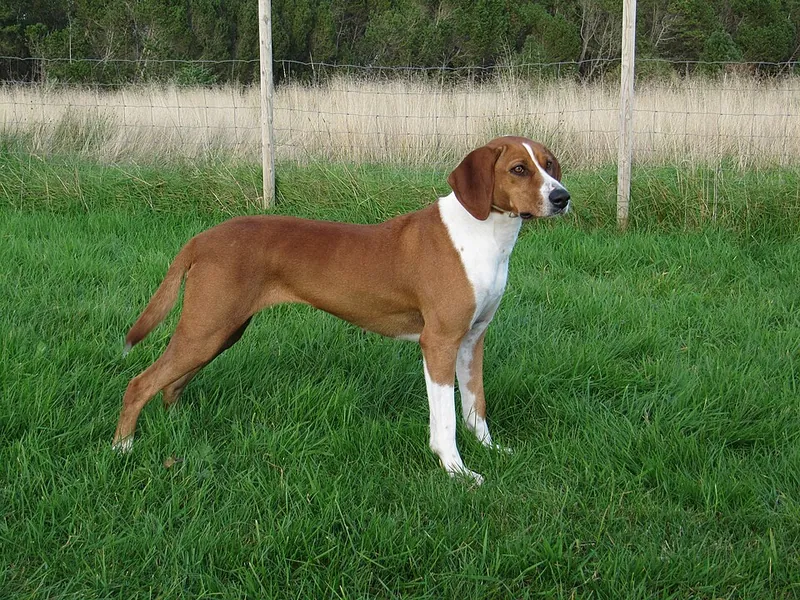
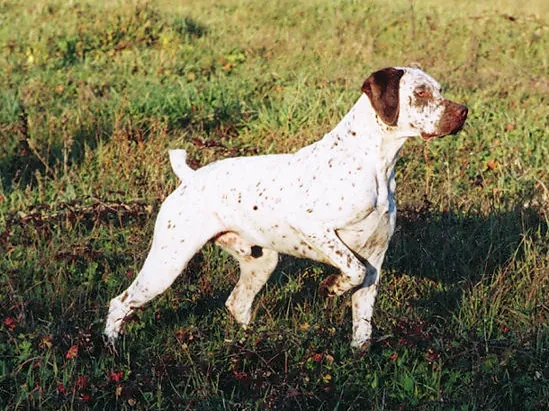
The Braque du Bourbonnais is a compact, muscular pointing dog with a short back, a broad, rounded head and a short, slightly tapered muzzle. It looks sturdy and powerful for its size rather than racy. Adults stand about 19 to 22 inches and weigh roughly 35 to 53 lb. Males are larger and heavier than females, typically sitting at the upper end of both ranges.
The coat is short, fine and dense, lying close to the body and a little coarser on the back. Its color pattern is the breed's hallmark: a white base densely covered with fine liver or fawn ticking, so the dog looks mottled from a distance. Liver-ticked dogs are traditionally described as lie de vin, or wine dregs, and fawn-ticked dogs as peach blossom. Small solid patches, especially on the head and ears, are common, but large patches on the body are not typical.
Some puppies are born with a naturally short tail, which breeders have long valued. Others have a longer tail.
Temperament and Personality
Bourbonnais are known for being calm, affectionate and cooperative. They form close bonds with their owners, tend to stay near the hunter in the field and are generally polite with visitors.
They are sensitive dogs that respond best to gentle handling. With proper socialization they get along well with children and other dogs, although their bird drive means small pets such as poultry and pet birds need supervision.
Indoors, a well-exercised Bourbonnais is usually quiet and content to lie near its people. It tends to be friendly rather than protective, so it is not a guard dog.
Is the Braque du Bourbonnais Good for First-Time Owners?
Yes, for active first-time owners it is one of the more approachable pointing breeds. The Braque du Bourbonnais is cooperative, gentle and eager to please, and it tends to work close to its person, which makes training easier than with many independent gundogs.
The main requirement is exercise. A young Bourbonnais needs daily running and mental work, ideally in safe off-leash areas, and gets restless without it. Beginners should also be ready for a sensitive dog that responds poorly to harsh corrections. Because the breed is rare, joining the breed club and talking to experienced owners before buying is a smart step.
Can a Braque du Bourbonnais Live in an Apartment?
It can, but only with a strong commitment to daily exercise. Indoors, a well-exercised Bourbonnais is usually calm and quiet, and its moderate size and easy coat suit smaller homes.
The challenge is that this is a working gundog that needs an hour or more of activity every day, including running rather than only leash walks. Apartment owners need regular access to parks, fields or secure areas where the dog can stretch out, and should add training or scent games. Without that, a young Bourbonnais can become restless, chew or bark. A house with a yard makes life easier but does not replace outings.
Is the Braque du Bourbonnais Good with Other Pets?
Usually yes with dogs, and often with cats raised alongside it, but birds are a different matter. The Bourbonnais is generally sociable and polite with other dogs, and many live happily in multi-dog homes.
Cats are often accepted when the dog grows up with them and is taught not to chase. The breed's strong bird drive, however, means pet birds, backyard chickens and other poultry need careful protection. Keep birds secure and out of reach, and supervise any contact. Rabbits and other small pets may also trigger interest. Early socialization and calm, consistent training go a long way.
Exercise and Training
This is an energetic gundog that needs daily running, ideally off leash in safe areas, along with mental work. An hour or more of activity a day is a good baseline, with more for young dogs.
Training is usually straightforward because the breed is biddable and eager to please. Pointing instinct often shows early. Field work, hunt tests, tracking, canicross and rally all suit it. Keep sessions positive; heavy corrections can make this soft breed lose confidence.
Grooming and Shedding
The short, fine coat is easy to care for: brush weekly with a soft brush or mitt and bathe only when needed. Shedding is light to moderate.
Check ears weekly and after field work, and inspect feet and coat for grass seeds, ticks and small cuts after hunting in cover.
The coat is white with dense liver or fawn ticking, giving the mottled appearance breeders call lie de vin or peach blossom. It is short and fine, so the dog may need a coat in cold, wet weather.
Feeding and Nutrition
The Braque du Bourbonnais is a working gundog, and its food needs rise and fall with its workload. A dog hunting several days a week during bird season may need noticeably larger portions than in the off-season. Adjust gradually and keep the dog lean, with easily felt ribs and a visible waist.
Puppies do well on three meals a day until about six months, then two meals. A complete puppy food for medium-sized breeds supports steady growth. Avoid long, forced runs and repetitive jumping until growth plates have closed, and keep puppies slim to protect their hips.
On hunting or long training days, offer water regularly and avoid feeding a large meal right before intense exercise. Many hunters give a small portion in the morning and the main meal after work, once the dog has cooled down.
The Bourbonnais is food-motivated and learns quickly with treats. Use small pieces and subtract them from meals. Check for grass seeds in the mouth and paws after field work.
| Adult weight | Less active | Typical adult | Very active |
|---|---|---|---|
| 35 lb | 780 kcal | 890 kcal | 1,110 kcal |
| 53 lb | 1,060 kcal | 1,220 kcal | 1,520 kcal |
Estimates use the resting energy formula veterinarians work with (70 × body weight in kg0.75) and standard activity factors. Use the feeding guide on your food as a starting point and adjust to body condition. Puppies, seniors, pregnant animals and pets that need to lose weight have different needs, so ask your vet.
Health and Lifespan
The Braque du Bourbonnais is described as a hardy breed, and no specific inherited diseases stand out in the sources we checked. Its revival from a narrow base means genetic diversity is a concern, so choose breeders who track pedigrees and screen for hip dysplasia and eye conditions.
Some puppies are born with naturally short tails. Typical lifespan is around 10 to 12 years.
Braque du Bourbonnais Price and Cost of Ownership
The Braque du Bourbonnais is rare in the US, with a small number of breeders and some imported dogs, so a reliable published price range is not available. Prices vary by breeder, region and lines, and hunting-proven parents or imported bloodlines can raise the price. Expect a waiting list, and look for breeders who screen hips and eyes and manage genetic diversity carefully. Rescue Bourbonnais are uncommon.
Ongoing costs are moderate. The short coat needs no professional grooming, and food costs are typical for a medium-sized active dog.
Breed-specific cost drivers include field training, hunt tests and related equipment, such as a GPS collar or blaze-orange vest, travel to hunting areas, and treatment for injuries or grass seed problems after work in cover. Insurance that covers accidents is worth considering for working dogs.
Is the Braque du Bourbonnais Right for You?
The Bourbonnais is an excellent fit for active households that hunt upland birds or want a trainable partner for outdoor sports. Its moderate size, easy coat and kind nature also suit families, provided its exercise needs are met.
It is not ideal for apartment life without daily running opportunities, or for owners who are away for most of the day.
Braque du Bourbonnais Traits at a Glance
Braque du Bourbonnais FAQ
How big is a Braque du Bourbonnais?
It is a medium-sized pointer, around 19 to 22 inches at the shoulder and about 35 to 53 lb.
Are Braque du Bourbonnais easy to train?
Yes, generally. They are cooperative and eager to please, and respond best to calm, reward-based training.
Are Braque du Bourbonnais good with kids?
With good socialization they are usually gentle and friendly with children, though young dogs can be bouncy.
Do Braque du Bourbonnais shed?
They shed lightly to moderately. A weekly brush keeps the short coat tidy.
How long do Braque du Bourbonnais live?
Their typical lifespan is about 10 to 12 years.
Do Braque du Bourbonnais have docked tails?
Some are born with naturally short tails. Whether others are docked depends on the country and its laws.