Ca de BestiarMallorca's black herder and farm guardian
The Ca de Bestiar, or Majorca Shepherd Dog, is a large, black farm dog from the Balearic island of Mallorca, used to move and protect livestock. It bonds intensely with one person and is wary of everyone else. It is a demanding breed for experienced owners only.
Why people love the Ca de Bestiar
- Devoted, loyal companion for one main person
- Serious, capable guardian of home and livestock
- Low-maintenance short coat in the common variety
- Tolerates heat well thanks to its Mediterranean background
- Hardy working dog bred for function over looks
Things to consider
- Suspicious of strangers and needs careful management with visitors
- Often quarrelsome with unfamiliar dogs
- Difficult to train for inexperienced owners
- Very rare outside Spain; puppies usually need importing
- Limited health and lifespan data available
Is this breed right for you?
10 questions · live resultHistory and Origin
The name means livestock dog in Mallorcan Catalan. For generations, farmers on Mallorca used these dogs to herd sheep, goats and cattle across rocky land and to guard farms and flocks. Selection focused on working ability and toughness in heat rather than looks.
The breed is recognized by the FCI and the Spanish kennel club, but it remains rare outside Spain and is not recognized by the AKC or The Kennel Club. Most dogs are short-haired, and a rarer long-haired variety also exists. The coat is black, sometimes with small white markings.
Size, Coat and Color
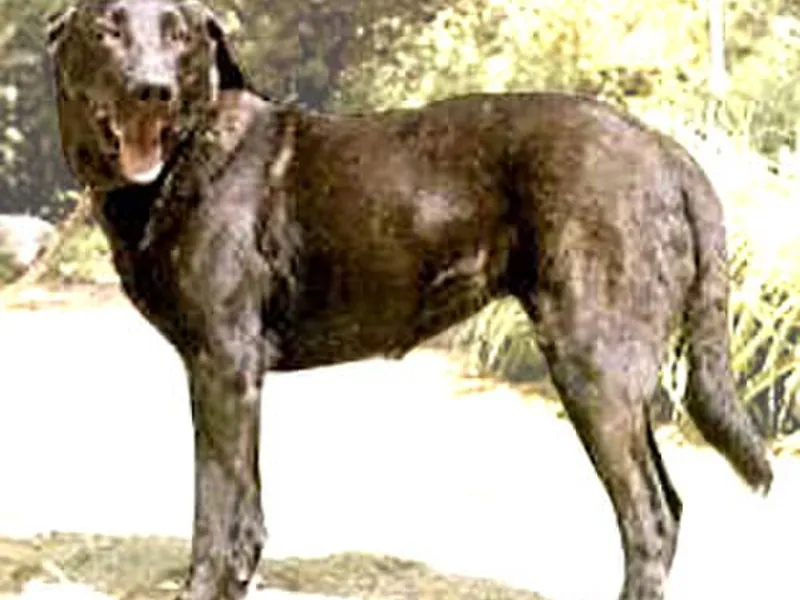
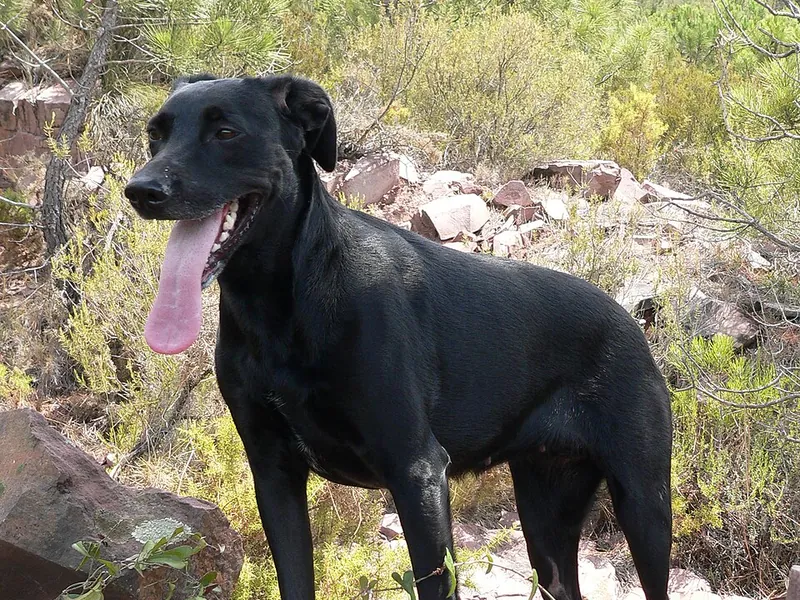
The Ca de Bestiar is a large, athletic, slightly longer-than-tall dog with a powerful but not heavy build. It has a long, strong head, medium almond-shaped eyes in amber to brown tones, and medium triangular ears that hang close to the head. The tail is long and thick at the base, reaching the hock.
Adults stand about 24 to 29 inches at the shoulder. Under the FCI standard, males are taller, roughly 26 to 29 inches, and females are slightly smaller, roughly 24 to 27 inches. Males also look more robust. No reliable weight range is given in our data, but the build should be agile and lean.
There are two coat varieties:
- Short-haired: the more common type, with a short, dense coat
- Long-haired: rarer, with a coat of moderate length that is fairly smooth
The only accepted color is black, sometimes with small white markings on the chest or toes. Large white areas are not desired.
Temperament and Personality
The Ca de Bestiar is loyal, brave and strongly fixed on one main person. It is naturally suspicious of strangers and will guard home and family seriously. It can be quarrelsome with other dogs, especially of the same sex.
This is not a dog that relaxes around a constant flow of visitors. It needs owners who can read its body language and manage introductions calmly. Information on behavior with children is limited; adult supervision is always essential.
Its reactions are fast and its guarding is serious, so visitors should be introduced under control. Many owners keep the dog in a separate area when guests arrive, especially guests unfamiliar with dogs.
Is the Ca de Bestiar a Good Guard Dog?
Yes, guarding is central to the Ca de Bestiar. On Mallorca it protected farms and livestock, and it remains naturally suspicious of strangers and serious about its territory.
For owners, that instinct calls for careful management rather than encouragement. The breed does not need protection training. It needs early, ongoing socialization, solid obedience basics such as recall, settle and leave it, and clear routines for visitors and deliveries. Many owners keep the dog in a separate area when guests arrive. Its reactions are fast, so a confident, experienced handler and secure, high fencing are essential.
Can a Ca de Bestiar Live in an Apartment?
No, an apartment is a poor match. The Ca de Bestiar is a large, active working dog that needs at least an hour of purposeful exercise a day and a secure property to watch over.
Shared hallways, elevators and frequent contact with neighbors and their dogs are stressful for a protective, one-person breed and can lead to difficult encounters. A rural property with secure, high fencing, ideally with livestock or real work to do, suits it best. Even with land, the dog needs daily time with its owner, walks and training, not just space.
Can You Get a Ca de Bestiar in the US?
Rarely. The Ca de Bestiar is recognized by the FCI and the Spanish kennel club but not by the AKC, and very few dogs live outside Spain. Most prospective owners need to contact breeders on Mallorca or elsewhere in Spain.
Importing a puppy involves research, communication with breeders, health certificates, vaccinations, microchipping and transport arrangements, so plan well ahead. Ask breeders about the parents' temperaments, working background and any hip or elbow screening. Because the breed is so rare, there is little support from local clubs, and experience with guardian dogs becomes even more important.
Exercise and Training
Daily exercise of at least an hour, with work or purpose, keeps the breed balanced. Farm tasks, long walks and structured activities such as tracking or obedience give it an outlet.
- Training is difficult: the breed is intelligent but independent and protective.
- Start socialization early and continue it throughout life.
- Use calm, consistent leadership and reward-based methods; harshness damages trust.
- Secure, high fencing is necessary.
The breed tolerates heat well thanks to its Mediterranean background, but still needs shade and water during hot weather work. Training should build reliable obedience basics, such as recall, settle and leave it, before guarding instincts fully emerge in adolescence.
Grooming and Shedding
The short, dense coat of the common variety needs only a weekly brushing. Black coats absorb heat, so provide shade and water in hot weather. The long-haired variety needs more frequent brushing. Trim nails and check ears regularly.
Feeding and Nutrition
The Ca de Bestiar is a lean, athletic working dog, and it should stay that way. Reliable breed-specific nutrition data is limited, so general large-breed guidance applies.
- Feed a puppy food suited to large breeds and keep growth steady and the puppy lean to protect developing joints.
- Puppies do well on three or four meals a day, and adults on two meals.
- As a large, deep-chested dog, it may share the bloat risk of similar breeds. Avoid one large meal and keep hard exercise away from mealtimes.
- Adjust portions to workload: a dog working livestock needs much more than one on daily walks.
Check body condition regularly. You should feel the ribs easily and see a defined waist. In hot weather, provide ample fresh water and shade, especially for black-coated dogs working outdoors. Use small rewards during training, which is an ongoing commitment with this independent breed. Discuss any diet changes with your veterinarian, particularly when importing a dog used to a different feeding routine.
Health and Lifespan
Reliable sources do not report breed-specific health problems, and there is no well-documented lifespan figure. As with any large working dog, ask breeders about hip and elbow screening and general health history of the parents.
Keep the dog lean and fit, protect young dogs from excessive jumping while they grow, and arrange regular veterinary checks.
Ca de Bestiar Price and Cost of Ownership
The Ca de Bestiar is very rare in the US, and there is no reliable typical US price. Most puppies come from breeders in Spain, and the overall cost depends on the breeder, lines and import expenses. Rescue dogs are almost never available outside Spain.
Cost drivers to plan for include:
- Import costs: transport, health certificates, vaccinations and microchipping
- Secure, high fencing for a guarding breed
- Professional training with someone experienced in guardian dogs
- Hip and elbow screening and general health checks
- Food for a large, active working dog
Grooming costs are low for the short-haired variety, which needs only weekly brushing.
Is the Ca de Bestiar Right for You?
The breed suits experienced owners with rural property, livestock or a real guarding role, who are prepared for serious socialization and training. It is not suitable for apartments, first-time owners, homes with many visitors, or multi-dog households without experience.
For the right person, it is a devoted, low-maintenance and hardy partner. Expect to contact Spanish breeders, as puppies are rarely available elsewhere.
Ca de Bestiar Traits at a Glance
Ca de Bestiar FAQ
How big is a Ca de Bestiar?
It stands about 24 to 29 inches at the shoulder. It is a large, athletic dog.
Is the Ca de Bestiar good for first-time owners?
No. Its protective, one-person nature and training difficulty make it a breed for experienced handlers.
Is the Ca de Bestiar good with other dogs?
Often not with unfamiliar dogs, especially same-sex ones. Careful socialization and management are needed.
What does Ca de Bestiar mean?
It means livestock dog in the Mallorcan dialect of Catalan.
Does the Ca de Bestiar need much grooming?
Very little. The short coat needs only weekly brushing.
Is the Ca de Bestiar good with children?
Reliable information is limited. Its protective, one-person nature means close supervision is essential, especially with visiting children.