Bucovina ShepherdRomania's massive, deep-voiced flock guardian
The Bucovina Shepherd is a massive livestock guardian from the mountains of northern Romania, built to stand off wolves and bears. Independent, watchful and loud at night, it is a serious working dog for experienced owners with land, not a casual family pet.
Why people love the Bucovina Shepherd
- Devoted, steady guardian of family and livestock
- Calm and gentle with animals it considers its own
- Hardy breed with no documented hereditary diseases
- Low exercise intensity, high territory needs
- Thrives outdoors in cold climates
Things to consider
- Barks loudly at night when patrolling
- Very independent and hard to train
- Wary of strangers and unfamiliar dogs
- Needs large, securely fenced land
- Almost impossible to find in the US
Is this breed right for you?
10 questions · live resultHistory and Origin
The Bucovina Shepherd takes its name from Bucovina, the historic region in the northeastern Carpathians of Romania. For generations, shepherds there relied on these heavy dogs to protect flocks and farmsteads from large predators. The breed was described in a Romanian standard in the 1980s and was later recognized by the FCI, which places it in Group 2 among the mountain and molossoid-type dogs rather than with the sheepdogs.
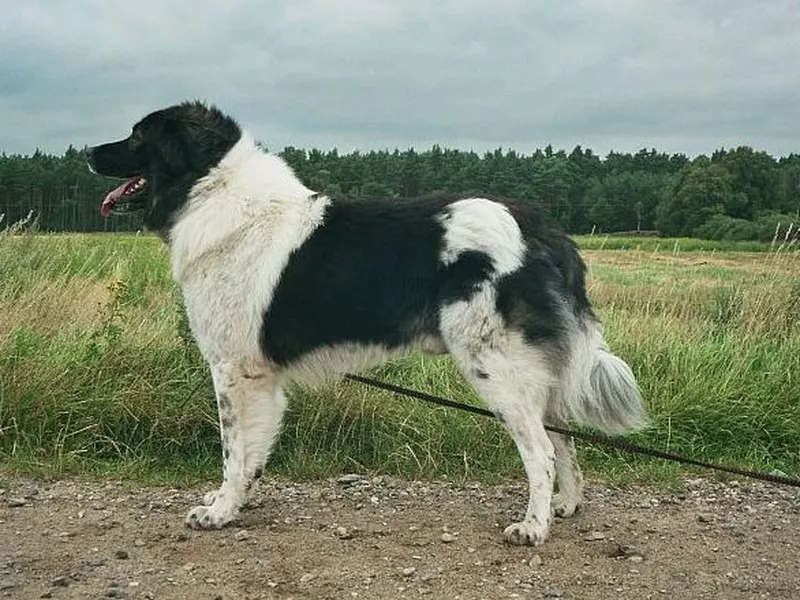
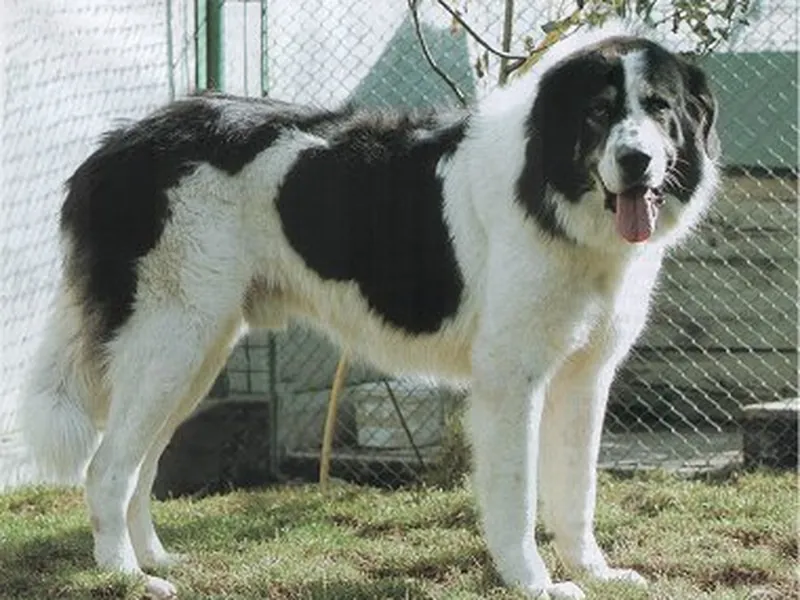
It is one of the largest Romanian breeds, standing roughly 25 to 31 inches (about 64 to 78 cm). The coat is usually white or cream with black or gray patches, though solid black-and-white patterns also occur.
Size, Coat and Colors
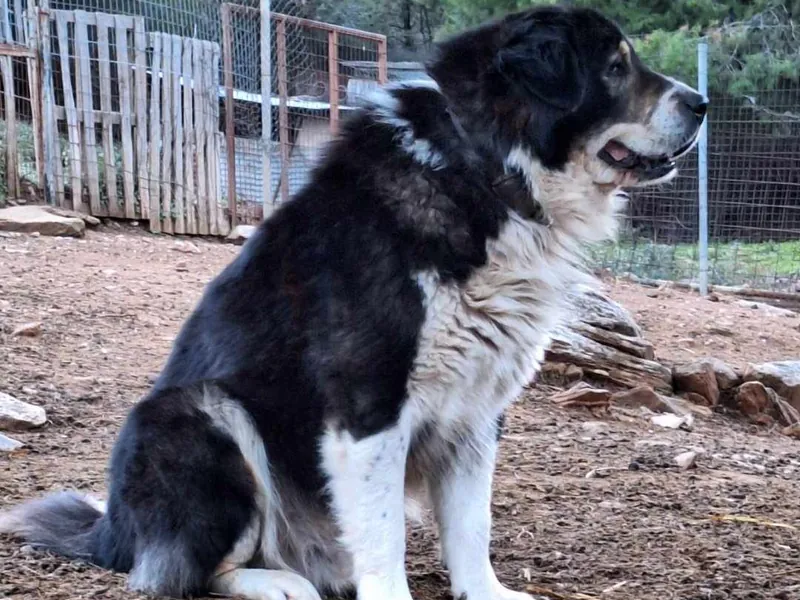
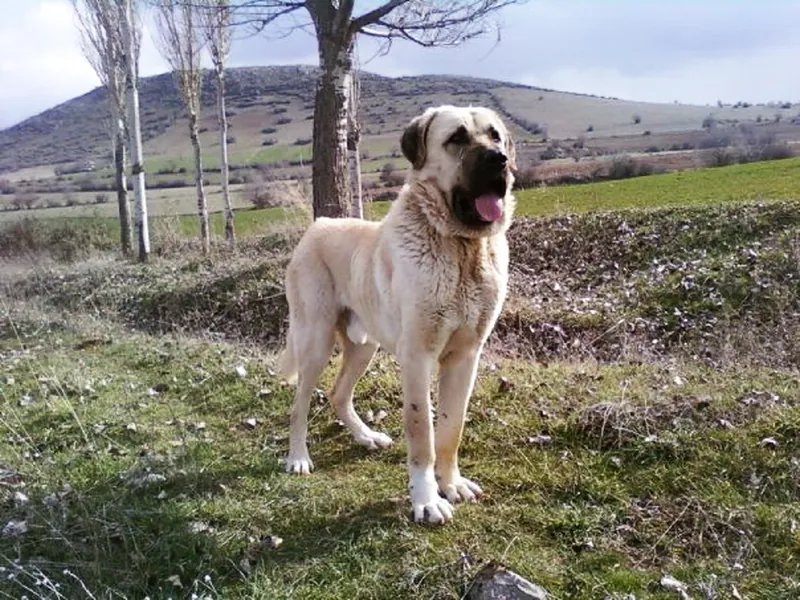
The Bucovina Shepherd is a massive, imposing livestock guardian standing roughly 25 to 31 inches at the shoulder, with males at the upper end of the range and females noticeably smaller. It is heavy-boned and slightly longer than tall, with a broad chest, a large head with a strong muzzle and V-shaped hanging ears, and a long tail carried low at rest and raised when alert.
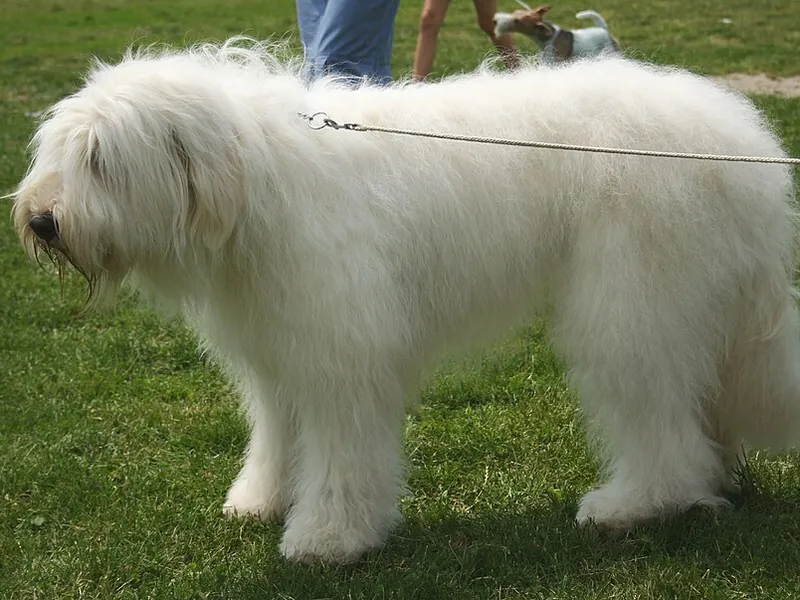
The coat is long, straight and harsh, over a dense, softer undercoat. It is shorter on the head and front of the legs and forms a fuller ruff on the neck and longer feathering on the backs of the legs and tail.
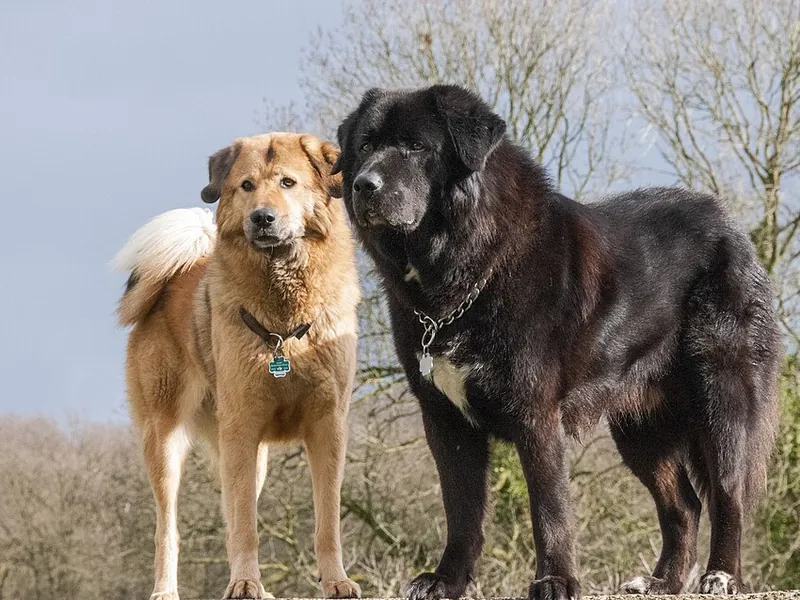
The usual color is a white or cream base with well-defined black, gray or brindle patches. Solid black or gray dogs also occur, often with white markings. Males are larger, heavier and more massive in head than females. Reliable weight figures for the breed are scarce, but adults are clearly giant-sized.
Temperament and Personality
Bucovinas are calm and steady with their own people and devoted to the family and animals they consider theirs. Toward strangers and unfamiliar dogs they are wary and protective. They were bred to make decisions without a shepherd present, so they are highly independent.
One of the most noticeable traits is their nighttime guarding. A Bucovina patrols and barks in a deep, far-carrying voice when it senses anything at the boundary, which is exactly right on a sheep farm and difficult in a neighborhood.
Is the Bucovina Shepherd Good for First-Time Owners?
No. The Bucovina Shepherd is a serious working livestock guardian, and it is best suited to people with experience of guardian breeds and enough land for it to patrol.
A first-time owner would face several challenges at once: a giant dog with a strong will, guarding behavior that needs careful socialization to stay appropriate, loud nighttime barking and training that progresses slowly because the dog decides for itself what is worth doing. Leash manners must be taught before the dog outweighs its handler. Beginners drawn to large, calm guardians usually do better with a breed bred more for companionship, or by gaining experience first with support from an experienced guardian-breed mentor.
Is the Bucovina Shepherd a Good Guard Dog?
Yes. Guarding is the breed's purpose. Shepherds in the Carpathians relied on it to protect flocks and farms from wolves and bears without human direction, and that instinct remains strong today.
A Bucovina watches its territory closely, especially at night, and warns with a deep, far-carrying bark. It is calm with its family but wary of strangers and unfamiliar dogs. Socialization from puppyhood helps it distinguish normal visitors from threats, and strong, tall fencing defines what it protects. It is a natural guardian rather than a trained protection dog, and it suits rural properties far better than suburban homes.
Are Bucovina Shepherds Good with Other Dogs?
Bucovina Shepherds usually accept dogs they live with, particularly when raised together, and on working farms they often guard alongside other livestock guardians. Toward unfamiliar dogs, though, they are typically wary and may treat them as intruders on their territory.
Same-sex tension between large guardian dogs is possible, so pairing a male with a female often works best. Introductions should be slow, controlled and on neutral ground. Dog parks and crowded walking routes are not a good fit. Smaller resident dogs and cats can be accepted as part of the household, but supervision is wise because a giant dog can injure a smaller animal accidentally.
Exercise and Training
This breed does not need high-intensity exercise, but it does need a large territory. A spacious, securely fenced property where it can patrol, plus daily walks, keeps it balanced. Puppies should grow slowly with moderate, self-directed exercise.
- Training is challenging. Expect a dog that understands what you ask and decides whether it is worth doing.
- Begin socialization very early and continue it into adulthood.
- Fencing must be tall and solid; guardians often test boundaries.
- Professional guidance from someone familiar with livestock guardians is a good investment.
Grooming and Shedding
The long, straight, harsh outer coat over a dense undercoat sheds heavily, especially during seasonal changes. Brush at least weekly, more often in shedding season, with an undercoat rake and a slicker brush. Pay attention to the thick hair on the neck, behind the legs and on the tail.
Baths are rarely necessary. Check ears and trim nails regularly, especially on dogs living mostly on soft ground.
Feeding and Nutrition
Bucovina puppies grow into giant, heavy-boned adults over two years or more, and steady growth is key to healthy joints. Feed a diet formulated for large or giant-breed puppies, keep the puppy lean, and avoid extra calcium or supplements unless your vet advises them.
Adult livestock guardians are often efficient eaters. A Bucovina that spends its day watching and patrolling may need less food than owners expect for its size. Judge portions by body condition, feeling for ribs under the thick coat rather than relying on appearance.
- Feed at least two meals a day to lower the risk of bloat, a known risk in giant, deep-chested dogs, and avoid exercise around meals.
- Dogs living outdoors in harsh winters may need more food during the cold months.
- Feed separately from other dogs, since guardians can protect food.
- Keep the adult lean to protect hips and elbows.
Health and Lifespan
No breed-specific hereditary diseases are named in the VDH or FCI breed information, and the Bucovina is generally described as a hardy breed. As a giant, heavy dog it still carries the typical risks of very large breeds: hip and elbow dysplasia, bloat and the strain that excess weight puts on joints. Reliable lifespan figures for the breed are not available.
Choose breeders who screen hips and elbows and who can tell you about the health of older relatives.
Bucovina Shepherd Price and Cost of Ownership
The Bucovina Shepherd is not recognized by the AKC and is extremely rare in the US, so there is no US price range. Most dogs come from breeders in Romania or elsewhere in Europe, and importing a giant puppy adds transport, veterinary paperwork and possibly quarantine costs. Prices vary by breeder, region and lines.
Livestock guardian rescues sometimes take in guardian-type dogs and mixes, which can be an alternative for experienced homes.
Ongoing cost drivers include tall, solid fencing for a large property, food for a giant dog, hip and elbow screening, and vet costs that scale with weight, such as anesthesia and medication. Heavy seasonal shedding means grooming tools or professional de-shedding. Insurance or savings for bloat surgery and joint problems are wise.
Is the Bucovina Shepherd Right for You?
The Bucovina is a fit for livestock owners and experienced guardian-breed keepers with ample land and no close neighbors bothered by barking. It is a poor fit for suburbs, apartments and first-time dog owners.
- Good fit: farms with livestock, rural properties, owners experienced with independent guardians.
- Poor fit: urban homes, households with frequent visitors, owners wanting obedience or dog sports.
Bucovina Shepherd Traits at a Glance
Bucovina Shepherd FAQ
How big do Bucovina Shepherds get?
They are giant dogs, standing roughly 25 to 31 inches tall, with males at the upper end.
Do Bucovina Shepherds bark a lot?
Yes. They guard actively, especially at night, and have a deep, far-carrying bark.
Are Bucovina Shepherds good with children?
They are usually tolerant and protective of children in their own family, but their size and guarding instinct require supervision, especially with visiting kids.
Do Bucovina Shepherds shed?
They shed heavily, particularly during seasonal coat changes, and need regular brushing.
Is the Bucovina Shepherd hard to train?
Yes. It is very independent and best suited to owners experienced with livestock guardian breeds.