Basset Bleu de GascogneShort legs, big nose, bigger voice
The Basset Bleu de Gascogne is a low-slung French scent hound with a blue-mottled coat, long ears and a powerful, howling voice. Cheerful and sociable, it is a charming companion for owners who can live with its noise, independence and love of a trail.
Why people love the Basset Bleu de Gascogne
- Friendly with people and other dogs
- Easygoing, affectionate companion
- Easy-care short coat
- Good stamina for long, sniffy walks
- Often enjoys living with another dog
Things to consider
- Loud, deep, persistent voice
- Strong scent drive; unreliable recall
- Long back needs care with jumping and stairs
- Long ears prone to infections
- Very rare in the US
Is this breed right for you?
10 questions · live resultHistory and Origin
The breed descends from the large blue hounds of Gascony, in southwest France. Short-legged versions appeared in the Middle Ages and were valued because they moved slowly enough for hunters on foot to follow, working rabbit and hare through dense cover.
By the late 19th century the type had nearly disappeared. In the early 20th century, French breeder Alain Bourbon rebuilt it, selecting for straighter legs and sound construction. It remains uncommon, but The Kennel Club in the UK records it on its Imported Breed Register.
Size, Blue Coat and Build
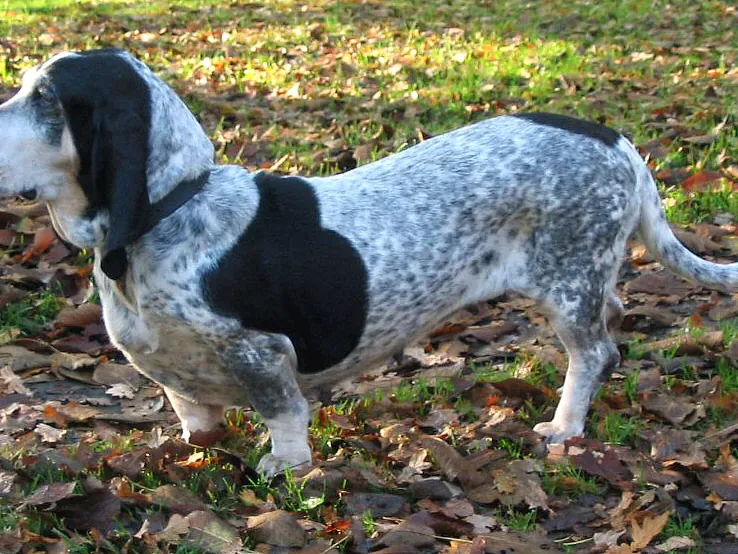
The Basset Bleu de Gascogne is a low-set, long-bodied scent hound standing 13 to 15 inches and weighing about 35 to 40 lb. It has a deep chest, a long back, short but strong legs and a noble head with a long muzzle and long, curled ears that hang well below the jaw. The tail is long, carried in a gentle curve.
The coat is short, thick and dense. Its signature color is called blue: a white base so heavily mottled with black that it appears slate blue. Most dogs also have black patches, often on the head and back, and tan markings above the eyes, on the cheeks, inside the ears and on the legs.
The Basset Bleu is lighter and more athletic than the familiar Basset Hound, with less loose skin and less exaggerated leg shortness. Males are usually slightly larger than females. Breeders who prioritize sound structure and moderate leg length help reduce strain on the spine.
Temperament and Personality
Bassets Bleus are friendly, affectionate and generally easygoing with people and other dogs, a legacy of pack hunting. They love company and do not like being left alone, which is often when the howling starts.
The voice is the defining trait: loud, deep and persistent. Combined with a strong hunting instinct, it means this breed needs owners with patience and neighbors who are not too close.
Its sociable nature means the breed usually gets along with other dogs, and many owners keep two. Cats raised with the dog can be accepted, but outdoor animals are fair game in its eyes.
Is the Basset Bleu de Gascogne Good for First-Time Owners?
The Basset Bleu de Gascogne can suit patient first-time owners who accept a vocal, nose-led hound, but it is not the easiest beginner's dog.
Its friendly nature is a plus. The challenges are the loud voice, unreliable recall and dislike of being alone. A first-time owner with a fenced yard, tolerant neighbors and time for long, sniffy walks can do well, especially with a second dog for company. Training requires consistency and food rewards rather than harshness.
A puppy class with a hound-friendly trainer and plenty of scent games make the first year much easier.
Is the Basset Bleu de Gascogne Good with Cats?
A Basset Bleu de Gascogne can accept cats it is raised with, but outdoor cats and small animals are often chased.
Its pack hunting background makes it sociable with other dogs, and many accept household cats when introduced early. However, its scent drive is strong, and unfamiliar animals may be pursued. Introduce a puppy to a calm, dog-savvy cat with plenty of escape routes. Pet rodents and rabbits should be kept securely out of reach.
Teach a solid leave-it and reward calm behavior when the cat moves around the house.
Can a Basset Bleu de Gascogne Live in an Apartment?
Apartment life is possible but not ideal, mainly because of the breed's loud voice.
The Basset Bleu de Gascogne is calm indoors after exercise, but its deep, persistent howling carries through walls, especially when left alone. Stairs can also strain its long back. If you live in an apartment, choose a ground-floor unit or one with an elevator, plan for at least an hour of walking daily and avoid leaving the dog alone for long periods.
Non-slip floors also help protect the long back during play indoors.
Exercise and Training
Despite short legs, this is a hound with real stamina. Give it at least an hour of walking a day, with plenty of time to sniff. Tracking and scent games are ideal.
Training requires consistency without harshness. Bassets Bleus are smart but nose-led, so recall is unreliable once they find a trail. Use a long line in open areas and secure fencing at home. Discourage jumping from heights and excessive stairs, especially in growing puppies, to protect the long back.
Keep weight in check: extra pounds put more strain on the long back and short legs. Measured meals and regular walks matter more than intense exercise.
Grooming and Shedding
The short, thick coat needs only weekly brushing. It sheds moderately and is not suited to allergy sufferers.
Ear care is essential. The long, low ears collect dirt and moisture, so check and clean them weekly. Wipe the face and ears after meals if they drag in food or water.
Feeding and Nutrition
Keeping a Basset Bleu de Gascogne lean is essential. Extra weight puts more strain on its long back and short legs, increasing the risk of spinal problems. Like many scent hounds, it loves food and will steal from counters if given the chance, so store food securely.
- Feed puppies three or four meals a day and adults two meals.
- As a deep-chested hound, it has some bloat risk. Feed smaller meals and avoid vigorous exercise right after eating.
- Use part of the daily ration as training rewards.
Check body condition often: the ribs should be easy to feel and the waist visible from above. Measure food with a kitchen scale rather than a cup. Wipe the face and ears after meals if they drag in food or water, which helps prevent ear infections. Scatter feeding or food puzzles give the nose a workout and slow down eating.
| Adult weight | Less active | Typical adult | Very active |
|---|---|---|---|
| 35 lb | 780 kcal | 890 kcal | 1,110 kcal |
| 40 lb | 860 kcal | 980 kcal | 1,230 kcal |
Estimates use the resting energy formula veterinarians work with (70 × body weight in kg0.75) and standard activity factors. Use the feeding guide on your food as a starting point and adjust to body condition. Puppies, seniors, pregnant animals and pets that need to lose weight have different needs, so ask your vet.
Health and Lifespan
The Basset Bleu de Gascogne has a long back and short legs, a body shape that can put strain on the spine. Keep it lean, limit jumping and use ramps where helpful. Its deep chest means bloat (gastric dilatation-volvulus) is a risk; feed smaller meals and avoid vigorous exercise right after eating.
Long ears make ear infections common. Choose a breeder who prioritizes sound structure and moderate leg length. Typical lifespan is about 12 to 14 years.
Basset Bleu de Gascogne Price and Cost of Ownership
The Basset Bleu de Gascogne is very rare in the US, and there is no reliable typical puppy price. Most dogs are found in France, and acquiring one may mean importing, which adds travel costs, health certificates and possibly a waiting period.
Adoption is rarely possible for this breed in the US, though hound rescues occasionally place similar breeds.
Breed-specific ongoing costs are modest. The short coat needs no professional grooming, and food costs are moderate. Budget for ear cleaning supplies and treatment of ear infections, secure fencing, and possibly ramps to protect the back. Insurance that covers spinal problems is worth comparing while the dog is young.
Is the Basset Bleu de Gascogne Right for You?
This breed suits people who enjoy slow, sniffy walks, have a fenced yard and are home much of the day, or have another dog for company. It is good-natured with family members and other dogs.
It is a poor match for thin-walled apartments, long workdays or owners who want a dog that comes back instantly when called.
Basset Bleu de Gascogne Traits at a Glance
Basset Bleu de Gascogne FAQ
How big is a Basset Bleu de Gascogne?
It stands about 13 to 15 inches at the shoulder and weighs roughly 35 to 40 lb.
Do Basset Bleu de Gascognes howl?
Yes. They have a loud, deep, howling voice and use it when tracking, excited or left alone.
Are Basset Bleu de Gascognes good family dogs?
They are friendly and sociable, and usually good with children and other dogs, but they need company and exercise.
Can a Basset Bleu de Gascogne be left alone?
Not for long. They dislike solitude and may howl or become destructive.
How long do Basset Bleu de Gascognes live?
Their typical lifespan is about 12 to 14 years.
Do Basset Bleu de Gascognes shed?
Yes, moderately. The short coat is easy to groom with a weekly brush, but it is not hypoallergenic.