American Leopard HoundSpotted tree dog with old roots
The American Leopard Hound is one of the oldest tree dog breeds in the US, used to hunt everything from raccoons to bear and cougar. Many have a striking leopard-spotted coat, though most are solid-colored. Devoted and protective with its family but reserved with strangers, it suits experienced owners with a rural, active life.
Why people love the American Leopard Hound
- Loving and very protective of family children
- Tough, versatile tree dog for many types of game
- Short coat needs only weekly brushing
- Generally sociable with other dogs
- Hardy breed, often living 12 to 15 years
Things to consider
- Vocal; bays on the trail and barks at the unusual
- High prey drive; cats and small pets at risk
- Reserved with strangers; needs early socialization
- Needs an hour or more of vigorous activity daily
- Hard to find outside hunting circles
Is this breed right for you?
10 questions · live resultHistory and Origin
According to the UKC breed standard, the American Leopard Hound is believed to descend from dogs brought to the New World by Spanish conquistadors and crossed with native dogs in Mexico. Settlers later brought these leopard dogs into the United States, where they were used especially for hunting bear.
Over time the breed became a versatile tree dog, hunting raccoon, bobcat, cougar, squirrel and other game that climbs. The UKC recognized it as the Leopard Cur in 1998 and renamed it the American Leopard Hound in 2008. The AKC has recorded it in the Foundation Stock Service since 2012. It is not recognized by The Kennel Club in the UK.
Size, Coat and Leopard Patterns
The American Leopard Hound is a medium-to-large, muscular hound standing about 21 to 27 inches and weighing roughly 35 to 75 lb. Males are larger, typically 22 to 27 inches and 45 to 75 lb, while females are 21 to 25 inches and 35 to 65 lb. The build is athletic and well balanced, with a deep chest, strong legs and enough substance for long hunts in rough country.
The head is broad, with medium-length drop ears and an alert, intelligent expression. The tail is moderately long and carried up when the dog is working.
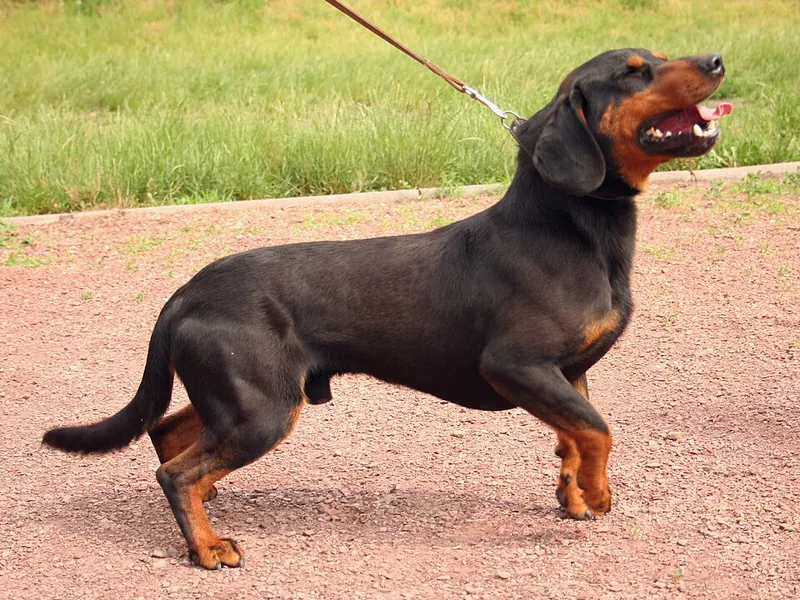
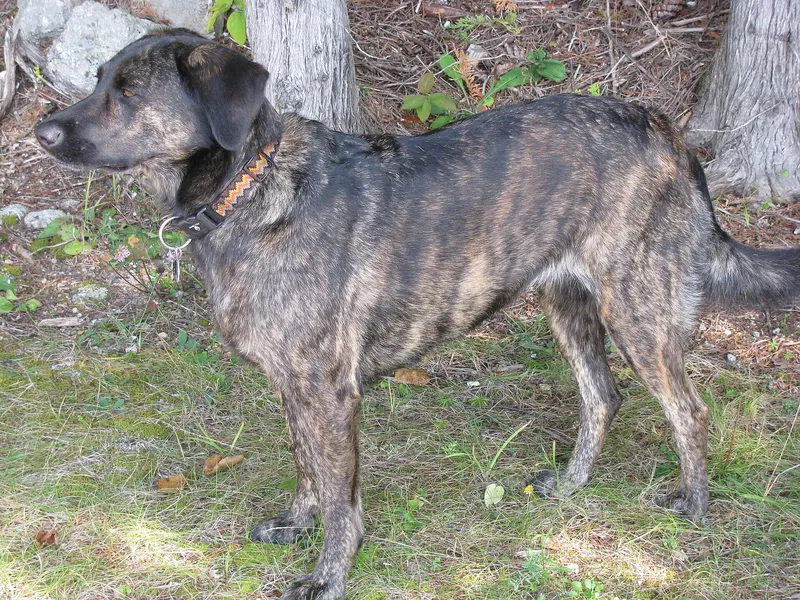
The coat is short and dense, with a slightly coarse outer layer over a fine undercoat. Colors include leopard (a merle-type spotted pattern in blue, red, black or yellow), solid yellow, black, red, blue and brindle. Limited white on the chest, feet and face is allowed. About 60 percent of the breed is solid-colored. Eyes are usually yellow or brown; leopard-patterned dogs may have blue or partly blue eyes.
Temperament and Personality
The AKC describes the breed as loving with its family, very protective of children and highly intelligent. It is reserved with strangers and has strong watchdog instincts, so it will bark at anything unusual. Good socialization in puppyhood helps it tell normal visitors from real threats.
It is generally sociable with other dogs, but its prey drive is high, so cats and small pets are at risk unless the dog is raised with them and supervised. This is a vocal breed that bays on the trail and at the tree.
Is the American Leopard Hound Good for First-Time Owners?
Generally no. The American Leopard Hound is a high-drive, protective working hound that needs experienced handling, plenty of exercise and careful socialization.
First-time owners often find the breed's independence on a scent, vocal nature and wariness of strangers challenging. Its protective streak toward family children needs guidance so it does not become overprotective. If you are new to dogs but drawn to the breed, work with a trainer experienced with hounds, choose a breeder who prioritizes stable temperament and consider whether your lifestyle includes hunting or regular outdoor activity.
Are American Leopard Hounds Good with Cats?
Often not, unless raised with them. The breed was developed to tree raccoons, bobcats and other climbing game, and its prey drive is high. Cats that run or climb can trigger that instinct.
A Leopard Hound puppy raised with a confident household cat may learn to coexist peacefully, but supervision and management are still wise. Adult dogs without cat experience pose a higher risk. Give cats high escape routes and separate feeding areas, and keep small pets such as rabbits or rodents securely out of reach.
Are American Leopard Hounds Easy to Train?
They learn quickly and are highly intelligent, but they are not always easy to train. On a scent, a Leopard Hound becomes intensely focused and may ignore cues.
Calm, consistent, reward-based training works best. Build recall carefully on a long line in many locations, and use a securely fenced area for off-leash play. Mental work such as tracking or scent games satisfies the breed's high need for stimulation. Early socialization is especially important, given its protective nature and reserve with strangers. Harsh methods tend to backfire.
Exercise and Training
Leopard Hounds are athletic and tough, built to hunt over long distances in heat or cold. Expect to provide at least an hour of vigorous activity a day plus mental work: tracking, scent games, hiking on a long line or hunting. The AKC rates their mental stimulation needs at the top of the scale.
They learn quickly but can be independent on a scent. Use calm, consistent, reward-based training and build recall carefully, with a securely fenced yard as a backup. Given their protective streak, early and ongoing socialization is important.
Grooming and Shedding
The coat is short and dense, with a fine undercoat and a slightly coarse outer layer. Colors include leopard spotted, yellow, black, brindle, red and blue, with limited white allowed; the AKC notes that about 60 percent of the breed is solid-colored. Eyes are usually yellow or brown, and spotted dogs may have blue eyes.
Brush weekly with a rubber mitt. Shedding is moderate and increases seasonally. Check ears, feet and coat for ticks after time in the woods.
Feeding and Nutrition
American Leopard Hounds are athletic working dogs, and food needs vary with activity. A dog that hunts regularly may need considerably more food in season than in quieter months. Feed a complete diet in two meals a day and keep the dog lean and well muscled, with ribs easy to feel.
Puppies of larger lines benefit from a diet suited to large-breed growth to support steady development of hips and joints.
As a deep-chested hound, the breed has some risk of bloat. Feed two meals a day, avoid hard exercise for about an hour before and after eating and use a slow feeder if your dog gulps.
Many Leopard Hounds are food-motivated, which helps with training. Use small treats or part of the daily ration as rewards. During hunting season, carry water and a small snack for long days in the field, and adjust portions as activity drops.
| Adult weight | Less active | Typical adult | Very active |
|---|---|---|---|
| 35 lb | 780 kcal | 890 kcal | 1,110 kcal |
| 55 lb | 1,090 kcal | 1,250 kcal | 1,560 kcal |
| 75 lb | 1,380 kcal | 1,580 kcal | 1,970 kcal |
Estimates use the resting energy formula veterinarians work with (70 × body weight in kg0.75) and standard activity factors. Use the feeding guide on your food as a starting point and adjust to body condition. Puppies, seniors, pregnant animals and pets that need to lose weight have different needs, so ask your vet.
Health and Lifespan
The breed is considered hardy, with a typical life expectancy of 12 to 15 years. As with other active hounds, hip dysplasia, ear infections and field injuries are the main practical concerns.
The leopard pattern is a merle-type pattern. Breeding two leopard-patterned dogs together can produce puppies with a double dose of the gene, which raises the risk of deafness and eye defects. Responsible breeders avoid these pairings and screen hips; ask about both before buying a puppy.
American Leopard Hound Price and Cost of Ownership
American Leopard Hounds are bred mainly by hunters, and there is no reliable typical price range. Prices vary by breeder, region and lines, with proven hunting lines often costing more. Ask breeders whether they avoid leopard-to-leopard pairings, which raise the risk of deafness and eye defects, and whether they screen hips.
Leopard Hounds and leopard cur mixes sometimes appear in Southern shelters and hound rescues, so adoption is an option.
Ongoing costs are moderate. Grooming is minimal. Main cost drivers include hunting gear, GPS collars, secure fencing and pet insurance for field injuries and ear infections. Food costs depend on activity level, with working dogs eating more during hunting season.
Is the American Leopard Hound Right for You?
An American Leopard Hound may suit you if you:
- hunt or live an outdoor, rural lifestyle
- have experience with protective, high-drive dogs
- can offer daily exercise and a secure property
It is not a good fit for apartment life, first-time owners who want an easy dog, or homes with frequent unfamiliar visitors and small pets.
American Leopard Hound Traits at a Glance
American Leopard Hound FAQ
How big do American Leopard Hounds get?
Males stand 22 to 27 inches and weigh 45 to 75 lb; females are 21 to 25 inches and 35 to 65 lb.
Are American Leopard Hounds good with kids?
They are affectionate with family and known for being protective of children. Their size, energy and wariness of strangers call for supervision and good socialization.
Do American Leopard Hounds bark a lot?
Yes. They are watchful and bay on the hunt, so expect a vocal dog.
Are all American Leopard Hounds spotted?
No. The breed comes in solid, leopard and brindle patterns, and the AKC notes that around 60 percent are solid-colored.
Is the American Leopard Hound AKC recognized?
It is in the AKC Foundation Stock Service since 2012, not fully recognized. The UKC has recognized it since 1998.
How long do American Leopard Hounds live?
Typically 12 to 15 years.