English Toy Terrier (Black & Tan)A tiny Victorian ratter with big character
The English Toy Terrier (Black & Tan) is a sleek, elegant toy dog with a true terrier spirit. It is cheerful, alert and very fond of its people, yet still keen to chase anything small and fast. It suits owners who want a small, low-maintenance dog that is lively rather than lapdog-quiet.
Why people love the English Toy Terrier (Black & Tan)
- Bright, affectionate and attentive companion
- Short coat needs minimal care
- Suits apartments and city life
- More stamina than its size suggests
- Generally healthy, often living 12 years or more
Things to consider
- Can become barky without guidance
- Fragile; not ideal with small children
- Strong interest in chasing rodents and squirrels
- Feels the cold; needs a coat in winter
- Very rare; hard to find outside the UK
Is this breed right for you?
10 questions · live resultHistory and Origin
The breed descends from the Black and Tan Terrier of 19th-century England, a ratting dog prized in the industrial cities. Smaller specimens became popular in Victorian times, both as ratters and as fashionable companions, and selective breeding produced the toy-sized dog we see today.
It shares its roots with the Manchester Terrier. For decades the toy version was known by several names before The Kennel Club settled on English Toy Terrier (Black & Tan) in the 1960s. Today it is rare, and The Kennel Club lists it among its vulnerable native breeds. The AKC does not register it, although its closest American relative is the Toy Manchester Terrier.
Size, Coat and Black and Tan Markings
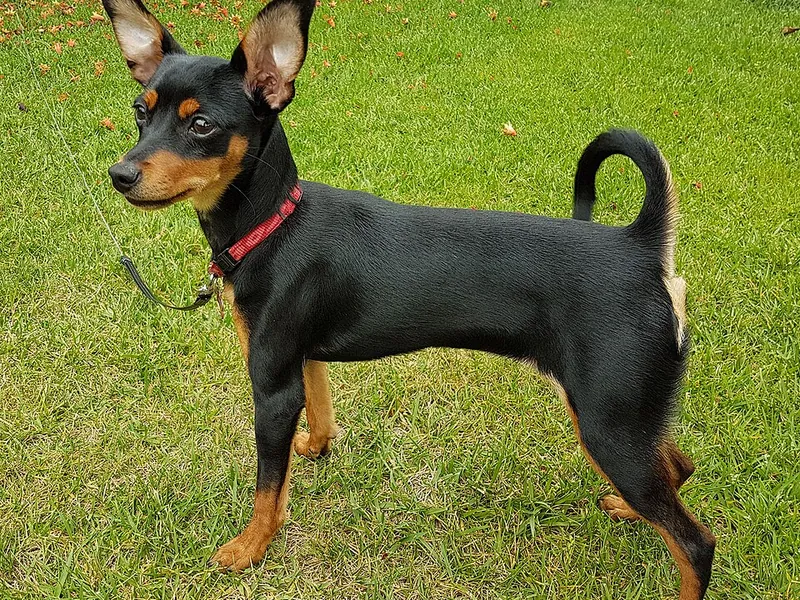
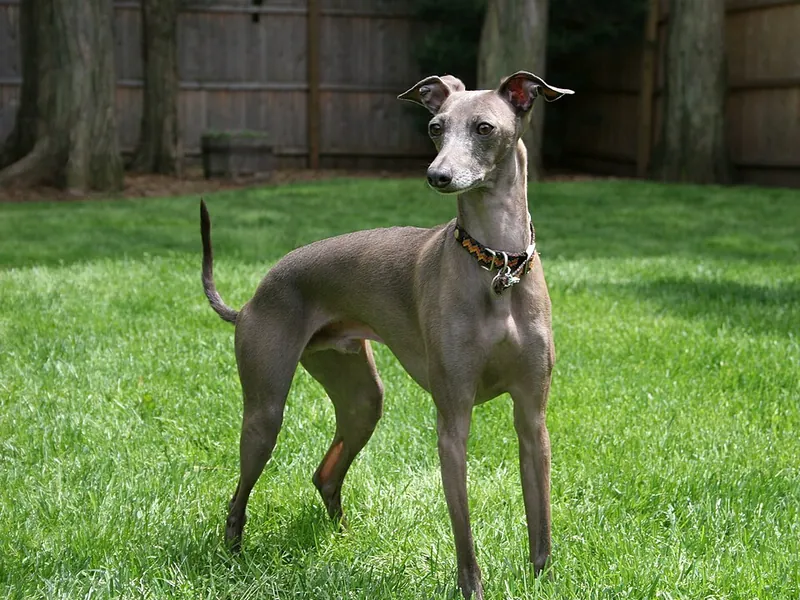
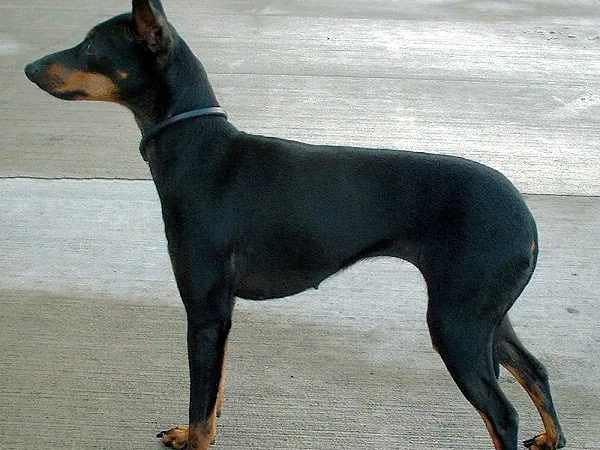
The English Toy Terrier is a small, elegant dog standing about 10 to 12 inches and weighing roughly 6 to 8 lb. Males and females are similar in size. The body is compact and balanced, with a slightly arched loin, fine but strong bone and a graceful, high-stepping gait.
The head is long and narrow, with dark, almond-shaped eyes. The ears are a signature feature: erect and shaped like a candle flame, slightly pointed at the tips. The tail is thick at the root and tapers to a point.
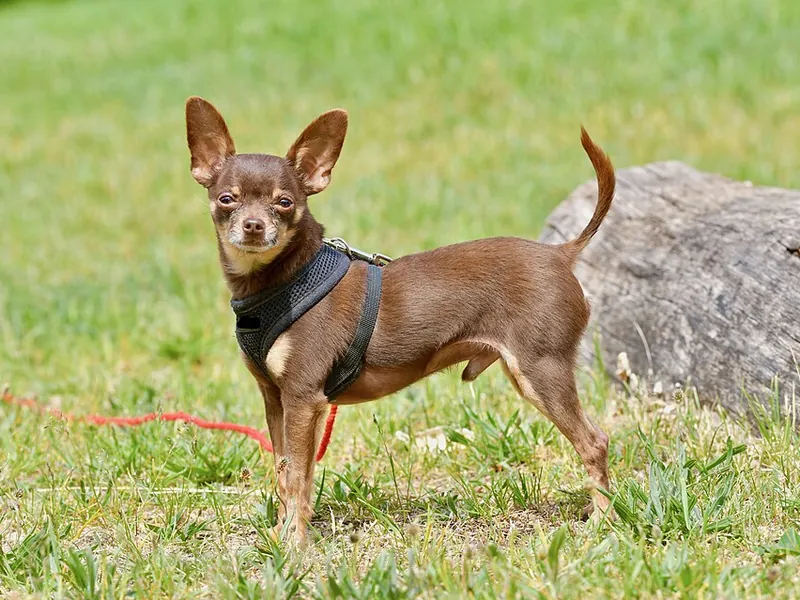
The coat is short, dense, close and glossy. The only accepted color is black and tan. The tan markings are precisely defined: on the muzzle, a spot on each cheek, above each eye, on the chest, on the inside of the legs and under the tail. Pencilling (black lines) on the toes and a black thumb mark on the front of each foreleg are desired. White is not accepted.
Temperament and Personality
ETTs are bright, affectionate and attentive to their owners. They tend to be loyal to one household and polite but watchful with strangers. As a former ratter, the breed has a lively interest in rodents, squirrels and birds.
They are alert and will bark to announce visitors, which can become constant yapping without guidance. Because they are small and fine-boned, they do best with considerate children. Many prefer being the only small pet in the house, and small rodents should be kept well out of reach.
Indoors they are cuddly and like to burrow under blankets, but they are not a passive lapdog. Expect a busy, curious little dog that follows you from room to room.
Are English Toy Terriers Good for First-Time Owners?
Yes, for most first-time owners. ETTs are bright, affectionate and easy to care for, and their small size makes them manageable.
New owners should be prepared for terrier traits: a strong interest in chasing small animals, alert barking and a busy, curious nature. Early training with rewards, including a quiet cue, helps. Their small, delicate frame needs gentle handling and a harness rather than a collar. If you can find a breeder, which may take time, an ETT is a rewarding first dog. Expect a lively, opinionated little dog rather than a passive lapdog, and plan regular training games to keep its quick mind busy.
Are English Toy Terriers Good Apartment Dogs?
Yes, ETTs generally adapt well to apartment living. They are small, need only moderate exercise and enjoy city walks.
Barking is the main concern in shared buildings. ETTs are alert and announce visitors, so teaching a quiet cue early is important. Give them two walks a day plus indoor play. A warm, cozy bed and blankets suit their love of burrowing. In winter, a coat makes outdoor trips more comfortable. Use a harness for walks, and consider ramps or steps if the dog jumps off high furniture, since the fine-boned legs are easily injured.
Can English Toy Terriers Be Left Alone?
Adult ETTs can manage a few hours alone, but they are companion dogs that bond closely with their owners. Long stretches alone can lead to barking or anxiety.
Build alone time gradually from puppyhood, using a safe space, a chew toy or food puzzle and calm departures. Exercise and play before you leave help the dog settle. For full workdays, a dog walker or someone to check in is a good idea. Many ETTs are happier with company, but small rodents should never be kept with them.
Exercise and Training
Two walks a day plus indoor play is enough for most English Toy Terriers. They have more stamina than their size suggests and enjoy longer walks once fit.
- Reward-based training works well: they are clever and respond to food and play.
- Teach a quiet cue early to manage alert barking.
- Use a well-fitted harness, since the neck and frame are delicate.
- They feel the cold, so a coat in winter is sensible.
Many ETTs enjoy dog sports such as agility, rally and scent work, which channel their quick minds and terrier drive.
Grooming and Shedding
The short, dense, glossy coat needs little more than a weekly rub with a soft cloth or rubber mitt. Shedding is light. Brush teeth several times a week, as toy breeds are prone to dental problems, and keep nails short.
Feeding and Nutrition
English Toy Terriers are small, active dogs with fast metabolisms. Feed a complete small-breed diet in two meals a day for adults, and three or four small meals for puppies, since tiny dogs can develop low blood sugar if they go too long without food.
Weight gain is easy in a dog this small. Even an extra half pound matters on a 6 to 8 lb frame. Weigh your dog regularly and adjust portions rather than relying on the bag's guide.
Dental problems are common in toy breeds, so kibble sized for small mouths and daily tooth brushing are both important. Retained puppy teeth sometimes need attention from your vet.
Xanthinuria type II, a metabolic disorder seen in the breed, can cause bladder stones. If your dog is affected, your vet may recommend a specific diet; do not guess. Plenty of fresh water supports urinary health. Use tiny treats in training and count them toward the daily total.
| Adult weight | Less active | Typical adult | Very active |
|---|---|---|---|
| 6 lb | 210 kcal | 240 kcal | 300 kcal |
| 8 lb | 260 kcal | 290 kcal | 370 kcal |
Estimates use the resting energy formula veterinarians work with (70 × body weight in kg0.75) and standard activity factors. Use the feeding guide on your food as a starting point and adjust to body condition. Puppies, seniors, pregnant animals and pets that need to lose weight have different needs, so ask your vet.
Health and Lifespan
English Toy Terriers typically live 12 years or more. The Kennel Club recommends:
- Eye examinations for breeding dogs.
- DNA testing for juvenile dilated cardiomyopathy, a serious heart condition in young dogs.
- DNA testing for xanthinuria type II, a metabolic disorder that can cause bladder stones.
No exaggerated features cause welfare concerns. Because the gene pool is small, buy from a breeder who uses these tests and can explain them.
English Toy Terrier (Black & Tan) Price and Cost of Ownership
English Toy Terriers are very rare and not recognized by the AKC, so US breeders are almost nonexistent. Most puppies come from the UK, where the breed is listed as vulnerable. There is no reliable typical US price range. Prices vary by breeder, region and lines, and importing adds transport and paperwork costs. Ask for eye exams and DNA tests for juvenile dilated cardiomyopathy and xanthinuria type II on both parents.
Rescue ETTs are very rare outside the UK.
Ongoing costs are low. Grooming is minimal, food costs are small and the breed has few exaggerated features. Main cost drivers include dental care, winter coats and pet insurance for heart or urinary issues.
Is the English Toy Terrier Right for You?
This breed suits apartment dwellers, older owners and families with gentle older children who want a small, smart dog with personality. It handles city life well if it gets daily walks and attention.
It is not ideal if you need a quiet dog, have pet rodents, or are away for very long hours. Expect to wait for a puppy, since litters are few.
English Toy Terrier (Black & Tan) Traits at a Glance
English Toy Terrier (Black & Tan) FAQ
How big do English Toy Terriers get?
They stand about 10 to 12 inches tall and weigh roughly 6 to 8 pounds.
Is the English Toy Terrier the same as a Toy Manchester Terrier?
They share ancestry and look similar, but The Kennel Club and the AKC treat them as separate breeds with separate standards.
Are English Toy Terriers good with children?
They can be, with calm, respectful older children. Their small size makes them vulnerable to rough handling.
Do English Toy Terriers bark a lot?
They are alert watchdogs and can be barky. Early training helps keep it under control.
Do English Toy Terriers shed?
Lightly. Their short coat is easy to care for.
How long do English Toy Terriers live?
Usually 12 years or more.