Austrian PinscherA rare Austrian farmyard guardian
The Austrian Pinscher is a rare, medium-size farm dog from Austria, bred to guard the homestead and keep it free of vermin. Loyal, lively and watchful, it suits owners who want an alert companion and can guide its suspicion of strangers.
Why people love the Austrian Pinscher
- Affectionate, playful and loyal with its family
- Natural watchdog with a strong guarding instinct
- Often good with children it knows
- Weak hunting drive, tends to stay close to home
- Short, dense coat needs only weekly brushing
Things to consider
- Distrustful of strangers, needs careful socialization
- Vocal, announces every visitor and noise
- May be territorial with unfamiliar dogs
- Very rare outside Austria and central Europe
- Little published health or lifespan data
Is this breed right for you?
10 questions · live resultHistory and Origin
For generations Austrian farms kept versatile pinscher-type dogs that guarded the yard, warned of visitors and hunted rats and mice. In the early 1920s breeders began building a formal breed from these country dogs, and it was recognized in 1928 under the name Austrian Shorthaired Pinscher.
Changes in farming nearly ended the breed in the 20th century, and its numbers have stayed small. It belongs to FCI Group 2, alongside other pinschers and schnauzers, and remains uncommon even in Austria.
Size, Coat and Colors
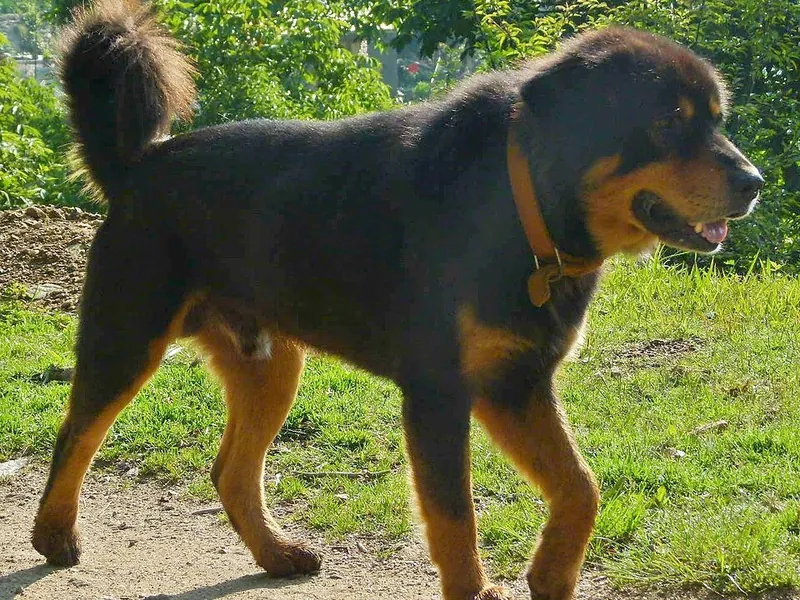
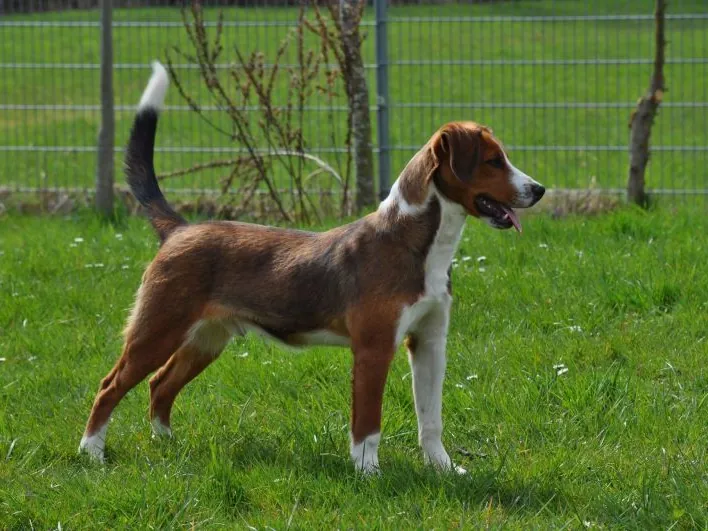
The Austrian Pinscher is a medium-size, compact and robust farm dog standing 17 to 20 inches and weighing 26 to 40 lb. It is slightly longer than tall, with a broad chest, strong bone and a pear-shaped head with a short, powerful muzzle and small, folded or semi-erect ears.
Males are typically larger, stronger and broader in the head than females, with the FCI standard giving a slightly higher height range for males.
The coat is short to medium in length, dense and close-lying over a thick undercoat that protects against Alpine weather. Accepted colors under the FCI standard:
- Golden-yellow, red-yellow or deer red
- Black and tan, with tan markings on the head, legs and chest
White markings on the chest, neck, muzzle, feet and tail tip are common and allowed. The tail is set high and often curled over the back. The overall look is practical and unexaggerated, reflecting a dog bred for work rather than fashion.
Temperament and Personality
The Austrian Pinscher is affectionate and playful with its family and often very good with children it knows. Its defining trait is a strong guarding instinct: it watches its territory closely and is distrustful of strangers, announcing them loudly.
According to the breed standard, hunting instinct is only weakly developed, which makes it less likely to roam than many terrier types. It prefers to stay near home and its people.
With its own people it is affectionate and lively. It is generally sociable with dogs it knows, but it may be territorial toward unfamiliar dogs entering its property.
Is the Austrian Pinscher Good for First-Time Owners?
The Austrian Pinscher can work for a first-time owner who is willing to put real effort into socialization. It is affectionate, learns quickly and has little urge to roam, which makes daily life easier than with many working breeds.
The challenge is its guarding instinct. Without early and ongoing exposure to visitors, new places and other dogs, wariness can turn into excessive barking or reactivity. Beginners do best when they:
- Attend puppy classes from the start
- Invite visitors often and reward calm greetings
- Teach a quiet cue early
Because the breed is so rare, buyers also need patience to find a breeder.
Can Austrian Pinschers Live in Apartments?
Austrian Pinschers are not an ideal apartment breed. Their size is manageable, but they were bred to guard a farmyard and announce anyone who approaches, so footsteps in the hallway and noisy neighbors can trigger frequent barking.
Apartment life is more realistic if:
- The dog gets long daily walks and active play
- You work consistently on calm responses to sounds
- The building is quiet, with few people passing your door
A house with a fenced yard, in a rural or suburban area, suits the breed's watchful nature far better and keeps both dog and neighbors happier.
Do Austrian Pinschers Shed?
Yes, Austrian Pinschers shed moderately, and more heavily during spring and fall when the thick undercoat turns over. The coat is short to medium in length, so loose hair is noticeable but easy to manage.
A weekly brush with a rubber curry or slicker removes most dead hair. During seasonal sheds, brushing two or three times a week and an undercoat rake help a lot. Bathing is rarely needed, as the dense coat sheds dirt well once dry. The breed is not low-shedding, so it is not a good choice for people trying to reduce dog hair at home.
Exercise and Training
As a lively working dog it enjoys daily walks, play and tasks to solve. Many do well in obedience, rally and other dog sports. A yard to patrol is appreciated, but the dog still needs time and activity with its people.
Austrian Pinschers learn quickly. Early, thorough socialization with visitors, other dogs and new places is important so watchfulness does not turn into excessive barking or reactivity. Teach a quiet cue early.
Many enjoy hiking and are robust enough for long walks in varied weather.
Grooming and Shedding
The coat is short to medium length, dense and close with a thick undercoat. Weekly brushing is enough, with extra attention during seasonal shedding. Colors include yellow, red and black and tan, often with white markings.
Feeding and Nutrition
The Austrian Pinscher is a sturdy, active farm dog that should look compact and muscular, not heavy. Check condition by feel: ribs easy to find, a visible waist and no fat over the hips. Because there is little breed-specific health research, staying lean is one of the most practical ways to protect joints over a long life.
Puppies grow into a medium frame over about a year. A diet formulated for medium-breed puppies, given in three measured meals a day until about six months and two meals for adults, suits most.
Adjust portions to activity. A dog that patrols a farm and hikes daily needs more than one living a quieter suburban life, and neutered adults often need less.
Food rewards are useful in socialization. Ask visitors to toss a treat as they arrive to build positive associations, and count these in the daily ration. Avoid table scraps, which can encourage guarding of food or the kitchen.
| Adult weight | Less active | Typical adult | Very active |
|---|---|---|---|
| 26 lb | 620 kcal | 710 kcal | 890 kcal |
| 40 lb | 860 kcal | 980 kcal | 1,230 kcal |
Estimates use the resting energy formula veterinarians work with (70 × body weight in kg0.75) and standard activity factors. Use the feeding guide on your food as a starting point and adjust to body condition. Puppies, seniors, pregnant animals and pets that need to lose weight have different needs, so ask your vet.
Health and Lifespan
There is little reliable published data on breed-specific health problems or typical lifespan, largely because the population is so small. As with any medium-size dog, screening of breeding dogs for hips and eyes is sensible.
A small gene pool makes careful breeding especially important. Ask breeders about health tests and the diversity of their lines.
Austrian Pinscher Price and Cost of Ownership
Austrian Pinschers are very rare in the US, and there is no reliable published US price. Most breeders are in Austria, Germany and neighboring countries, so buying usually means importing a puppy. Prices vary by breeder, region and lines, and importing adds flight or transport costs, health certificates and sometimes a trip to collect the puppy.
Adoption in the US is unlikely, given how few dogs live here.
Ongoing cost drivers:
- Hip and eye screening, which is sensible given the small gene pool
- Training classes focused on socialization
- Secure fencing for a dog that guards its territory
Grooming and food costs are modest for a medium dog. Pet insurance helps cover unknowns in a breed with little published health data.
Is the Austrian Pinscher Right for You?
This breed suits owners who appreciate a natural watchdog and live where a vocal, alert dog is welcome, ideally a house with a yard. Finding a puppy outside central Europe can be difficult.
- Good match: rural or suburban families, owners wanting an alert companion, people who enjoy training.
- Think twice: apartments with thin walls, homes with constant stream of visitors, owners who dislike barking.
Austrian Pinscher Traits at a Glance
Austrian Pinscher FAQ
Is the Austrian Pinscher a good watchdog?
Yes. It is highly alert, protective of its home and distrustful of strangers, and it announces visitors readily.
How big is the Austrian Pinscher?
It is a medium-size dog standing about 17 to 20 inches at the shoulder.
Are Austrian Pinschers good with children?
They are typically affectionate and playful with children in their own family.
Do Austrian Pinschers have a strong hunting instinct?
The breed standard describes the hunting instinct as weak, so they tend to stay close to home.
Is the Austrian Pinscher recognized by the AKC?
No. It is recognized by the FCI but not by the AKC or The Kennel Club.