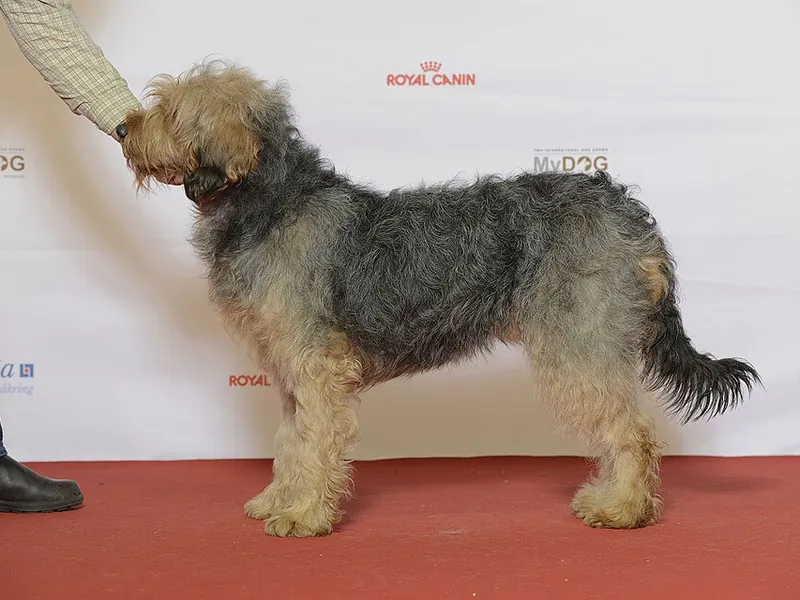
Serbian HoundTenacious red-and-black Balkan scenthound
The Serbian Hound, long known as the Balkan Hound, is a medium-sized scenthound with a striking red coat and black saddle. Friendly and reliable, yet extremely persistent on a trail, it is best suited to hunters and active rural owners.
Why people love the Serbian Hound
- Friendly, lively and reliable with people
- Persistent tracker that works a trail for hours
- Short, glossy coat that is easy to keep
- Striking red coat with a black saddle
- Social with people and other dogs
Things to consider
- Very hard to call back on a scent
- Strong prey drive with cats and small animals
- Vocal while hunting and when bored
- Needs serious daily activity
- Rare outside the Balkans
Is this breed right for you?
10 questions · live resultHistory and Origin
Scenthounds have been used in the Balkans for centuries, and the Serbian Hound is one of the region's established types. For much of its history it was called the Balkan Hound, and it appears under that name in older literature. The FCI later adopted the name Serbian Hound.
The breed was developed to hunt hare, fox and other game, including wild boar, often in hilly forest. Hunters wanted a dog that would keep working a trail for hours and give voice the whole time. The closely related Serbian Tricolour Hound is now a separate breed.
Size, Coat and Colors
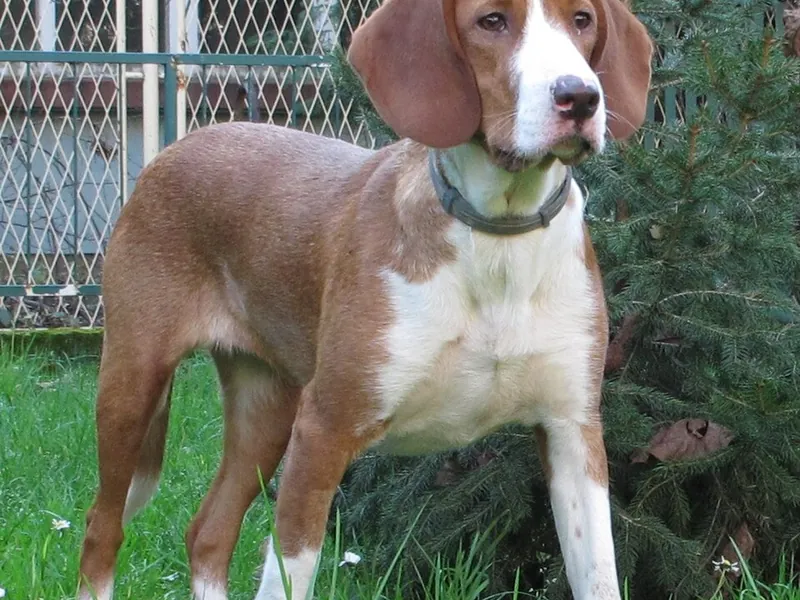
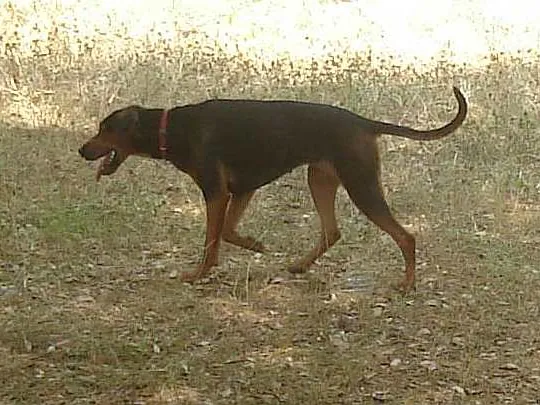
The Serbian Hound is a medium-sized, solidly built scent hound with a slightly longer-than-tall body and good muscle. Adults stand 17 to 22 inches at the shoulder. Males are generally taller and heavier, with a stronger head, while females are somewhat lighter.
The coat is short, thick, dense and glossy, with a well-developed undercoat that protects the dog in hilly forests. It is slightly longer on the tail and the back of the thighs.
The coat color is distinctive:
- A base of red to fox red or rust red
- A black saddle or mantle that may extend up to the head
- Black stripes running along the sides of the head, often to the eyes
A small white mark on the chest is tolerated in the standard, but larger white areas are not desired.
The head is long, with medium-length drop ears that hang flat and dark eyes. The tail is long, thick at the base and carried in a slight sabre curve. The closely related Serbian Tricolour Hound is a separate breed.
Temperament and Personality
The FCI describes the Serbian Hound as friendly, lively and reliable. At home it is generally good-natured and attached to its family.
Its defining trait is perseverance. On a scent, it is focused and very hard to call back. Strong prey drive means cats and small animals must be managed carefully. It is a social dog that likes company, human or canine.
Because it was used for long, independent work in forests, the Serbian Hound learns to make its own decisions on a trail. Owners should see this as a feature of the breed, not disobedience, and plan around it with good fencing and long lines rather than expecting instant obedience in the open.
Is the Serbian Hound Good for First-Time Owners?
Usually not. The Serbian Hound is friendly and reliable, which helps, but its persistence on a trail and exercise needs make it demanding for beginners.
Challenges include:
- Recall that rarely works once the dog is on a scent
- Strong prey drive with cats and small pets
- Daily serious activity, ideally hunting or tracking
- Finding a breeder, likely in Serbia
A first-time owner who hunts, lives rurally and has secure land may do well. Most new owners will find a less driven breed easier to live with.
Is the Serbian Hound Easy to Train?
Moderately. Serbian Hounds are friendly and attached to their people, and they respond well to patient, food-based training.
Their independence on a trail is the main challenge. They were bred to work alone for long periods in forests, making their own decisions, so instant obedience in open areas is unrealistic. Training priorities include:
- Leash manners and long-line work
- Recall practice in fenced areas
- Scent games and tracking, which use the dog's strengths
Plenty of variety and short sessions keep the dog engaged. Punishment-based methods tend to backfire.
Is the Serbian Hound a Good Apartment Dog?
Generally no. The Serbian Hound needs serious daily activity, plenty of scent work and room to move, which apartments rarely provide.
Its voice is another issue. Serbian Hounds can be vocal when bored, under-exercised or alone, which can cause problems with neighbors in shared buildings.
The breed is best suited to rural homes with secure fencing and access to fields or forests. An apartment could only work for a highly committed owner who provides hours of outdoor activity every day, and even then, a rural setting will suit the dog much better.
Exercise and Training
A Serbian Hound needs serious daily activity. Hunting is ideal; otherwise long hikes, jogging on a lead and tracking work.
- Keep it on a lead or long line unless the area is securely fenced.
- Train with patience, food rewards and plenty of variety.
- Scent games and tracking give it a mental outlet.
- Manage barking with enough exercise and company rather than punishment.
Grooming and Shedding
The short, thick, glossy coat is easy to keep. Brush weekly with a hound glove, and bathe only when needed.
Check ears and paws after outings, particularly for ticks in wooded areas. Keep nails short, since overgrown nails affect gait on long runs.
Feeding and Nutrition
The Serbian Hound is a working scent hound, and its food needs depend on how hard it works. A dog hunting in hilly forest during the season can burn far more than one on a walking routine. Adjust portions to activity and body condition, aiming for a lean, muscular hound with easily felt ribs.
Puppies grow into medium-sized, solidly built dogs. A complete puppy food fed in measured portions supports steady growth and helps protect hips.
- Feed adults two meals a day.
- Avoid hard exercise right before and after eating.
- On hunting days, offer a small breakfast and the main meal after work.
- Carry water and offer it often during long outings.
Scent hounds are often keen scavengers, so watch what the dog picks up on walks and store food securely at home. Use food rewards in training, and count them in the daily total. No breed-specific food sensitivities are documented.
Health and Lifespan
No breed-specific health concerns are named in the FCI standard or other reviewed sources, and reliable lifespan data are not available. The breed has a moderate, functional conformation.
Look for breeders who screen hips and select for soundness. Routine care, including weight control and ear checks, covers most everyday needs.
Working hounds that hunt in brush often pick up small injuries: torn ear tips, cut pads and tick bites. A quick nose-to-tail check after every outing catches most problems early, and tick prevention appropriate to your region is worth discussing with your veterinarian.
Serbian Hound Price and Cost of Ownership
The Serbian Hound is very rare in the US and not recognized by the AKC. Most dogs are bred in Serbia and neighboring countries, primarily for hunters, so buying one usually means importing. Prices vary by breeder, region and lines, and import costs add significantly.
Rescue is not a realistic route outside the Balkans, though hound rescues sometimes place red hounds of similar type.
Breed-specific ongoing costs include:
- Import, transport and paperwork if buying from Serbia
- Tick prevention for dogs working in woods
- Secure fencing and long lines
- Tracking classes or hunting club fees
- Hip evaluation if breeding
- Insurance that covers field injuries
Is the Serbian Hound Right for You?
The Serbian Hound is a working dog for outdoor people.
- Good match: hunters, trackers, rural families with secure land and time to exercise a dog daily.
- Poor match: apartments, busy households with little time, homes with free-roaming cats or rabbits.
Its friendly nature makes it an easy housemate when its energy is used well.
Serbian Hound Traits at a Glance
Serbian Hound FAQ
Is the Serbian Hound the same as the Balkan Hound?
Yes. Balkan Hound is the older name; the FCI now lists the breed as Serbian Hound.
How big do Serbian Hounds get?
They stand roughly 17 to 22 inches at the shoulder and are solidly built.
What color is a Serbian Hound?
Red to fox-red with a black saddle or mantle, often with a small white mark on the chest.
Are Serbian Hounds good family dogs?
They are friendly and reliable, but they need an active, preferably rural family that can meet their exercise needs.
Do Serbian Hounds bark a lot?
They give voice while hunting and can be vocal when bored, so plenty of activity matters.
Can a Serbian Hound live with cats?
Some can if raised with a cat from puppyhood, but prey drive is strong, so outdoor cats and small pets need protection.